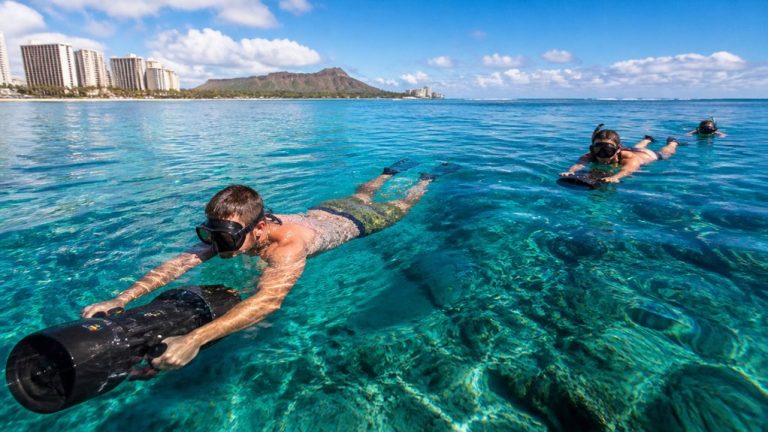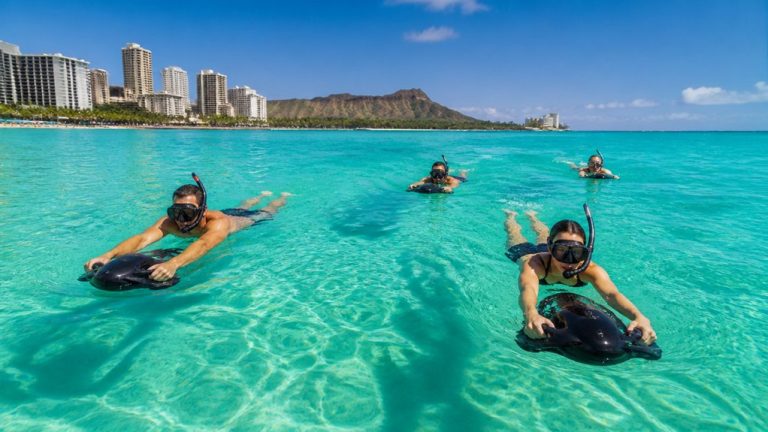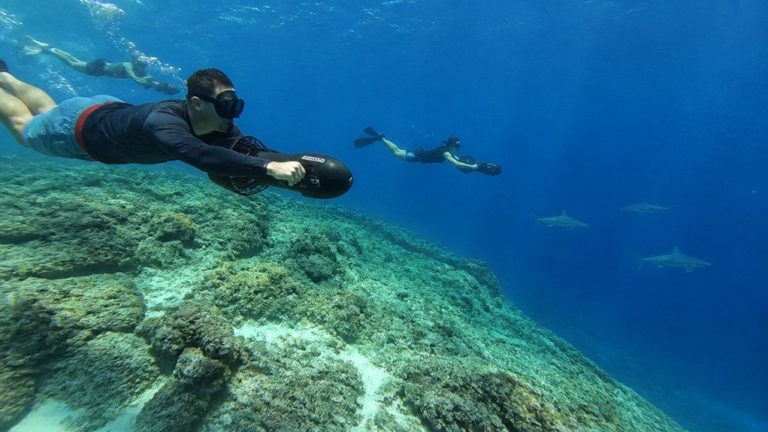
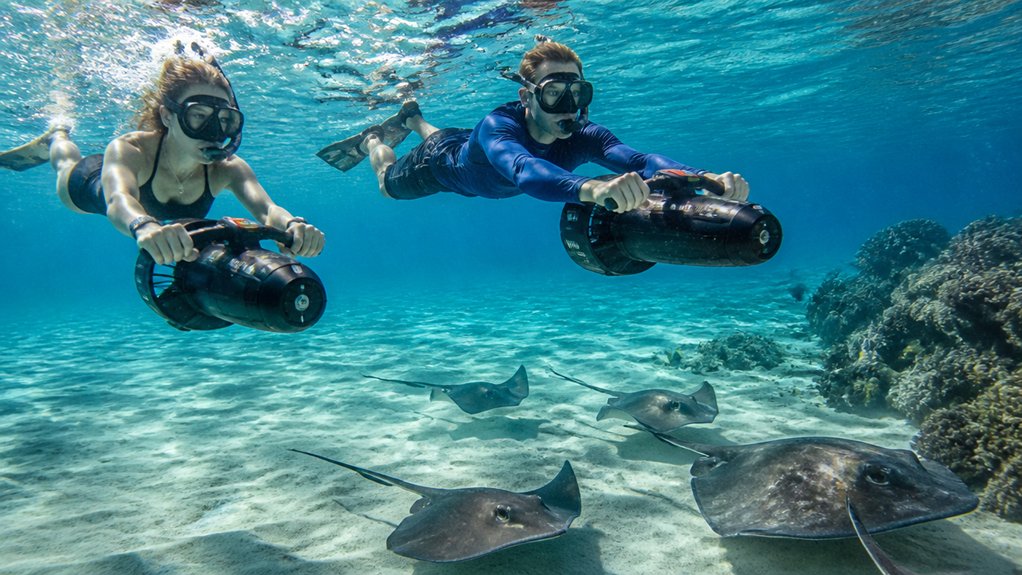
Like a scene from Blue Planet, you glide over Oahu’s clear water and scan the reef edge for a sudden wingbeat in the blue. You might spot a spotted eagle ray or a stingray lifting off the sand, then fading into a channel near Turtle Canyon or Maunalua Bay. It doesn’t happen on every sea scooter tour, which is part of the thrill. A few simple choices can raise your odds more than you’d think.
Key Takeaways
- Yes, rays are sometimes seen on Oahu sea scooter tours, but they are a lucky bonus rather than a guaranteed sighting.
- Sightings are most common along sandy channels, reef edges, drop-offs, and spots like Turtle Canyon, Kewalo Basin, and Maunalua Bay.
- Hawaiian stingrays often rest on or in the sand, while spotted eagle rays glide above channels and reef borders.
- Early morning or late afternoon tours in calm, clear summer conditions usually offer the best chance of spotting rays.
- Sea scooter or SeaBob tours often improve ray-viewing chances because guides can cover more reef habitat than fixed-route submarine scooters.
Do You See Rays on Oahu Sea Scooter Tours?
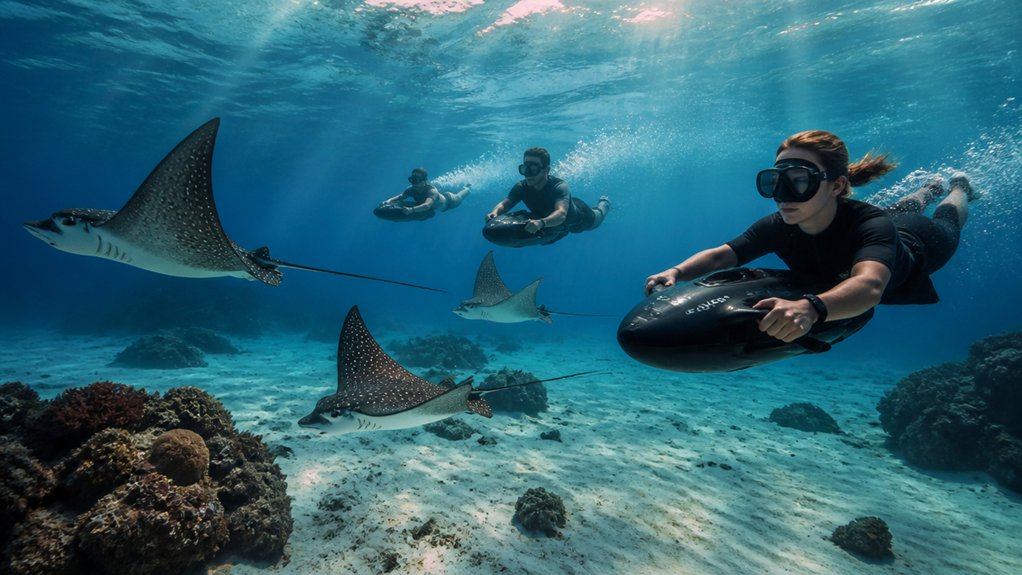
Often, yes, you do see rays on Oahu sea scooter tours, especially along reef edges near Waikiki and Turtle Canyon. From your underwater scooter, you glide low over sand flats and along coral borders where Hawaiian stingrays like to cruise. Guides often spot them first and angle you toward calmer sandy channels, where rays pass with that eerie flying-carpet grace. You might also see turtles and bright reef fish sharing the same water. Many riders also love the chance for sea turtles sightings, which are a highlight of gliding through Oahu’s reefs on sea scooter tours. The ride stays surprisingly quiet, so your approach feels smooth instead of splashy. Guides keep everything reef-safe and no-touch, with one-on-one supervision for riders ages ten and up. That means close passes feel controlled, respectful, and memorable. Even better, clear water turns those ray sightings into crisp, shadowy little underwater theater.
How Likely Are Ray Sightings on Oahu Tours?
Usually, ray sightings on Oahu tours fall into the nice-surprise category rather than the standard checklist. You’ll usually spot turtles, reef fish, and sometimes dolphins before you spot any ray. On a standard Waikiki snorkel or sea-scooter trip, your odds stay low, especially around turtle-focused shallow reefs. Many guests instead enjoy spotting reef fish on Waikiki sea scooter tours. Your chances improve when tours visit sandy flats, reef channels, or deeper water where rays pass through. Season and site matter, so recent trip reports are worth a quick look. If ray sightings top your wish list, book an operator known for ray-friendly spots or consider an evening excursion. Otherwise, treat a ray encounter like finding bonus treasure on the reef, unexpected, graceful, and very hard to forget even after the boat ride back to shore ends.
Which Rays Can You Spot in Oahu?
If a ray does appear on your Oahu tour, you’ll most likely spot one of two standouts: the Hawaiian stingray or the spotted eagle ray. You’re looking for a few quick clues:
- Hawaiian stingrays stay smaller and hug the bottom, sometimes half buried like living kites in sand.
- Spotted eagle rays look bolder, with long tails and white spots that flash as they glide.
- Eagle rays can reach 10 feet across, so you may notice a broad shadow before the full shape appears.
- Stingrays show a diamond outline and whip-like tail, so keep your eyes low and your movements calm.
If you see either, give it space, follow your guide, and enjoy the rare, silent flyby. It’s the ocean’s version of a passing whisper you won’t forget soon. In Hawaii, respectful wildlife viewing means keeping a safe distance and never approaching or crowding marine animals.
Where Do Oahu Sea Scooter Tours See Rays?
You’re most likely to see rays around reef drop-offs and sandy channels near popular snorkel zones like Turtle Canyon off Waikiki. Your guide will often line you up along reef slopes, ledges, and nearby bay edges where rays like to glide and forage, especially when the water’s calm and clear. You can’t count on a sighting, but tours that cruise across varied reef structure give you a better shot than just hoping a ray makes a grand entrance. On a Sea Scooter Tour, you also get to explore Waikiki while covering more water where rays may appear.
Ray Sighting Areas
Because rays like to patrol the edges where reef meets sand, Oahu sea scooter tours often look for them in places like Turtle Canyon off Waikiki and around parts of Kewalo Basin. If you’re comparing ray sighting areas, you’ll hear guides mention Turtle Canyon Snorkel routes, Maunalua Bay, and sandy ledges near coral heads. Your best odds come on clear mornings when visibility opens up and boat traffic stays moderate. On a Sea Scooter Adventure in Waikiki, guides often combine these ray-prone zones with easy reef exploration to help guests cover more water efficiently.
- Turtle Canyon off Waikiki often draws eagle rays.
- Kewalo Basin can produce foraging stingrays.
- Maunalua Bay offers occasional calm-water sightings.
- Sandy flats beside coral heads are classic hunting lanes.
You won’t get a guarantee, of course. Rays follow tides, seasons, and their own schedules, which is part of the fun.
Reef And Bay Zones
Reef edges tell the real story here. If you join a sea scooter tour on Oahu, you’ll usually See Turtles, bright fish, and maybe a small reef shark before you spot a ray. Rays prefer sandy channels, deeper drop-offs, and coastal ledges beside the reef, not the shallow flats where many Waikiki tours linger. That’s why tours that reach reef passes or varied snorkel sites give you a better shot. In sheltered bays, rays can slide along the perimeter when currents strengthen and visibility clears, but sightings still stay hit or miss. If rays top your wish list, ask operators about routes before you book. You want depth changes, open edges, and a little moving water. Think less turtle traffic jam, more blue hallway. A first-timer walkthrough can also help you understand why route details matter before you book a Waikiki underwater scooter tour.
When Are Rays Easiest to See in Oahu?
You’ll usually spot rays most easily in the clearer morning hours when calm water smooths the surface and the reef below sharpens into view. In Waikiki, water clarity is often best in the morning, which can make sea scooter tours even better for spotting movement along the reef. If you visit in summer, especially from late spring into early fall, you’ve got better odds as warmer water and bright sun make those sandy channels and reef edges come alive. Book an early tour, watch for mellow ocean conditions, and you might catch a spotted eagle ray gliding past like it owns the place.
Early Morning Sightings
Often, the best time to spot rays off Oahu is just after dawn, roughly from 6:00 to 8:00 AM, when the water tends to lie flatter and the visibility sharpens over the reef.
- You may catch manta rays or stingrays cruising shallow reef flats and sandy channels as they feed.
- Your scooter tour has better odds if it heads toward Turtle Canyon or similar reef edges.
- You’ll usually find fewer boats and swimmers then, so rays act less jumpy on first departures.
- You still need luck. Season, tide, and conditions all matter, so ask the crew what they’ve seen lately.
This lines up with the best time of day for Sea Scooter Tours in Waikiki, since calmer early conditions often make marine life easier to spot.
Book the earliest true early morning trip you can. If check-in starts at 10:45 AM, that’s not dawn, no matter how much coffee you drink.
Calm Water Conditions
Usually, rays stand out best when the ocean goes glassy and the surface stops twitching with chop. In calm water, you can track their dark shapes over reefs and sandy bottoms instead of squinting through glare and foam. You’ll get your best odds when winds stay under about 10 knots and swell sits below 1 to 2 feet.
Clear days after at least 72 hours without heavy rain help even more. Less runoff means cleaner water, so rays feeding near reef edges and flats show up sooner on a sea scooter ride. Sheltered launch spots like Maunalua Bay or Turtle Canyon also work in your favor on gentle trade-wind days. Boats can anchor in protected water with less current, and that makes spotting rays feel less like luck and more like timing. Oahu visibility and comfort can drop fast when hazardous seas build Monday night into Tuesday, with rougher water and haze making ray sightings harder from the surface.
Summer Visibility Peaks
Summer is the season when Oahu tends to show off underwater. From June through August, you often get the best summer visibility, with 50 to 100 feet on calm mornings. Warmer water, around 76 to 80°F, can pull stingrays and eagle rays into shallower reefs and sandy channels, sometimes alongside sea turtles. This is why many visitors consider summer the best time of year for sea scooter tours in Oahu.
- Book morning tours for calmer seas and clearer water.
- Choose Turtle Canyon or protected Waikiki reefs over rougher windward spots.
- Watch the weather. Several windless days beat a rainy forecast every time.
- Stay flexible. Even in summer, rays don’t RSVP.
If you time it right, your sea scooter ride feels like flying through blue glass, with reef textures snapping into view below. You’ll hear bubbles hiss softly while sunlight flickers over coral.
What Increases Ray Sightings on Oahu Tours?
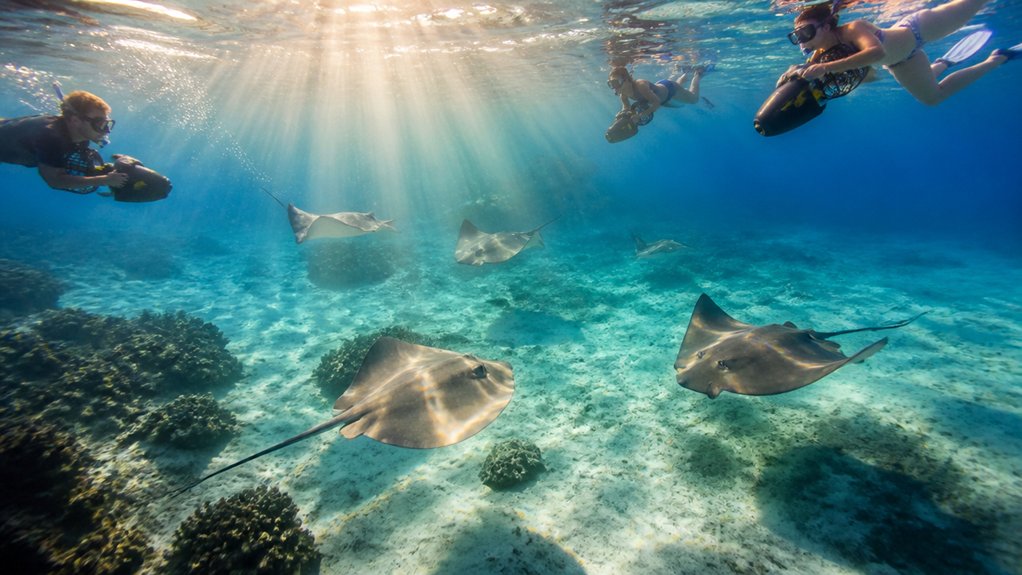
You’ll spot more rays on Oahu tours when the route follows reef drop-offs and sandy channels, where stingrays and eagle rays like to cruise and forage for food. Head toward reef edges near places like Turtle Canyon, then look for wings gliding over pale sand.
You’re also more likely to get better ray sightings on an early morning or late afternoon snorkeling tour, when cooler water and softer light get rays moving. Calm seas and clear water help you notice shapes from the surface and while riding a sea scooter. Choose trips that cover reef, sand flats, and deeper ledges. Quiet drifting helps too. If your group kicks hard and splashes, the rays usually vote no. Experienced crew keep you positioned without the chaos. Following reef etiquette while riding a sea scooter in Hawaii helps reduce disturbance and can improve your chances of seeing rays behave naturally.
Do Submarine Scooter Tours See Rays Too?
Yes, you can spot rays on a submarine scooter tour off Oahu, and many riders do when the route passes reef edges and sandy channels where they like to rest. You’ll float about 8 to 10 feet down during the short guided circuit, which gives you a clear look at the seafloor while your guide points out movement below like a living treasure map. Sightings aren’t guaranteed, so you’ll have the best odds when visibility is good, conditions are calm, and you ask your operator for the latest ray reports before you book. Tours departing from Kewalo Basin may also share current ocean conditions and recent wildlife sightings before your ride.
Ray Sightings Possible
Often, rays do glide into view on Oahu sea scooter tours, but they’re more of a lucky bonus than a regular cast member like turtles and bright reef fish. You might spot a smaller stingray on a Submarine Scooter ride, since you cruise about 8 to 10 feet down near reef edges. This 8 to 10 feet depth in Waikiki keeps the experience close to the reef while still feeling approachable for beginners. A SeaBob or Snorkel tour gives you more movement, so ray sightings can improve, though nothing’s promised. Guides keep it simple:
- Watch calmly.
- Keep your distance.
- Don’t touch.
- Follow the crew.
That way, if a shadowy wing beats past your helmet or under your fins, you’ll enjoy the moment safely. The tours welcome ages 10 and up, and the crew helps you feel curious, and ready for surprises.
Where Rays Appear
Sometimes rays slip into view right where the reef changes shape, especially near sandy patches, gentle drop-offs, and calm lagoon pockets that sea scooter guides know well. You might spot eagle rays gliding above pale sand or a stingray resting beside coral heads near reef drop-offs. Guides often angle your route toward these habitats because turtles and rays both pass through them. On Oahu, spots around reef edges and places like Turtle Canyon can produce memorable passes. Do submarine scooter tours see rays too? Yes, you can, especially on shallow bell-helmet rides near the same reef zones, though those encounters happen a bit less often because you move less. While watching, keep a respectful 50 yards from sea turtles and avoid trying to approach or touch any marine life. Then your guide holds position, and you watch a wide shadow turn into wings below.
Best Viewing Conditions
When the sea lies flat and the water clears to 30 to 50 feet or more, your odds of spotting a ray go up fast. On calm, wind-sheltered days, you can scan bright reef edges and pale sandy channels with better visibility, and guides can anchor in clear, shallow water where rays cruise. The best time to book a Waikiki sea scooter tour is during periods of calm weather, since flatter seas usually bring clearer water and better wildlife viewing.
- Choose a SeaBob tour if you want more range and quieter movement over sand flats.
- Follow your guide toward reef corners and wildlife hotspots near places like Turtle Canyon.
- Go flexible on time, because tide, light, and ray routines change daily.
- Expect submarine scooter tours to see rays sometimes, not often, since you stay on a fixed route about 8 to 10 feet down.
Nature still keeps the final vote, cheekily.
Are SeaBob Tours Better for Seeing Rays?
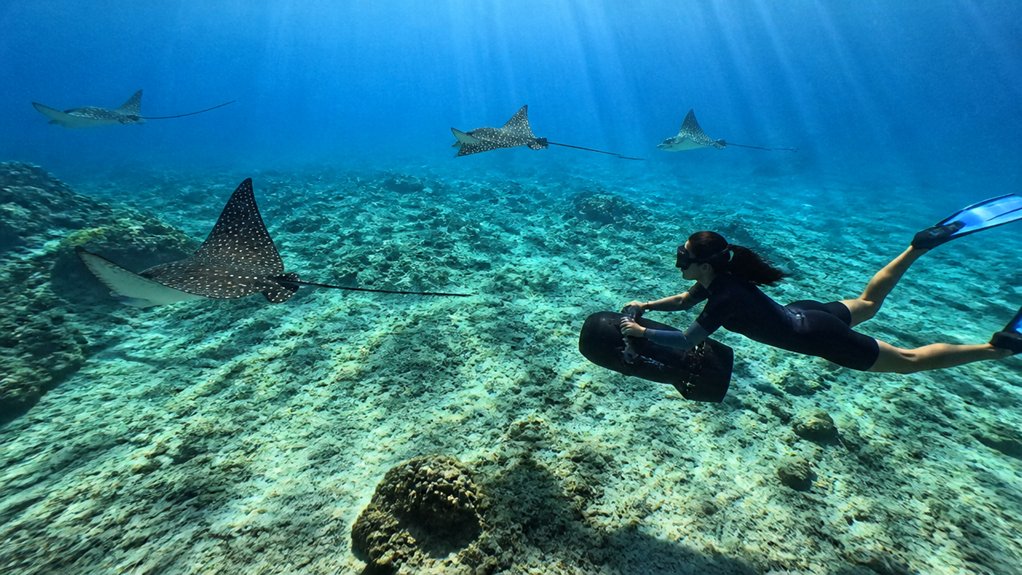
Why do SeaBob tours give you a better shot at seeing rays around Oahu? You cover more water fast, so your ray sightings can improve. A SeaBob lets you skim reef edges, sweep sand channels, and dip below the surface for sharper views. That means you can spot stingrays tucked into sand or eagle rays cruising near drop-offs. Guided outings help too, since crew lead you toward known hotspots and keep wildlife space respectful. If you’re comparing Sea Scooter vs Scuba, SeaBob tours can feel like the better fit when your goal is covering more habitat in less time.
| SeaBob advantage | What you notice |
|---|---|
| Speed and agility | More reef and sand explored |
| Brief dives near bottom | Closer, clearer ray views |
You still need luck. Rays aren’t on a timetable, even in good seasons. But if you’re comfortable, fully immersed, and following directions, SeaBob tours often feel like the smarter bet.
Which Tour Is Better for Beginners?
For first-timers, the Submarine Scooter is usually the easier pick. You don’t need strong swim skills, your face stays dry, and the bell helmet feels surprisingly calm once you descend to about 8 to 10 feet. The ride lasts around 20 minutes, and the pace stays gentle.
- Choose Submarine Scooter if you want a relaxed, almost passenger-like intro.
- Pick SeaBob if you’re comfortable swimming, steering, and dipping fully underwater.
- Expect more speed and effort on a SeaBob, with more splash, motion, and self-control.
- Count on flotation, wetsuit tops, briefings, and staff support for both tours.
The biggest difference in the Sea Scooter Tour vs Submarine Oahu choice is how active and fully submerged you want your first experience to be.
If you’re nervous, go with the Submarine Scooter. If you want a sportier first adventure and don’t mind getting soaked, SeaBob brings the bigger grin.
How Guides Help You Spot Rays?
Although manta and eagle rays never work on a schedule, your guides do a lot to tip the odds in your favor. From the catamaran, they read tide, current, and sun angle like a local weather report. They position the boat and roll out the 17-foot Magic Carpet so you enter where rays often forage along sandy drop-off edges. Before snorkeling, they teach simple underwater hand signals and pointing cues that help everyone track movement quietly. In the water, guides escort you one-on-one or in small groups, scanning beneath the reef and over sandy channels. If they spot a ray first, they’ll cue you to hover at about three to ten feet for a better view, without spooking the neighborhood regulars below. As part of what happens on the sea scooter tour, guides walk you through each step so you know when to enter the water, how to follow signals, and where to look for rays.
How Should You React if You See a Ray?
When a ray glides into view, keep your cool and let the moment come to you. Breathe, ease your grip, and move with slow, steady control so you don’t send up splashy alarms. Watch for the diamond shape below and that subtle tail flick. Use camera zoom for responsible viewing instead of trying to move in for a closer look.
Stay calm, loosen your grip, and let the ray glide past on its own quiet terms.
- Stay 6 to 10 feet back when you can, and angle in from the side.
- If you drift too close, stop the scooter, float quietly, and let the ray choose the route.
- If the tail lifts or the animal darts, back away slowly toward your guide or boat.
- Keep listening to your guide, even if excitement or motion sickness scrambles your focus.
Think quiet, curious, and respectful. You’re there to witness the pass, not photobomb it with your SeaBob humming.
Are Ray Encounters Safe on Oahu Tours?
That calm approach is exactly why ray sightings on Oahu tours are usually safe. You might spot stingrays or eagle rays now and then, but they appear less often than turtles, reef fish, or dolphins. When a ray glides past, your crew will have you keep your distance, avoid touching it, and move slowly through the water. That matters because rays use their barb only in defense, and accidental stepping or crowding causes most problems in shallow sand.
Operators like Trident Adventures focus on safety-first guiding. You’ll often have in-water staff, flotation gear, and positioning that helps everyone give rays space. If you feel uneasy, tell the crew before you enter. They can guide you toward deeper reef zones or areas with fewer bottom-dwellers. The same respectful habits used in underwater filming of sea turtles, keeping space, moving calmly, and never chasing wildlife, also help make ray encounters safer.
How to Choose an Oahu Sea Scooter Tour
How do you pick the right Oahu sea scooter tour if you want more than a quick spin in the water? Start with operators using 50-foot catamarans and one-on-one crew supervision during a 45-minute Sea scooter session. Then narrow your options with a quick checklist:
- Choose a tour with small groups, certified in-water guides, and ages 10 and up.
- Look for reef-rich routes near Kewalo Basin, Maunalua Bay, or Turtle Canyon.
- Book combo trips with snorkeling, flotation, safety gear, and a full briefing.
- Read recent reviews for mentions of rays, turtles, dolphins, and calm professional crews.
You want clear water, focused guiding, and room to roam. That’s how you boost your odds of spotting rays instead of just bubbles beneath the bright blue surface.
Frequently Asked Questions
Can Children Join Oahu Sea Scooter Tours That Might Encounter Rays?
Yes, your child can join if they meet age limits, height, health, and guardian requirements. You should expect full immersion, follow guide instructions, and know rays aren’t guaranteed, though kids participation is allowed on tours.
Do I Need Prescription Goggles to Spot Rays Clearly Underwater?
No, you don’t always need prescription masks to spot rays clearly underwater, but if you wear glasses, they’ll help a lot. You should prioritize vision safety, fit, and anti-fog performance during snorkeling or scooter rides.
Are Ray Sightings Affected by Reef-Safe Sunscreen or Bright Swimwear?
No, over 90% of ray encounters depend on location and timing, not sunscreen impact or clothing visibility. You’ll improve sightings more by staying calm, avoiding splashing, and cruising sandy habitats where rays naturally feed below you.
Can Underwater Cameras Capture Rays Well on Sea Scooter Tours?
Yes, you can capture rays well on sea scooter tours if you stabilize your camera, match your speed, and dial in camera settings. Use wide angles, underwater lighting, and mounts so you won’t lose gear.
Do Tour Operators Offer Refunds if No Rays Appear?
Usually, you won’t get a refund if no rays appear; operators’ refund policies rarely cover missed wildlife. You should review contingency plans, since cancellations or tour changes may qualify you for rescheduling, credits, or refunds.
Conclusion
So, will you see rays on an Oahu sea scooter tour? You might, and that’s part of the thrill. Guides often scan reef edges and sandy channels where eagle rays glide like kites over blue water. In Hawaii, spotted eagle rays can reach spans of nearly 10 feet, which feels even wilder when one slips past in near silence. Go early, stay calm, and listen closely. The ocean doesn’t hand out guarantees, but it does reward patience.