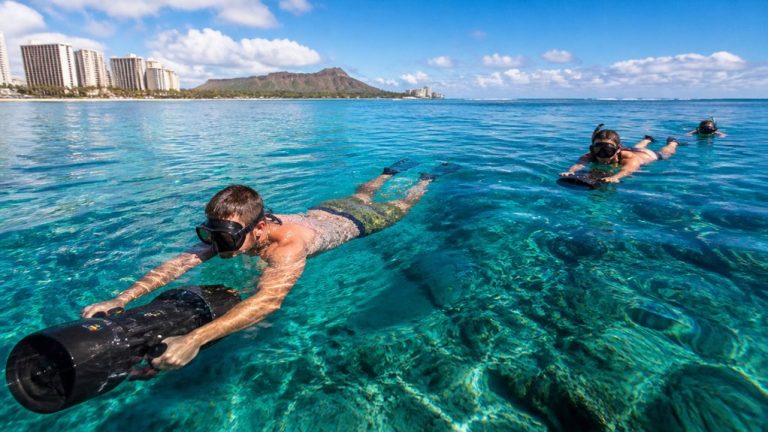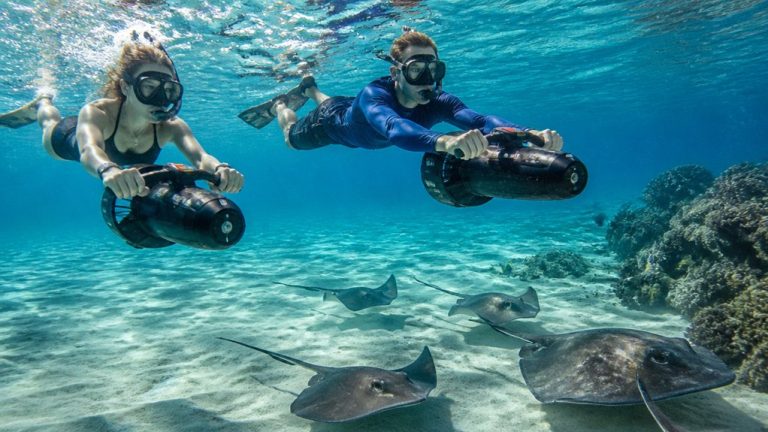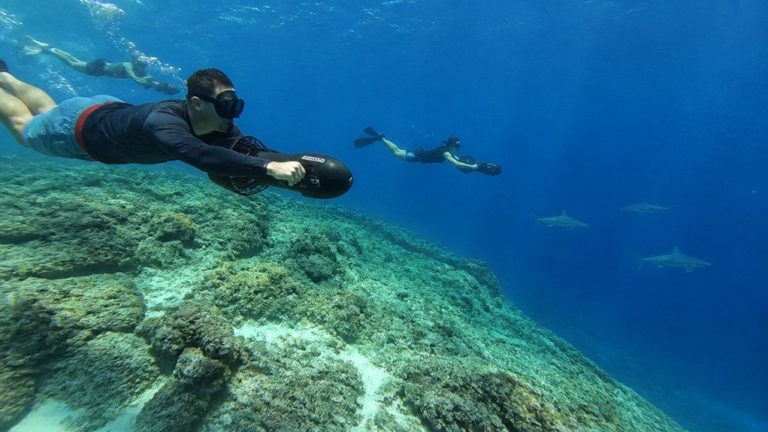
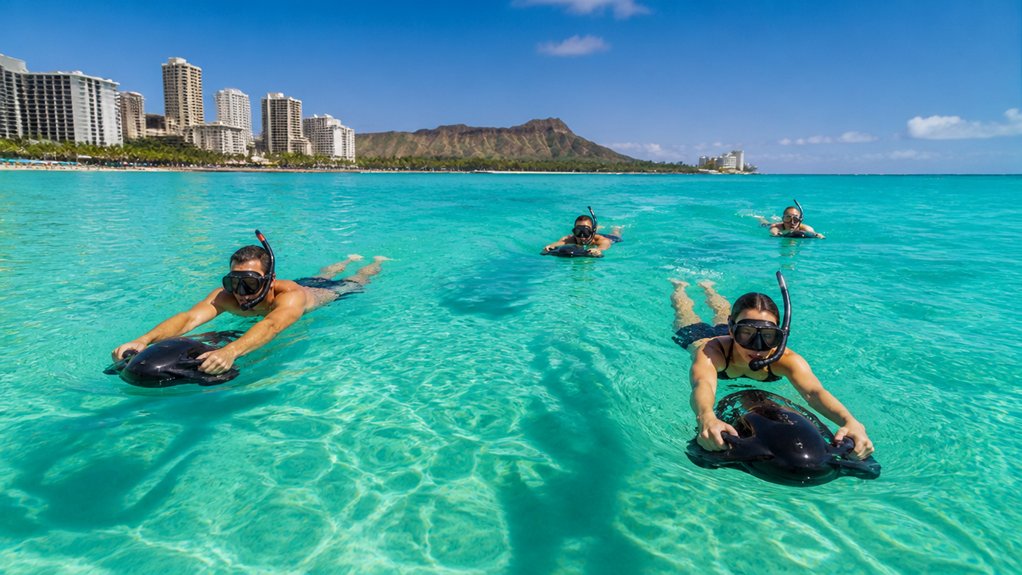
Clear or cloudy, Waikiki can change your sea scooter tour fast. On a calm summer morning, you might get 30 to 50 feet of visibility and watch reefs, bright fish, and maybe a turtle drift through the blue below your scooter. After rain or rough surf, that view can shrink to 10 feet and feel more like a surprise party for murky water. Timing matters here, and the best window isn’t always when you’d expect.
Key Takeaways
- Waikiki sea scooter tour visibility is typically 20–50 feet, with 30–60 feet possible on calm, clear mornings.
- Clarity can drop to 10–15 feet or less after heavy rain, strong surf, onshore winds, or large swells.
- Early morning tours, especially the first or second departure, usually offer the smoothest water and best visibility.
- Summer and several dry days generally bring clearer water, while winter swells and runoff often reduce sightlines.
- Tours stay shallow, often 8–10 feet deep, so even moderate visibility can still provide good fish and turtle views.
Waikiki Turtle Canyon Guided Snorkel: Turtle Guarantee
Choose Viator’s most-reviewed Turtle Canyon snorkel tour, with more than 4,800 traveler reviews and an experienced crew focused on a professionally...

Waikiki 2 hour Turtle Canyon Snorkeling Adventure
Join us for a 2-hour snorkeling adventure at Turtle Canyon, one of Oahu’s top snorkeling spots! Cruise along the s...

Oahu: The Magical Mystery Show! at Hilton Waikiki Beach Hotel
Step back in Hawaii's history to 1881 when King Kalakaua visited London. You've found the hidden gem of Oahu. This i...
Voted Honolulu's #1 Beginner Scuba Diving + Free Videos Tour
Try scuba diving in Honolulu with this easy, beginner-friendly ocean adventure at Magic Island, Ala Moana Beach Park...
How Clear Is Waikiki Water for Sea Scooter Tours?
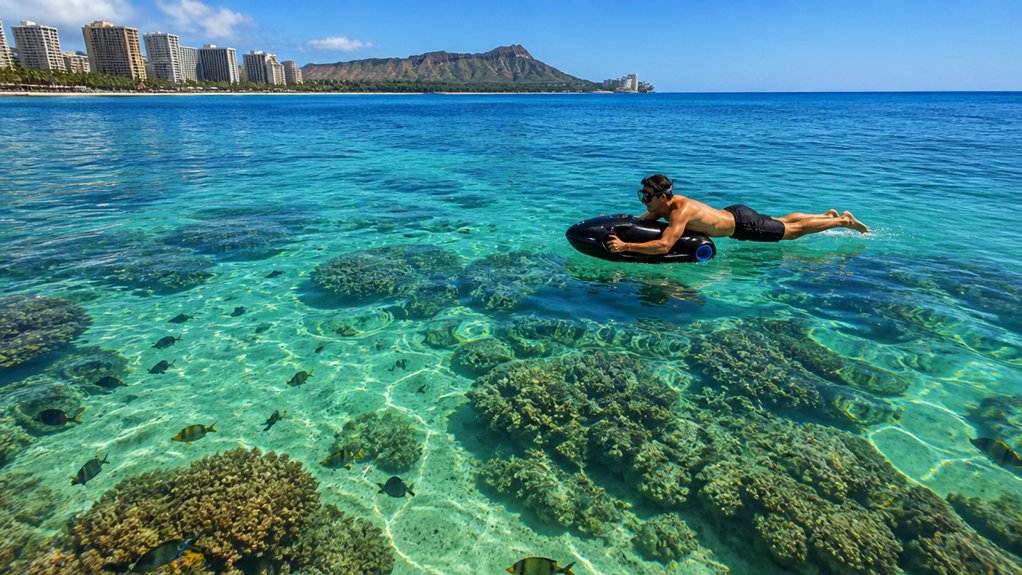
Often, Waikiki’s water looks clear enough that you can spot fish flashing below you before your sea scooter even hums to life.
For Sea Scooters, that means you’re usually gliding through crystal-clear water in calm, chosen launch spots where operators expect strong visibility. Crews often head toward places like Maunalua Bay or Turtle Canyon, where the surface feels silky and the underwater scene opens up fast. You might catch turtles cruising, reef fish flickering, and sunlight striping the bottom. Conditions still shift with rain, wind, and tides, so checking recent reports helps. If you book an early outing, you’ll often get the cleanest look below. Best time of day for sea scooter tours in Waikiki is often the morning, when calmer conditions can make the water appear even clearer. Even the motor’s soft buzz feels like an invitation to explore more of Waikiki’s blue world up close today.
What Visibility Is Typical in Waikiki?
Usually, you can expect underwater visibility in Waikiki to land somewhere around 20 to 50 feet on a good day, which is more than enough to watch reef fish dart past and spot a turtle before it glides out of view.
For a Sea Scooter ride, that range feels pleasantly roomy. You can track bright tangs over coral, see sandy patches open up below you, and keep your group in sight without squinting like a confused seal. Protected areas near reefs, and spots around Maunalua Bay by Koko Marina, often look clearer than more exposed shoreline. Still, visibility in Waikiki can swing fast. Surf, runoff, and strong currents may shrink the view to 10 or 15 feet, or less. Before booking, check local reports. Since Sea Scooter tours in Waikiki typically follow a set ride window, clearer water can make that limited time feel much more immersive.
When Is Waikiki Water the Clearest?
You’ll usually find Waikiki at its clearest on morning tours, when the water looks calmer, the surface stays smoother, and the reef comes into view with less chop. Your best odds come after a few dry days with light surf, especially in summer, since rain, runoff, and winter swells can cloud things up fast. Before you book, check the weather and swell report so you don’t end up peering through stirred-up sand and boat wake. That’s why best time to book often lines up with calm morning conditions, when visibility is typically at its strongest.
Best Time Of Day
The sweet spot for Waikiki water clarity is early morning, from sunrise to about 8:30 AM, when the sea is calmer, the winds stay light, and boat traffic hasn’t started churning things up.
If you want the best visibility for a Sea Scooter tour, book the earliest slot you can. On clear mornings, you may get 30 to 60 feet of sightlines, so reefs, fish, and sandy channels pop into view instead of fading into haze. That makes your snorkeling experience feel smoother and more relaxed too, especially before the beach fully wakes up. By late morning and afternoon, clarity often slips as the water gets busier and rougher on the surface. If you like fewer engines, early morning is your bet in Waikiki. For planning beyond the hour of the day, the best time of year for Sea Scooter tours in Oahu can also influence overall water conditions and visibility.
Weather And Surf Conditions
Beyond the early start, weather and surf shape how clear Waikiki looks once you’re in the water. You’ll usually find the best water clarity on calm trade-wind days, when winds stay under about 10 to 15 mph and the surface stays glassy, not choppy. In summer, especially from May through September, those smoother mornings can reveal 30 to 50 feet, with coral heads and fish appearing sharp below you. After heavy rain, though, streams and storm drains cloud the shoreline for 24 to 72 hours, so the ocean can look more latte than sapphire. A large swell can also stir sand, boost currents, and cut visibility to only a few feet. Winter brings that problem more often, making sea scooter rides less scenic, less productive, and sometimes better postponed until the water settles again. During stronger winter events, a building northwest swell and hazardous seas can further reduce Waikiki visibility even when the sky looks relatively clear.
Still comparing Turtle Canyon?
Ask for tour ideas, hotel suggestions, or a simple trip plan that combines both.
Trip Helper
What Makes Waikiki Water Less Clear?
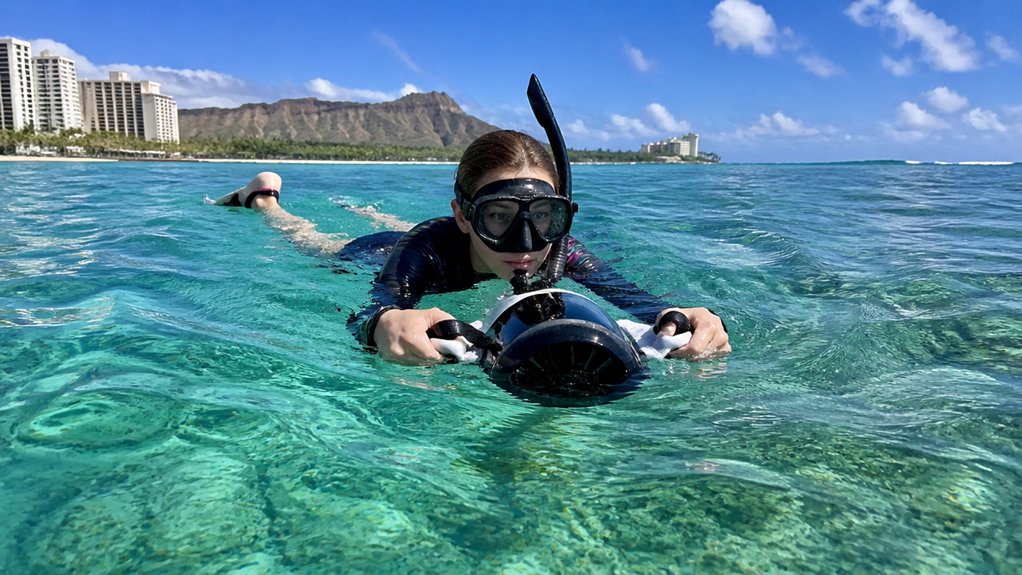
When Waikiki water turns less clear, a few very local forces usually team up to cloud the view.
You’ll often notice the change where swimmers, boats, and surfboards churn busy shallows. Their motion kicks sand and reef grit into the water, so visibility drops fast. Windier days and rougher surf can do the same, especially over sandy patches near the reef.
Human activity matters too. Construction, beach work, or dredging around Honolulu can release fine sediment that hangs in place. Nutrients from runoff and occasional sewage leaks can feed algae, which tints the water and dulls the scene. Heavy rain can also trigger Brown Water Advisory conditions when runoff from streams and storm drains carries silt, debris, and pollution toward the coast. If you’re gliding on a sea scooter, that means fewer crisp coral edges and more of a soft-focus postcard. Some days even paradise needs a rinse.
How Does Rain Affect Waikiki Visibility?
After a solid rain, Waikiki can shift from aquarium-clear to snow-globe murky in a hurry. You’ll notice the biggest drop in visibility when storms hit upstream or soak the windward slopes, because runoff carries silt into the nearshore water. On clear days, you might get 20 to 30 feet or more. After heavy rain, that can fall below 10 feet fast.
A brief shower usually doesn’t wreck conditions. If little runoff follows, currents and tides often clean things up within 12 to 48 hours. But if rain lasts, surf rises, or onshore winds kick up the bottom, cloudy water can linger for days. That’s why tour operators track recent rainfall closely. They may suggest rescheduling when visibility dips, since murky water can make your ride feel more mystery novel than postcard. If conditions stay poor, many operators recommend a rain reschedule so you can enjoy a safer and clearer sea scooter tour.
What Can You See on a Waikiki Sea Scooter Tour?
On a Waikiki sea scooter tour, you can glide past bright tropical fish, spot coral formations below you, and sometimes catch a Hawaiian green sea turtle cruising by like it owns the place. When the water’s calm, the visibility can feel almost perfect, so you get clear views near the surface and below it, often around 8 to 10 feet during guided sessions. Still, conditions and wildlife change from day to day, which is part of the fun because you never know exactly what will appear in the blue. For anyone new to the experience, a first timer walkthrough can help you know what to expect before heading underwater.
Tropical Fish Encounters
What swims into view on a Waikiki sea scooter tour? You’ll usually meet clouds of tropical fish almost right away. Crew members clip mesh food pouches near your Sub Scooter, and that simple trick brings small and medium reef fish close enough for crisp photos and eyed staring. In the often clear water off Waikiki, you can watch bright bodies flash and pivot within the usual 8 to 30 foot depth range. Some rides even include brief Sea Turtles sightings, though nature doesn’t punch a time clock and some days stay quieter. You may also spot a variety of reef fish commonly seen on Waikiki sea scooter tours. When conditions line up, the scene feels a little National Geographic, only with more bubbles and less narration. Either way, you get an intimate look at underwater life without needing diving skills.
Turtle And Reef Views
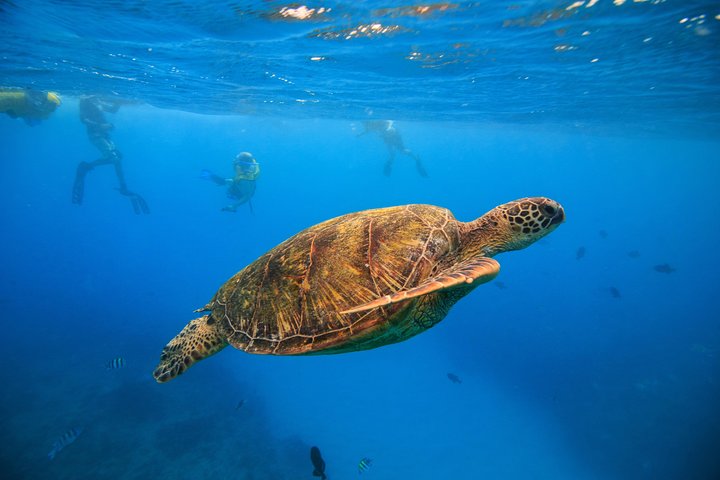
Glass-clear water is the real scene-stealer here, because it lets you scan the reef edges for movement instead of peering into blue haze. On a calm ride, you can spot a turtle gliding above patchy coral reefs, then watch reef fish flicker through the shallows. Tours usually stay around 8 to 10 feet down, so your view feels close and immediate when water clarity stays high. You won’t get a turtle guarantee, of course. Wildlife likes to keep its own schedule. Many riders book Sea Scooter Tours Oahu specifically for the chance to glide with sea turtles in Waikiki’s clear water.
- A green shell tilts, then vanishes past sunlit rock.
- Yellow fish spark around food pouches like confetti.
- Reef edges ripple with color, texture, and the occasional surprise guest.
On the best days, Waikiki feels like an aquarium with better stories.
Underwater Visibility Conditions
Because Waikiki often serves up visibility in the 30 to 50 foot range on calm days, you can usually see far enough to spot reef shapes, cruising turtles, and schools of fish before you’re right on top of them. Recent reports even call the water clarity perfect, and that matters when you’re gliding underwater on a sea scooter. On sunny days with light wind and no recent rain, visibility often feels wide open. If swell rises or runoff clouds the water, you’ll still get close views because guides bring fish and turtles nearer with food pouches. Waikiki usually looks clearer than muddier spots around Oahu, and the warm water helps you relax, stay immersed, and notice color, movement, and tiny reef details below you. Most sea scooter tours in Waikiki stay fairly shallow, which helps preserve these clear views while keeping the experience comfortable for beginners.
How Should You Book for the Clearest Conditions?
Usually, you’ll get the clearest water if you book the first or second tour of the day, when Waikiki and Maunalua Bay are often calmer and visibility is at its best.
To improve your odds, book smart:
- Pick a morning departure from Maunalua Bay toward Turtle Canyon and Diamond Head. You’ll picture blue water, bright reef edges, and turtles gliding below.
- Skip dates after heavy rain or onshore winds. Runoff can cloud the water, and debris can turn your underwater view into a mystery novel.
- Ask the operator about recent visibility, calm swell forecasts, and flexible rebooking. If conditions look murky, a refundable option lets you wait for that glassy, postcard-clear day and keep your sea scooter ride feeling more aquarium than snow globe.
A Sea Scooter Adventure in Waikiki is easiest to enjoy when early bookings line up with calm water and strong visibility.
Frequently Asked Questions
Are Sea Scooter Tours Suitable for First-Time Snorkelers?
Yes, you’ll find sea scooter tours suitable for first time snorkelers because guides prioritize Beginner comfort, provide guided instruction, and help you explore shallow reefs. You don’t need swimming skills, and safety gear supports you.
What Should I Bring on a Waikiki Sea Scooter Tour?
You should bring swimsuit, towel, photo ID, reef-safe sunscreen or Sunscreen alternatives, sunglasses, motion-sickness meds, and a Dry bag. Pack Waterproof snacks and a waterproof phone case. You can bring snorkel gear or use theirs.
How Long Do Waikiki Sea Scooter Tours Usually Last?
Waikiki sea scooter tours usually last about 2 hours, though Duration options vary. You’ll also want 30 minutes for check-in. Private charters can run longer, and Sunset departures follow similar timing with added scenic views.
Are Children Allowed on Waikiki Sea Scooter Tours?
Yes, you can bring children on Waikiki sea scooter tours, even if you’re worried about safety. Operators set age limits, require parental supervision, and give child a safety briefing; check height, weight, and health rules first.
Do I Need to Know How to Swim for Sea Scooter Tours?
No, you don’t need to know how to swim for sea scooter tours. You do need water confidence, though, since you’ll go underwater. Guides give safety briefings, provide flotation devices, and help you throughout safely.
Conclusion
Book the earliest tour you can, especially after a few dry days, and Waikiki usually rewards you. The surface turns glassy. The scooter hums. Then the blue opens, first to pale reef, then to silver fish, and maybe the slow shape of a turtle slipping past. On rough or rainy days, that scene can shrink fast into a green blur. Pick your timing well, and you won’t just ride. You’ll watch the water reveal its secrets inch by inch.

Oahu: Kualoa Ranch UTV Raptor Tour
Traveling with family and friends? You can enjoy the fantastic Multi-passenger UTV Raptor experience with your entire family or as a group with the ex...

Waikiki Turtle Canyon Snorkel Turtles Guaranteed
Book our Turtle Canyon snorkel tour and experience one of Waikiki’s most popular turtle snorkeling destinations! D...
Waikiki: Turtle Canyon Snorkel Adventure on Oahu
Enjoy an exclusive snorkeling adventure in Waikiki with small group sizes for a comfortable and VIP experience. You...

Oahu: Grand Tour Around Island with Snorkeling
Come join on a circle island adventure led by some of Hawaii’s most knowledgeable local guides and experience brea...