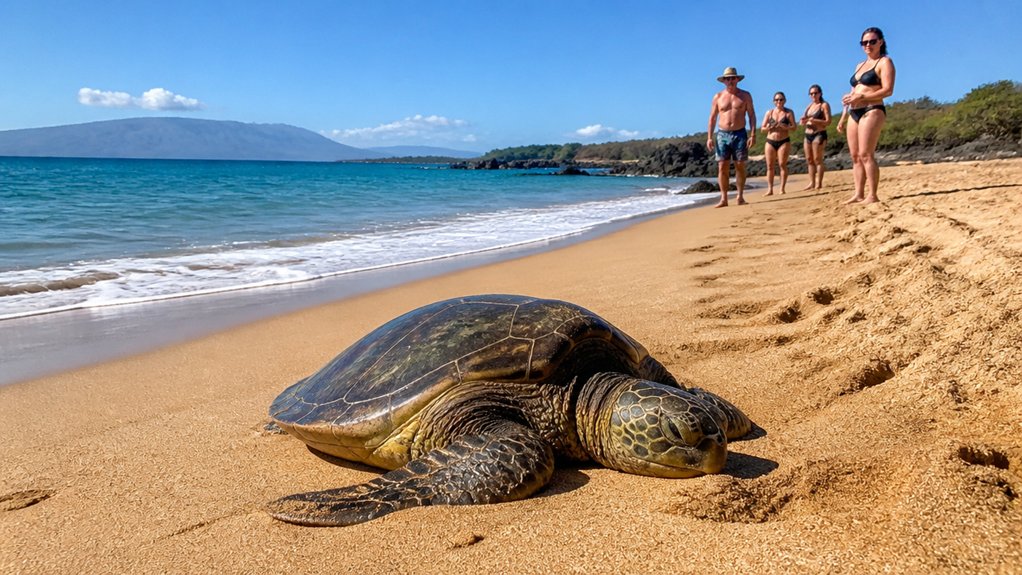
In Hawaii, you should treat sea turtles like honored locals and give them space. Stay at least 10 feet away on the beach and in the water, even if one looks calm as a sun-warmed rock. Don’t touch, feed, chase, or corner it while it surfaces to breathe. If a turtle changes course because of you, you’re too close. The simple rule sounds easy, but a few common mistakes catch visitors off guard.
Key Takeaways
- Stay at least 10 feet from sea turtles on beaches and in the water; some posted areas recommend 20 feet for extra safety.
- Never touch, chase, feed, corner, ride, or block a turtle, because disturbing them is illegal under the Endangered Species Act.
- If a turtle approaches while snorkeling or swimming, stay still or back away slowly and never swim above it or cut off its path.
- Keep at least 10 feet from nests and hatchlings, stay out of marked nesting zones, and avoid bright lights at night.
- From boats, give turtles a much wider buffer, idle down, shift to neutral, and move away slowly if one is nearby.
What’s Hawaii’s Sea Turtle Distance Rule?
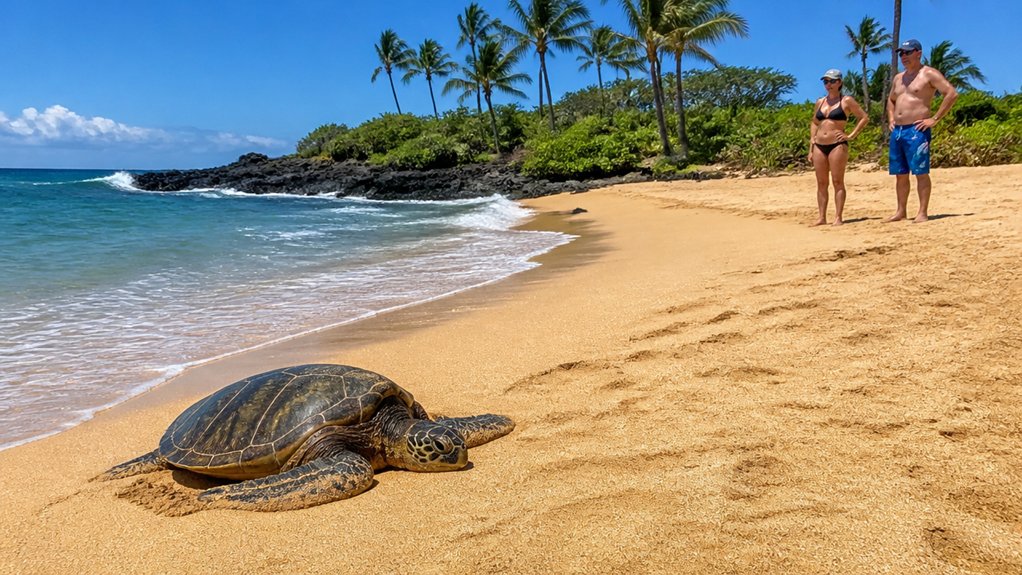
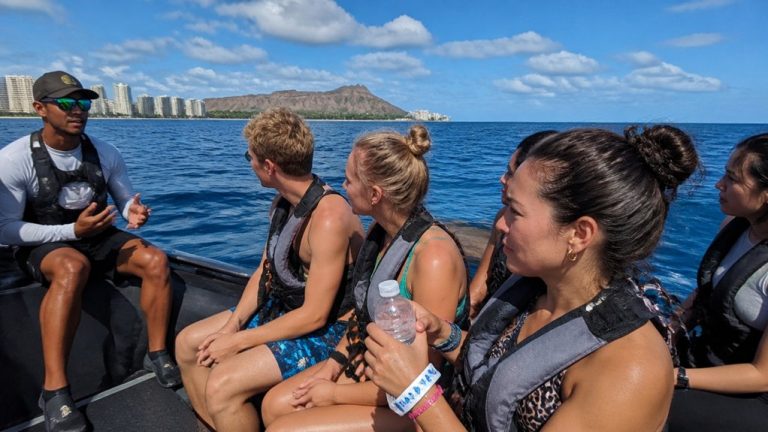
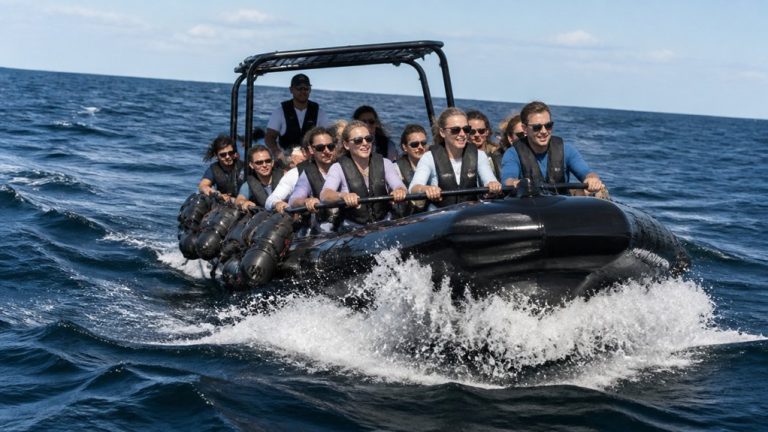
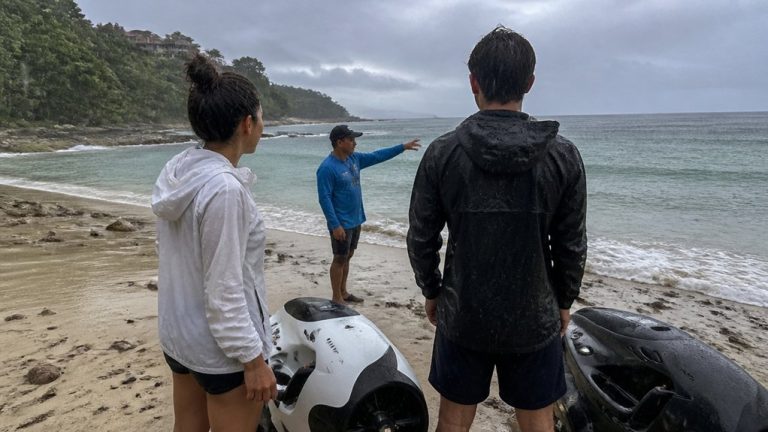
A good rule to remember is simple: give Hawaii’s sea turtles at least 10 feet of space on the beach and in the water, even though many posted signs ask for 20 feet to be extra safe. That means you should keep at least the minimum buffer whenever you watch one resting on sand or gliding through clear surf. On Oahu, some visitors book sea scooter tours to watch sea turtles more smoothly in the water while still giving them space. Under the Endangered Species Act, you can’t touch, chase, corner, or otherwise interfere with a turtle, and fines can be steep. For you, the easiest test is visual: stay least 10 feet away, let the animal move naturally, and enjoy the moment without turning it into a photo op circus. Think of that cushion as respectful room, not a suggestion for wildlife in busy places.
When the 10-Foot Rule Applies
You need to keep that 10-foot buffer any time you’re near sea turtles, whether you’re swimming through clear water, snorkeling over reef, wading in the shallows, or walking the beach. It matters on shore too, especially when turtles are resting on warm sand or, from late April through December, when adults, nests, and tiny hatchlings need extra space and darkness. If one glides your way or you’re lining up a photo from shore or a boat, don’t edge closer, just back off slowly and let the turtle keep the starring role. Use binoculars or camera zoom to maintain the 10-foot distance without disturbing resting or basking behavior.
In Water Encounters
In the water, the rule is simple: keep at least 10 feet, or 3 meters, between yourself and any sea turtle at all times. To keep distance from sea turtles, stay at least that far away, even if one glides over like a curious neighbor. You don’t need a selfie. The view is better when you simply watch the shell flash bronze below. Good underwater filming means observing without chasing or crowding the turtle for a better shot.
- If a turtle approaches, stay calm. Back away slowly or float still until it passes.
- Never touch, feed, block, or ride one. Protected turtles can bring serious fines.
- Don’t swim above a turtle or cut between it and the surface. It needs room to breathe.
- Keep lights, splashing, and noise low. Quiet water feels better for wildlife, and for you too.
Beach And Nesting Areas
Back on shore, the same 10-foot rule still holds, and it matters even more during nesting season from late April through December. You should keep distance from sea turtles by staying at least 10 feet (3 meters) from nesting adults, nests, and hatchlings. Stay on marked paths and out of turtle nesting zones, where soft sand hides eggs and dune plants hold the beach together. Skip flash, bright lights, and sudden moves so hatchlings can find the surf by moonlight. If a turtle heads your way, step back calmly and reopen that buffer. See a disturbed nest, an injured turtle, or someone crowding one? Call NOAA at 800-853-1964 instead of playing lifeguard. You’ll protect a remarkable ritual, and you’ll get a view of calm ancient determination. Before visiting, check current beach conditions so you can stay aware of changing ocean and shoreline conditions.
What to Do if a Turtle Approaches
If a sea turtle glides your way, stay cool and slowly back off until you’ve restored at least 10 feet of space. You’ll help protect its natural routine and give it room to surface, breathe, and keep cruising without a human traffic jam. Keep your movements quiet and easy, and let the turtle choose its own path. This 10-foot distance is the respectful viewing space recommended by NMFS to help avoid stressing or disturbing the turtle.
Move Away Calmly
When a sea turtle glides your way, stay cool and give it room. Your job is simple: keep distance from sea turtles and move away calmly. In the water, stay horizontal and ease back with slow kicks. On shore, step back quietly. No splashing, chasing, or blocking its path. Turtles need clear space to breathe, and panic helps nobody. Remember that sea turtles are protected under the ESA, and harassment or harm is illegal.
- Swim or back away until you reach the 10-foot (3-meter) minimum.
- Keep your movements smooth, quiet, and boring, like reef-safe ballet.
- Don’t grab gear or make noise that startles the turtle.
- From a boat, idle down, shift to neutral, and ease off slowly.
If it’s nesting or hatchlings are hustling seaward, give even more room and slip away quietly so tiny flippers can work uninterrupted.
Restore Safe Distance
A curious turtle can close the gap faster than you’d think, so your move is simple: stay calm and slowly create at least 10 feet, or 3 meters, of space. Pause, float quietly, and let the water settle. Don’t reach, splash, or wave. If you’re snorkeling or diving, level your fins and ease backward while facing the turtle, so you don’t block its path to the surface.
Your job is to keep distance from sea turtles, not direct traffic. Move yourself out of the immediate area and never chase, corner, or never touch. Keep 10 feet (3 meters) between you and that cruiser. If it starts darting, changing direction, or staying down too long, back off farther and report any harassment to wildlife authorities. The same reef etiquette applies on sea scooter tours in Hawaii: keep your movements controlled and avoid disturbing marine life or sensitive coral areas.
Give Sea Turtles Room to Breathe
For the best view, give sea turtles plenty of space and let them handle the hard part of being reptiles in the ocean: coming up for air. On shore or underwater, keep distance from sea turtles and stay at least 10 feet, or 3 meters, back. A green sea turtle needs a clear lane to surface, then glide back to deeper blue water. Healthy reefs also matter here, because coastal protection and clean nearshore habitat help support the marine ecosystems sea turtles rely on.
- If one swims near you, move slowly away and rebuild the 10-foot buffer.
- Give surfacing turtles the least away from stress, splash, and noise that you can manage.
- From kayaks or boats, slow to no-wake and shift into neutral.
- Quiet water lets you hear each breathy exhale and see the shell flash bronze in the sun before it slips under again.
Never Touch, Chase, or Block Turtles
Hands off, and let the turtle call the shots. In Hawaii, you should never touch a sea turtle. It’s illegal to harass, interfere with, or feed one under federal and state law, and fines can sting harder than sunburn. While topics like shark sightings may come up on Waikiki sea scooter tours, turtle etiquette still starts with giving marine life plenty of space. Keep distance from sea turtles by staying at least 10 feet away on shore or in the water. From a boat, give them a much wider 50-yard buffer.
Don’t chase, block, corner, or surround a turtle. If you cut off its path to open water or the surface, you can cause stress and even put it at risk of drowning. Skip the lure of snacks too. Feeding changes natural behavior and invites trouble. If a turtle suddenly turns, speeds up, or dives longer, you’re too close. Back off and relax.
How to Snorkel Near Sea Turtles Safely
While it’s thrilling to spot a sea turtle gliding through clear Hawaiian water, your best move is to slow down and give it space.
- Keep distance from sea turtles by staying at least 10 feet, or 3 meters, away at all times.
- Float quietly or tread water. Move slowly beside the turtle, never above it, and respect their space.
- Skip flash photos. Use optical zoom so you catch the shell’s bronze patterns without changing its behavior.
- Wear reef-safe sunscreen and use a float if you need one. Short viewings work best, and they let the turtle return to grazing, surfacing, or resting. You’re a guest here, fins and all. Watch bubbles, hear the hush, and leave room for easy breaths.
On some Oahu snorkel outings, you may also spot gliding rays moving calmly below, so the same slow, respectful approach helps protect all marine life.
Why You Should Never Feed Turtles
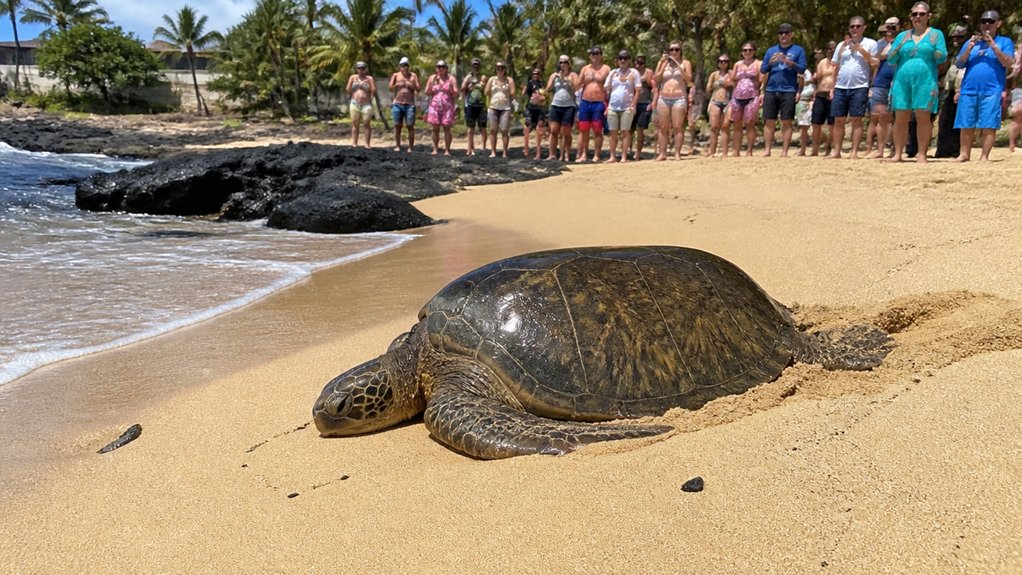
It may seem kind to toss a turtle a snack, but don’t do it. When you feed turtles, you change how they hunt and graze. Soon they start looking to people instead of reefs and seagrass. That’s why feeding them is illegal under the Endangered Species Act.
Handouts can upset a turtle’s diet and make disease spread faster through crowded groups. Fed turtles also cruise closer to boats, lines, and busy shorelines, where propellers and hooks don’t forgive mistakes. You can help by keeping at least 10 feet away in the water or on the beach. Use your camera zoom instead of snacks. You’ll get better photos anyway, with gliding flippers, dappled shells, and no awkward begging at all for everyone watching nearby too. After heavy rain, avoid murky shoreline water because Brown Water Advisory conditions can carry animal waste, chemicals, and other pollutants that raise illness risk for people and wildlife alike.
Stay Away From Nests and Hatchlings
During Hawaii’s nesting season, from late April through December, give sea turtle nests and hatchlings plenty of room and keep at least 10 feet away. If you’re planning nearby ocean activities, ask about tour accessibility in advance so protected nesting areas and beach access routes stay undisturbed.
- Look for large sand pits, ropes, and signs. They mark sea turtle nests, so don’t walk, sit, or drop towels nearby.
- On busy beaches, stay at least 10 feet (3 meters) away and use designated paths. Soft sand hides fragile eggs.
- If you spot hatchlings heading seaward, don’t touch them or block their tiny sprint. Give them a clear corridor.
- Keep pets leashed and well back. If a nest is damaged, or people crowd the area, call wildlife authorities and wait for help. You’ll protect mothers, eggs, and hatchlings, and you might witness one of Hawaii’s quietest, coolest beach dramas.
Avoid Lights and Other Common Mistakes
Once the sun drops, your best move is simple: keep the beach dark. During nesting season, that means you should avoid lights from flashlights, phone screens, headlamps, and flash photography. Even a quick glow can pull nesting females off course and send hatchlings wandering the wrong way.
Skip bonfires and bright LED lamps near nesting areas too. Light and heat can change nest temperature and confuse hatchlings looking for the surf. If you must walk the beach at night, use a shielded amber or red light and point it away from the shoreline. For daytime coastal outings, choose reef-safe sunscreen to help protect Hawaii’s marine environment during ocean tours. Close curtains, switch off exterior lights, and remember that distant car beams still matter. Give nest sites at least a 10-foot buffer, preferably more. Sea turtles don’t need your spotlight. They need moonlight and darkness.
Frequently Asked Questions
Are There Fines for Getting Too Close to Sea Turtles in Hawaii?
Yes, you can face fines for getting close to sea turtles in Hawaii; legal protections ban harassment. You should follow observation tips, keep distance, and know penalty amounts can reach hundreds or thousands, plus charges.
Which Sea Turtle Species Are Most Commonly Seen While Snorkeling in Hawaii?
You’ll most often see Green sea turtles while snorkeling in Hawaii; you might occasionally spot a Hawksbill turtle, but Loggerhead sightings are rare. You can find juvenile greens in lagoons and adults grazing shallow reefs.
Who Should I Contact if I Find an Injured Sea Turtle?
Call NOAA’s Wildlife hotline at 1-800-853-1964 first, Hawaii’s sea turtles make up over 90% of sightings. You can also contact Local rescue through DLNR or Maui responders, and follow Documentation protocol: note location, behavior, injuries, photos.
Are Guided Snorkeling Tours Better for Responsible Turtle Viewing?
Yes, you’ll usually view turtles more responsibly there on guided tours because Certified guides enforce distance rules, Small groups reduce pressure, and Educated briefings teach you not to touch, chase, or crowd wildlife while snorkeling safely.
Do Sea Turtles Behave Differently During Certain Seasons in Hawaii?
Yes, you’ll notice sea turtles act differently by season in Hawaii: migration patterns shift, nesting behavior peaks from spring through fall, and feeding changes follow food availability, so you should expect more shoreline activity there.
Conclusion
When you give Hawaii’s sea turtles at least 10 feet of space, you protect a wild moment that’s easy to enjoy and hard to forget. A green sea turtle can hold its breath for up to 5 hours while resting, so that calm head lift you spot near the surface is just a tiny part of its day. Keep your fins back. Let it pass. You’ll get the better view anyway, with less splashing and no turtle side-eye.