If you don’t swim and still want to see Waikiki underwater, a sea scooter tour sounds almost too easy. You step onto a boat, pull on a life jacket, and lower into the water with a dry helmet that keeps your face out of the ocean. Fish flicker past. Bubbles hum in your ears. You ride only about 7 to 8 feet down, but that simple number doesn’t answer the real question: how does it actually feel once you’re there?
Key Takeaways
- Non-swimmers can usually join Waikiki sea scooter tours because life jackets, dry helmets, and close guide support remove the need for swimming skills.
- Expect a shallow, gentle ride about 7–8 feet underwater, with no hard descent and a slow, easy-to-control scooter pace.
- The helmet rests on your shoulders, keeps your head dry, and lets you breathe normally through your nose or mouth.
- Actual scooter time is often about 20 minutes, while the full tour usually lasts around two hours including boat ride and briefing.
- Most operators enforce age, height, and weight limits, so check requirements carefully before booking for kids or larger participants.
Is a Waikiki Sea Scooter Tour Realistic for Non-Swimmers?
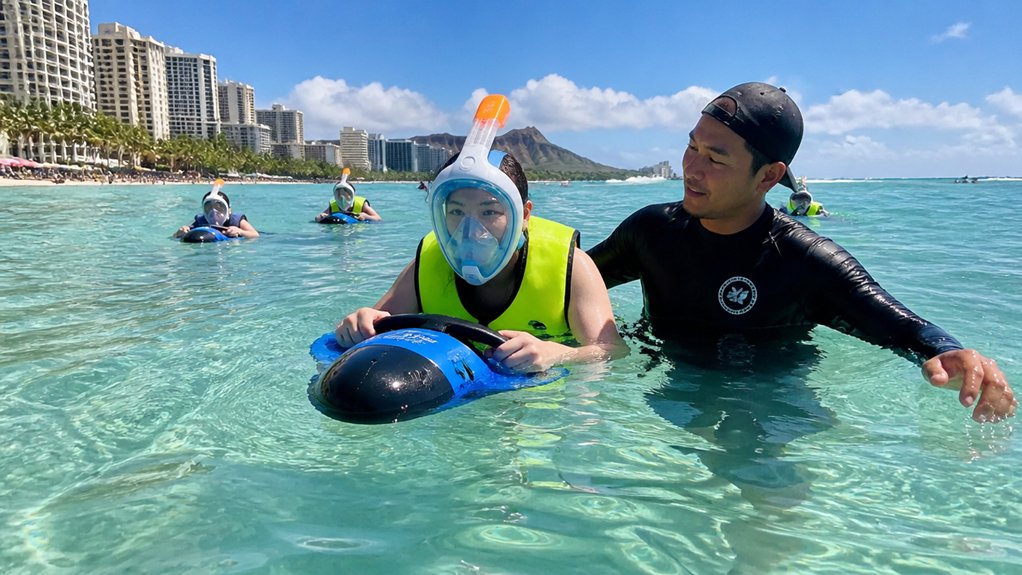
At first glance, a Waikiki sea scooter tour might sound like something only confident swimmers can do, but it’s actually built with non-swimmers in mind. You stay dry under a roomy glass helmet with its own air supply, and guides remain close the whole time. Tours openly welcome non-swimmers, with life jackets, crew supervision, and easy boarding from a stable catamaran. The Underwater Scooter ride is slow and low effort, so you don’t need strokes, fins, or any ocean swagger. Brief safety orientation and in-water help keep you comfortable. Most riders just settle in, listen to bubbles, and watch blue water slide past. Visibility and wildlife can vary, but turtles and tropical fish often appear. If you want snorkeling, flotation and amenities remain available. Knowing what to expect step by step can also make the whole experience feel much more manageable for first-time riders.
How Does a Sea Scooter Tour Work?
You slip under the surface in a clear bubble helmet that keeps your head dry while onboard oxygen lets you breathe normally, which feels a little sci-fi in the best way. As the crew lowers your battery-powered scooter to a comfortable depth, you tap a simple switch to glide forward and watch Waikiki’s blue water open around you. You don’t need to swim because trained guides stay with you the whole time, help with the up-and-down movement, and keep the ride calm, steady, and easy to enjoy. For many first-timers, the underwater scooter tour feels surprisingly simple once the crew explains each step before you enter the water.
Helmet And Breathing
Because the sea scooter uses a large clear diving-bell helmet, breathing feels surprisingly normal even underwater. Your head stays dry inside the Breathing Observation Bubble, or BOB, while air pressure keeps water out. You can breathe through your nose or mouth without a snorkel. That simple detail matters a lot if you’re nervous.
- The helmet seals around your shoulders, not your face, so you don’t bite anything.
- Air comes from an onboard supply or steady feed for the roughly 20-minute session.
- Guides stay close, watching your breathing, checking equipment, and helping fast if comfort changes.
- You wear a life jacket during surface transfers, which adds one more layer of reassurance.
Inside the helmet, voices sound muffled, bubbles drift past the clear visor, and the whole setup feels oddly calm. In Waikiki, many tours begin from Kewalo Basin Harbor, so guides typically explain the helmet and breathing setup before you enter the water.
Descent And Steering
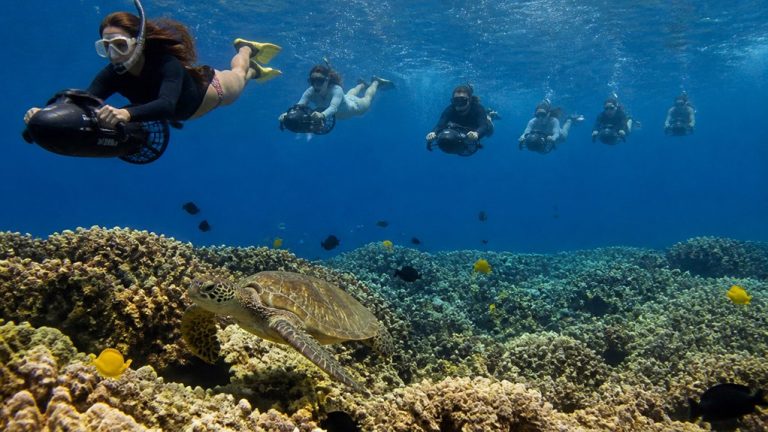
Once everyone’s set, the guide eases your small group down together until the scooters settle in that shallow, easy zone beneath the surface. Then your submarine scooter feels simple. You keep your head dry inside the bubble helmet while the 12-volt motor nudges you forward. A basic throttle helps you glide and turn at a pace, more reef cruise than race. You’re usually 7 to 8 feet down, so the water feels close, blue, and bright. Most Waikiki sea scooter tours last about 20 to 30 minutes in the water, so the ride stays manageable for beginners.
| You notice | What it means |
|---|---|
| Gentle drop | No dramatic plunge |
| Slow throttle | Easy steering |
| Wide turns | Relaxed pace |
| Shallow depth | Better views |
| Quiet hum | Calm ride |
Guide Support And Safety
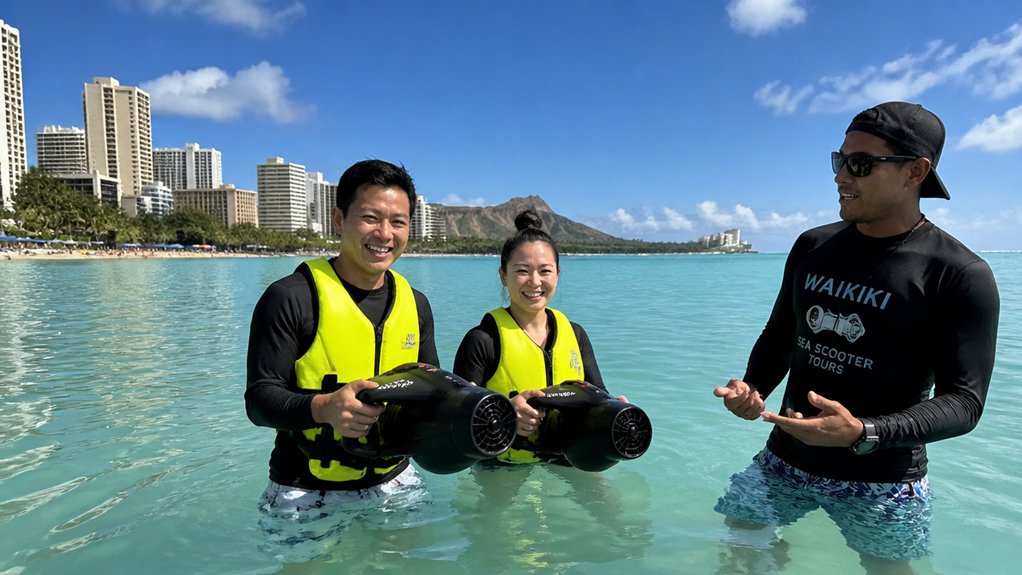
Usually, the part that surprises first-timers most is how close the guides stay from start to finish. Before you enter the water, the crew walks you through breathing, mask checks, scooter controls, and what to do if you feel uneasy. Once you’re in, a guide helps fit your big helmet, checks the oxygen supply, and manages your ascent and descent. If you don’t swim, that’s fine. You wear life jackets, follow flotation steps, and get steady hands nearby whenever your feet leave the bottom. It feels organized, not chaotic. Many first-time riders ask these safety questions in advance, which is exactly why the crew explains each step so clearly before you begin.
- One guide stays with your small group underwater.
- Professional divers fix masks, snorkels, and scooter gear fast.
- If seasickness or panic hits, they escort you back calmly.
- The whole setup feels more like a supervised glide than a dare.
How Do Non-Swimmers Breathe Underwater?
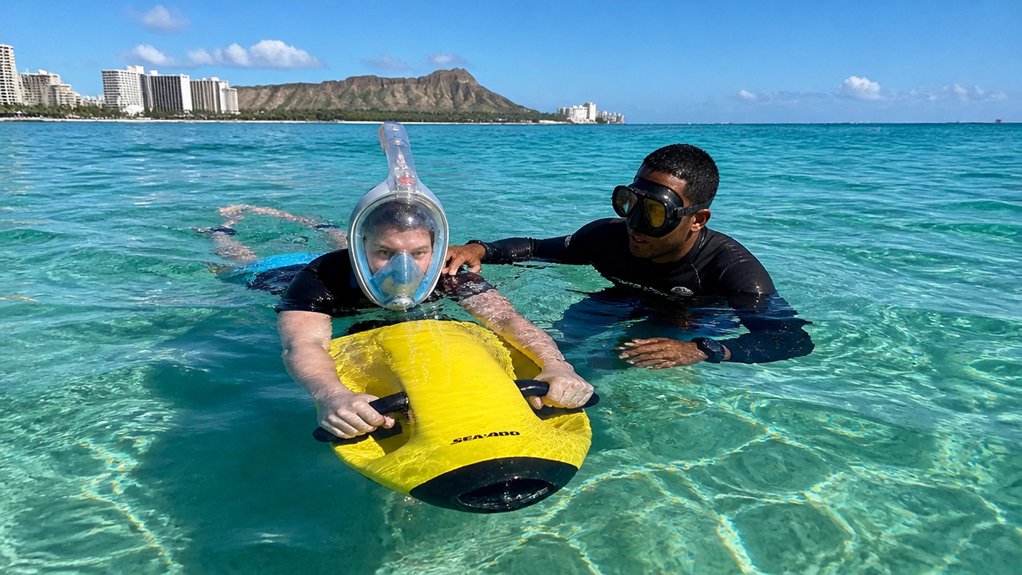
How does a non-swimmer breathe underwater on a Waikiki sea scooter tour? You use a dry-diving helmet that keeps your head dry and fills the clear bubble with breathable air. You breathe normally through your nose and mouth, so there’s no snorkel, no regulator, and no fancy training. The air keeps moving, excess carbon dioxide vents out, and guides watch the flow the time.
Tour operators also explain sea scooter safety before you ride so non-swimmers know what to expect underwater. You don’t need dive certification, but you do need to stay calm with your head enclosed and follow simple entry and exit instructions. If the helmet feels odd at first, that’s normal. You’ll hear bubbles, see fish slide past, and feel crew nearby. Quick-release fittings and support let guides help if you feel short of breath or want to surface.
How Deep Does the Sea Scooter Tour Go?
You won’t go far below the surface on most sea scooter tours, and that’s the point: you usually cruise about 7 to 8 feet down, with your head dry inside the helmet. Some operators may take you closer to 10 feet, while other related scooter setups advertise deeper runs, so you’ll want to check the exact tour before you book. In Waikiki, sea scooter tour depth varies by operator, but the experience is generally designed to stay shallow and approachable. As you ease down from the bright, choppy surface into calmer water, you’ll notice the noise soften, the view sharpen, and the whole ride feel a bit like floating through an aquarium with handlebars.
Typical Riding Depth
Often, the sea scooter tour takes you only about 7 to 8 feet below the surface, so it feels more like a gentle glide into the bay than a thorough exploration. Your helmet keeps your head dry, so you breathe normally and focus on fish, reef, and light moving across the water.
- You usually ride at a guided shallow depth, not wherever you want.
- Crew manage ascent and descent for small groups of four or five.
- Some operators mention 10 to 30 feet of water at the site.
- Your actual sea scooter viewing time is often about 20 minutes.
That makes the ride feel calm, visible, and easy to handle. Think scenic underwater window, not deep-sea mission. Many Waikiki tours emphasize this comfort-first, shallow-depth setup to keep the experience approachable for beginners. You’ll surface smiling, maybe surprising yourself afterward.
Surface-To-Depth Differences
Just below the sun-glittered surface, the sea scooter usually drops you to about 7 to 8 feet down, which feels surprisingly shallow once the helmet seals and the water goes quiet. From the boat, Maunalua Bay looks bright and open. Underwater, colors shift bluer, visibility can soften, and turtles seem to glide out of nowhere. On Kewalo Basin tours, operators similarly keep sea scooter experiences in shallow, guided areas designed for easy sightseeing rather than deep diving. Guides keep your group steady, so you sightsee instead of sinking into the abyss.
| Spot | Surface | Scooter depth |
|---|---|---|
| Light | Sparkly and warm | Bluer and calmer |
| View | Wide horizon | Reef close-up |
| Control | You bob around | Crew holds depth |
Most rides last about 20 minutes, with helmet airflow matched to that shallow zone, and routes stay near reef-rich areas, not deep drop-offs, unless conditions turn murky and the crew pauses today.
Why Does a Waikiki Sea Scooter Tour Feel Easier?
Usually, a Waikiki sea scooter tour feels easier because the hard parts of ocean swimming get handled for you. You breathe normally inside a dry BOB helmet, ride seated 7 to 8 feet down, and let slow self-propelled scooters do most of the work.
- Your head stays dry, so saltwater splash and snorkel timing don’t distract you.
- The steady 12-volt glide cuts effort, noise, and that wild flailing feeling.
- Step-by-step entry helps you float first, breathe second, then look down at fish.
- Physical support around your head and body softens the classic feet-off-bottom panic.
Because the helmet supplies normal breathing in dry air, many beginners feel calmer than they do while snorkeling.
Instead of kicking hard, you cruise gently past coral, bubbles, and flickers of silver light. It feels more like a calm underwater chairlift than a swim for first-time ocean explorers.
What Safety Help Do Guides Provide?
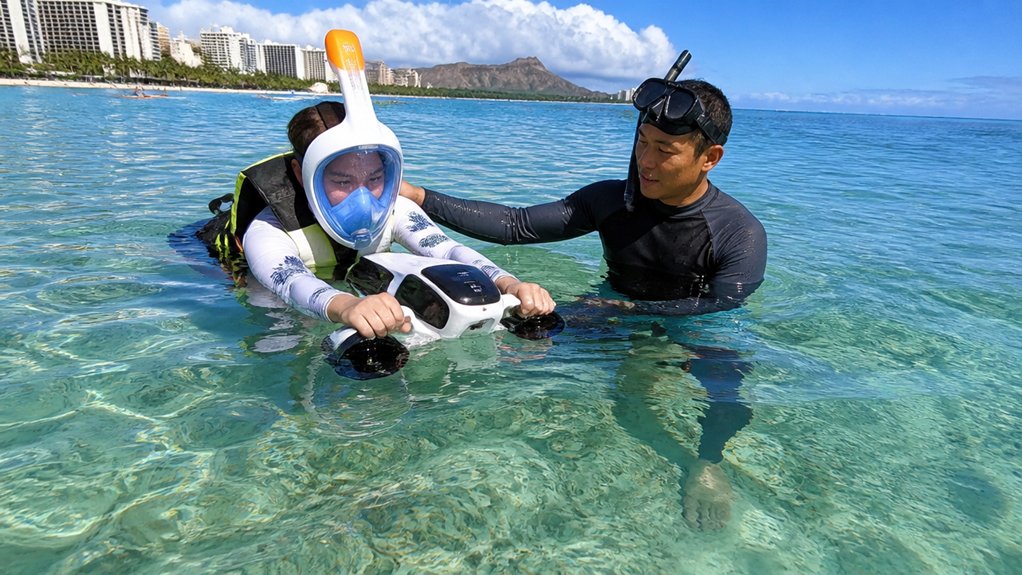
Watch how quickly the guides turn nerves into routine. Before you board, they walk you through helmet seals, breathing, hand signals, emergency steps, and simple limits like height, weight, and comfort checks. Once you’re in the water, trained guides stay beside your Scooter group, usually just four or five riders, so help is always within arm’s reach. They adjust helmet fit, steady your steering, and control the ascent and descent while watching for stress. If you don’t swim, they’ll offer a life jacket or flotation support and keep surface supervision tight during snorkeling. On the boat, the staff ratio stays high, wetsuits come out when needed, and someone will usually notice seasickness before you finish saying, “I feel a little green out here today.” It also helps to follow the operator’s check-in timing guidance so staff have enough time to fit gear, review safety steps, and answer last-minute questions before the Sea Scooter tour begins.
Can Kids Join a Waikiki Sea Scooter Tour?
That close guide support also makes these tours a realistic option for families, because many Waikiki sea scooter operators welcome kids ages 10 and up. If your child meets the usual rules, often at least 4 feet tall and under 350 pounds, they can usually join without swimming experience. In Maunalua Bay, kids stay dry inside the helmet and ride about 7 to 8 feet down while guides manage depth.
- Small groups, usually 4 to 5 riders, keep supervision tight.
- Underwater scooter time runs about 20 minutes per session.
- Life jackets help on the surface, and wetsuits add warmth.
- Operators enforce age, height, and weight limits.
You should still book early and double check restrictions. Brown water advisories or other safety issues can change plans fast. Kids steer slowly, no racecars here. Some Oahu tours also give families a chance at sea turtles sightings during the experience.
What Sea Life Might You Actually See?
Often, the first thing you notice below the surface is a swirl of bright reef fish darting right up to your scooter, drawn in by the small food pouch clipped to the front. That setup brings fish close for easy photos and makes the scene feel more active than standard snorkeling in Oahu. Many guests are surprised by how many reef fish appear early in the tour, especially in the calmer areas commonly used on Waikiki sea scooter outings.
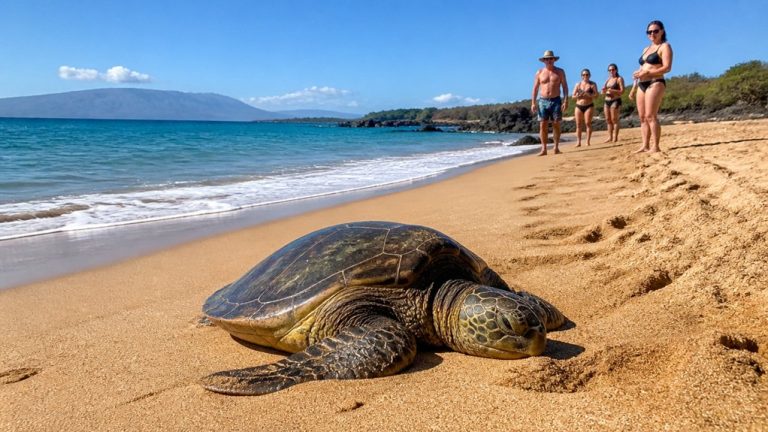
You might also spot a Hawaiian green sea turtle gliding past, which happens often on Maunalua Bay tours, though it’s never guaranteed. Some days guides also find octopus or sea stars. Other days, you mostly see schooling fish in open water. Routes favor safe, simple areas for non-swimmers, so expect fewer big coral gardens than you might imagine. If runoff clouds visibility, you’ll hear bubbles hum, but wildlife can hide nearby.
How Long Is a Waikiki Sea Scooter Tour?
You’ll usually set aside about two hours for a Waikiki sea scooter tour, and that window covers the boat ride, safety talk, gearing up, and a little deck time with salt on your skin and the harbor behind you. Your actual underwater scooter session is much shorter, often around 20 minutes, while small groups take turns in steady rotation. In between, you can expect some waiting for transfers, photos, and brief briefings, so the pace feels more like a relaxed mini outing than one long underwater run. Many operators present this as a sea scooter adventure in Waikiki, with the full experience built around the boat excursion as much as the underwater portion.
Total Trip Duration
Most Waikiki sea scooter tours take about two hours from start to finish, which gives you enough time to settle in without feeling like you’ve given up your whole day. That’s one of the best parts if you want adventure without wrecking your beach plans.
- Boat ride to Maunalua Bay with commentary
- Safety briefing and gear fitting onboard
- Snorkeling, sun deck lounging, photos
- Extra minutes for boarding, check-in, and sea-sickness care
Arrive early so you don’t miss orientation or the full window. The power catamaran cruise usually fills 20 to 40 minutes, and boarding procedures add a little more. Crew often pass out water and chips if the ocean gets bouncy. You’ll also have time to breathe, look around, and ease into the trip. If you’re comparing operators, reviewing the typical cost breakdown ahead of time can help you judge whether a two-hour tour feels worth the price.
Underwater Ride Time
While the full outing runs about two hours, your actual underwater sea scooter ride in Waikiki lasts about 20 minutes. That’s the part where you climb onto the submarine-style scooter, settle into the helmet, and cruise beneath the surface with crew watching nearby. You’ll usually ride about 7 to 8 feet down, though some routes dip deeper. It feels long enough to spot reef fish, wave at your group, and get used to the quiet hum and gentle pressure of the water.
Most tours send 4 or 5 riders down at once, so your in-water time is that single 20-minute session, not an open-ended spin for most riders. If you want photos or video, packages usually focus on that underwater window and cost extra. Your tour ticket typically covers the guided outing itself, while add-ons like media packages may be billed separately.
Between-Activity Downtime
Because the sea scooter part is only one slice of the outing, a Waikiki tour has a fair amount of easy in-between time built in. You won’t spend two straight hours in the water. First comes boarding, gear orientation, and a safety talk, often 15 to 25 minutes. Then the catamaran cruises toward Maunalua Bay while guides point out views and pass around snacks. If you’re worried about motion, the ride can feel rough waters choppy on windier days, though many guests find the transit manageable with the built-in downtime.
- Expect about 20 to 30 minutes to snorkel at the surface.
- Watch other riders while you relax on the sundeck.
- Enjoy commentary, breezes, and blue water during transit.
- Save a few calm minutes for photos and returning gear.
That pacing helps if you’re nervous. You get breaks, scenery, and time to reset before and after your turn on board there.
What If You Feel Nervous in Deep Water?
Even if deep water makes your stomach flutter, this tour is built to keep you steady and calm. Your life jacket and seated breathing helmet keep your head dry and give you strong buoyancy, so you stay supported about 7 to 8 feet below the surface without treading water. Before you go down, you’ll practice floating first and breathing second at the surface with a noodle or jacket.
If nerves spike underwater, stop kicking. Hold your scooter or a guide’s handhold. Take five slow breaths through the helmet and signal for help. Guides and divers stay close, adjust your helmet, coach your steering, and can raise you toward the surface fast. The battery powered scooter runs predictably, with onboard oxygen and set clear limits. This matches what many first-timers learn in an Oahu beginner’s guide, where clear expectations help reduce anxiety before entering the water.
How Does a Sea Scooter Tour Compare to Snorkeling?
Sea scooter tours feel very different from snorkeling right from the start. You stay seated about 7 to 8 feet down, breathe normally inside a dry helmet, and let guides handle steering, so sea scooter tours work even if you can’t swim.
- You cruise slowly on battery power, more like an underwater stroll than sporty snorkeling.
- Guides stay beside your small group, while snorkeling usually asks you to kick, float, and manage your own pace.
- Fish and turtles may appear in clear water, but visibility changes, and murky days soften the view.
- Afterward, you often still get snorkeling or sightseeing time from the catamaran, so you can watch, relax, or try flotation help.
Many visitors weighing sea scooter vs snorkeling in Waikiki find the sea scooter option easier and less intimidating for non-swimmers.
It’s less workout, more wonder, with fewer flipper flails for you.
What Should Non-Swimmers Wear and Bring?
For the smoothest start, wear a swimsuit under the wetsuit the crew provides, and plan on a supplied life jacket that adds comfort if you don’t swim. Many operators also include wetsuits and gear as part of sea scooter tours, so you usually do not need to bring your own basics. Choose quick-drying layers for the ride back. Bring a traditional snorkel mask, not a full-face style, and test the seal by pressing it to your face and inhaling through your nose. Pack reef-safe sunscreen, a towel, and a waterproof pouch for essentials. Leave valuables on the boat, where they stay drier and safer. Water activities feel easier when your gear works with you, not against you. Water shoes or reef booties help when you board and step off. Tie back long hair so it doesn’t flirt with scooter props. If boats make you woozy, take motion-sickness medicine before departure. Bring any flotation or medical gear, and check operator weight rules.
When Is a Waikiki Sea Scooter Tour Worth It?
Once your gear is sorted, the real question is simple: when does a Waikiki sea scooter tour feel like money well spent? It’s worth it when you want a gentle underwater taste of Hawaii without needing swim skills, especially with Island Water Sports guiding you.
- You stay dry inside the bubble helmet while moving 7 to 8 feet down.
- Guides stay close, and flotation plus crew help keep non-swimmers comfortable.
- The trip packs value: about 20 underwater minutes, plus snorkeling, boat views, and deck time.
- Clearer days bring more color, fish flashes, and maybe a green sea turtle. Photos cost extra, but they save you from fumbling with gear.
If brown-water advisories roll in, you may get less clarity, but the ride feels easy.
Frequently Asked Questions
Are Prescription Glasses or Contact Lenses Allowed During the Sea Scooter Tour?
Usually, you can’t wear prescription glasses inside the sea scooter helmet, but you can usually wear soft contact lenses. Bring glasses? Don’t count on them, ask your operator about prescription masks, inserts, or approved alternatives beforehand.
Is Transportation to the Waikiki Marina Usually Included in Tour Bookings?
No, like dawn light skipping across the harbor, you’ll usually arrange your own ride, because Marina transfers aren’t typically included. You should check booking details, though; some operators offer paid hotel pickup or bundled transport options.
What Happens if Bad Weather Cancels the Sea Scooter Tour?
If bad weather cancels your sea scooter tour, you’ll usually get a full refund or reschedule option. Operators may decide same day, so check the Cancellation Policy, watch advisories, and consider travel insurance coverage too.
Are Photos or Videos Available for Purchase After the Tour?
Absolutely, you’ll feel like an underwater celebrity: Photo Options are available after your tour. You can buy 30 edited photos and 3 short videos, usually for about $45–$47, then receive them through an emailed link.
Do Sea Scooter Tours Have Weight or Height Restrictions for Riders?
Yes, you’ll usually face height and Weight limits on sea scooter tours. Operators often require you to be at least 10, about 4’0″ to 6’8″, and under 350 pounds, with checks before departure for safety.
Conclusion
You came to Waikiki expecting deep water to be the deal breaker. Ironically, the sea scooter tour often works best when you don’t swim. You step in, settle under a dry helmet, hear the boat fade, and watch fish flash past coral while your face stays dry. Guides hover close. The ride lasts about 20 minutes, not all day, which helps. If you want underwater views without the usual splashy homework, this feels surprisingly realistic.