
If you’re choosing between a sea scooter and scuba in Waikiki, think about how you want the ocean to meet you. A sea scooter keeps your face dry, glides you through shallow blue water, and makes turtle spotting feel almost effortless. Scuba slows everything down. You hear your breath, sink deeper over the reef, and stay longer with the fish. One feels easy and playful. The other feels immersive and quiet. The best fit depends on a few key tradeoffs.
Key Takeaways
- Sea scooter is easiest for beginners, non-swimmers, and families who want a simple underwater view with a dry-face helmet.
- Scuba suits certified or confident newcomers seeking longer dives, deeper reef access, and more freedom to explore Waikiki underwater.
- Sea scooter rides stay around 7–10 feet deep for about 20 minutes; scuba usually offers 45–60 minutes at 30–60 feet.
- Choose sea scooter for guided turtle spotting and low effort; choose scuba for quieter marine-life encounters, reef ledges, and possible wreck dives.
- Morning calm, clear conditions favor both, but sea scooters work best in gentle seas while stronger currents and surge generally favor scuba.
Sea Scooter vs Scuba in Waikiki: Quick Answer
Here’s the quick take: if you want the easiest way to get underwater in Waikiki, pick a sea scooter tour, but if you want more time, more depth, and more freedom, scuba wins.
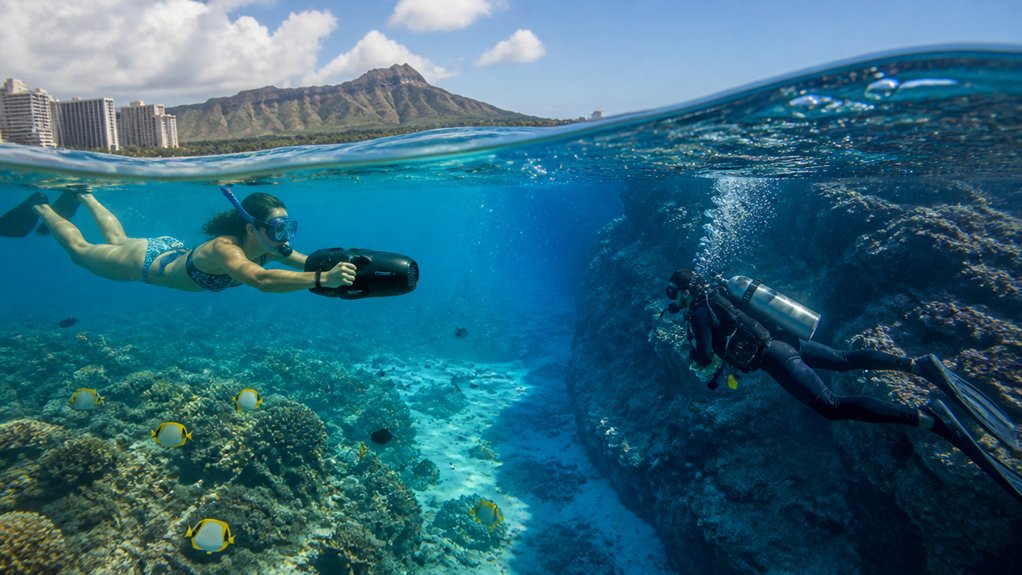
A Sea scooter tour keeps things simple. You ride about 7 to 8 feet below the surface with a dry helmet, skip snorkel hassles, and spend roughly 20 minutes underwater during a two hour outing. Scuba diving asks more from you. You use a tank, regulator, and BCD, manage your air, and control buoyancy, but you usually get 45 to 60 minutes below at moderate depths. In Waikiki, sea scooters focus on guided ease, photos, and reliable turtle views. Scuba gives you a quieter, closer look at reefs and marine life. If comfort and depth matter most, the comfort and depth guide can help you compare the best sea scooter tour options in Waikiki.
Who Should Choose Sea Scooter in Waikiki?
Often, the Sea Scooter in Waikiki makes the most sense if you want the underwater view without the work that usually comes with it. If you’re a non‑swimmer, a first-time ocean visitor, or just want an easy adventure, this ride keeps things simple. You cruise about 7 to 8 feet down in a helmet, stay dry through your face space, and skip the snorkel learning curve. The guided outing runs about two hours, including the boat ride, and it often includes photos or video. In Maunalua Bay, the battery-powered Sea Scooter glides quietly past coral and gives you a shot at spotting Hawaiian green sea turtles. As a first-timer walkthrough, this kind of tour is designed to make the experience feel approachable from start to finish. It’s a smart pick if swimming feels tiring, awkward, or medically unwise. Families and groups fit it well.
Who Should Book Scuba in Waikiki?
If you’re certified and comfortable underwater, scuba in Waikiki lets you go beyond the surface and reach reef walls, wrecks, and other sites in the 30 to 60 foot range. You get longer time below, often 45 to 60 minutes, so you can watch the light shift across coral and hover close for a better look. It’s a smart pick when you want more depth, more control, and gear that’s built for real underwater exploring, not just a quick peek with fins and a grin. Unlike some sea scooter tours, scuba gives you training-based control and equipment designed for deeper, longer underwater dives.
Certified And Comfortable
While sea scooters keep things simple, scuba in Waikiki suits you best when you’re already certified, or ready to try a guided Discover Scuba session with an instructor at your side.
If you’re among certified divers, you’ll appreciate the extra control and longer bottom time that comes with full scuba gear. A BCD, regulator, and dive computer let you hover quietly above coral ledges, watch reef fish flick through clear blue water, and line up steady close-up photos without rushing. Guided trips usually include a briefing, rental gear, and time in the water with a dive pro, so the logistics feel straightforward even if the bubbles sound gloriously dramatic. You should reserve ahead, and if you have asthma, heart issues, or other medical concerns, ask about clearance before you book first. Unlike some tours that follow weight guidelines, scuba operators may focus more on certification, medical screening, and comfort in the water.
Explorers Seeking Depth
Scuba in Waikiki is the pick for you when shallow sightseeing won’t cut it and you want to see what waits farther down. With Scuba, you can descend to real depth, often 60 to 100 feet, where coral ridges, wrecks, and thicker schools of fish appear. You also get 45 to 60 minutes underwater, not a quick spin like Underwater Scooters. By contrast, a Waikiki sea scooter tour stays much shallower, with sea scooter depth focused on a more limited underwater experience.
- Hover for photos with buoyancy control
- Explore reefs and wrecks beyond 10 feet
- Dive longer with training and a computer
If you’re curious, certified, and patient, this is your lane. You can pause, listen to your bubbles, and study tiny life tucked into rock cracks. Just respect limits, check gear, and let wonder do the rest. Blue water rewards patient eyes and calm.
How Deep Can Sea Scooter and Scuba Go in Waikiki?

Although both let you slip below Waikiki’s bright surface, they reach very different depths. An Underwater Sea Scooter tour usually keeps you just 7–10 feet down, sometimes capped around 10–15 feet. Those shallow depth limits keep the ride simple and comfortable, so you can watch fish drift past and hear the muffled hush of the water. As an Oahu beginner’s guide often explains, these shallow rides are designed to feel approachable for first-time ocean explorers.
Scuba opens far more ocean. Most Waikiki reef dives stay around 30–60 feet, while recreational dives can reach 60–130 feet when conditions and your dive plan allow. If you want deeper reef zones or wrecks beyond about 15 feet, Scuba is your ticket. You’ll trade poollike shallows for blue space, coral ledges, and that thrilling sense that Waikiki still has another floor below waiting for you to notice it.
Do You Need Swimming Skills or Certification?
Often, this is the point where the two experiences split in a big way. If you don’t have much swimming ability, a sea scooter tour is usually the easier fit. You stay guided, shallow, and focused on following instructions, not powering yourself. Many underwater scooter rides keep you around 7 to 10 feet deep, and operators handle propulsion and safety. In many cases, swimming skills are not required for a sea scooter tour, though basic comfort in the water still helps.
If swimming ability is limited, a sea scooter tour is usually the simpler choice: guided, shallow, and easy to follow.
- You can join many sea scooter tours without swimming skills.
- You need comfort in water for Discover Scuba, plus practice with basic skills.
- You need Open Water certification for independent scuba dives.
If you want longer freedom underwater, scuba asks more from you. You’ll train for buoyancy, regulator use, and emergencies. If water makes you uneasy, the choice is pretty clear for most.
What Gear Comes With Each Waikiki Experience?
You’ll notice the gear sets the tone right away: a Sea Scooter tour usually hands you a self-propelled scooter or Seabob and a clear-breathing helmet, so you can cruise a few feet under the surface with your hair still mostly behaving. On a Scuba Waikiki trip, you gear up with the full kit, including mask, fins, wetsuit, BCD, regulator, and tank, and your guide walks you through the basics before you head out. If you’re wondering which setup feels easier, drier, or more hands-on, this is where the choice starts to get interesting. Many operators also include wetsuits and gear on Sea Scooter tours, though the exact extras can vary by company.
Sea Scooter Equipment
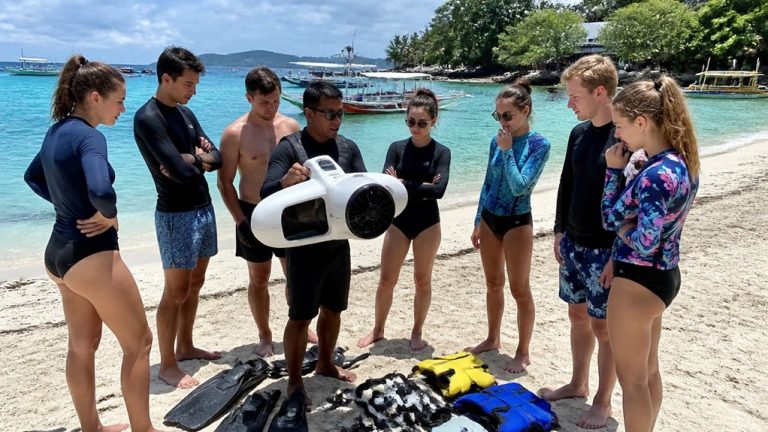
Most travelers notice the gear difference right away. On a Waikiki sea scooter tour, you get a battery-powered dive scooter and a clear-breathing observation helmet. The helmet keeps your face dry while you breathe normally about 7 to 8 feet down. After a quick safety briefing and fitting, you’re ready to glide. You won’t manage compressed-air tanks, and that’s the appeal. The setup feels simple, quiet, and a little futuristic. This Waikiki adventure is designed to make underwater sightseeing feel approachable for beginners.
- A self-propelled scooter that does the hard work
- A dry helmet that keeps hair, makeup, and nerves calmer
- Guided timing, usually around 20 minutes underwater, plus basic age, height, and weight rules
You’ll hear bubbles outside, feel gentle push from the motor, and spend more time looking at fish than fumbling with gear below.
Scuba Gear Included
Scuba Waikiki looks and feels more like the full underwater toolkit. You get the scuba gear included in most dive packages: mask, snorkel, fins, wetsuit, regulator, alternate air source, compressed-air tank, and a BCD to control buoyancy. You also wear a dive computer or gauges, so you can track depth, time, and air supply while bubbles hiss past your ears. Before you descend, your instructor walks you through the setup and safety checks. On a sea scooter tour, you can also expect a step-by-step safety briefing and equipment orientation before entering the water. That means more gear on your body, but also more freedom once you’re below. You kick, hover, and explore for 45 to 60 minutes, depending on conditions and your tank. If you want the classic dive feel, this is the real deal, straps and all, with saltwater sparkle and calm focus.
Is Sea Scooter or Scuba Safer in Waikiki?

While both can be safe in Waikiki with a good guide, sea scooter tours usually feel safer for beginners because they keep you shallow, often around 7 to 10 feet, and inside a breathing bubble or on a simple self-propelled device.
- You get simple safety features, short rides, and quick return to the boat if anything feels off.
- You avoid bigger depth/underwater risks, since shallow water brings little decompression danger and fewer surprises.
- Scuba can be very safe too, but it depends more on dive training, gear control, and calm responses underwater.
If you’re a non-swimmer or just want easy reef views, scooters often win. If you’re trained and want more self-rescue options, scuba gives you that. You’ll hear bubbles, see fish, and relax. For many first timers, calm confidence comes easier on a sea scooter tour because the experience feels simple and less intimidating.
Which One Takes More Physical Effort?
If you want the easier ride, a sea scooter does most of the work and pulls you along at about 2 to 4 mph while your legs mostly relax. With regular scuba in Waikiki, you keep finning, adjust your buoyancy, and work harder against the water, so you’ll usually move slower and use more air. That difference matters fast when the current picks up, your tank clock starts ticking, and your calves remind you who’s really in charge. For many beginners, especially non-swimmers in Waikiki, that lower-effort sea scooter setup can feel much more realistic and manageable than traditional scuba.
Effort While Riding
Glide on a sea scooter and you’ll notice the biggest difference right away: it does most of the work for you. With an underwater scooter, you cruise around 2 to 4 mph while your hands or knees handle light steering. That means reducing physical strain and keeping physical effort low, even in current.
- You mostly steer and stabilize instead of kicking nonstop.
- You can handle longer routes with less fatigue and more comfort.
- You don’t need elite swim fitness to enjoy the ride.
This lower-effort experience is one reason many visitors ask whether Sea Scooter Tours in Oahu are worth it. Traditional scuba with fins feels very different. You move slower, usually about 0.5 to 1.0 mph, and your legs keep working the whole time. You also need stronger buoyancy and finning skills. Think easy glide versus calf day in paradise.
Energy And Air Use
That easy ride shows up in your air gauge, too. With an Underwater scooter, you glide at about 2 to 4 mph while the motor does the hard part. Your legs relax, your breathing settles, and your air consumption usually drops compared with finning. That can stretch bottom time because you aren’t burning energy with every kick. If you want to document that smoother pace, a video shot guide can help you plan stable footage during a sea scooter tour.
With regular scuba fins, you keep working the whole dive. Normal swim speeds hover around 0.5 to 1 mph, and currents can turn a cruise into a thigh workout. More effort means faster air use and more fatigue, especially on multi-dive days. The tradeoff is simple. A scooter saves your body, but now you must watch Battery Life, switches, and features. Trade calf burn for dashboard duty.
Which Shows You More Marine Life?
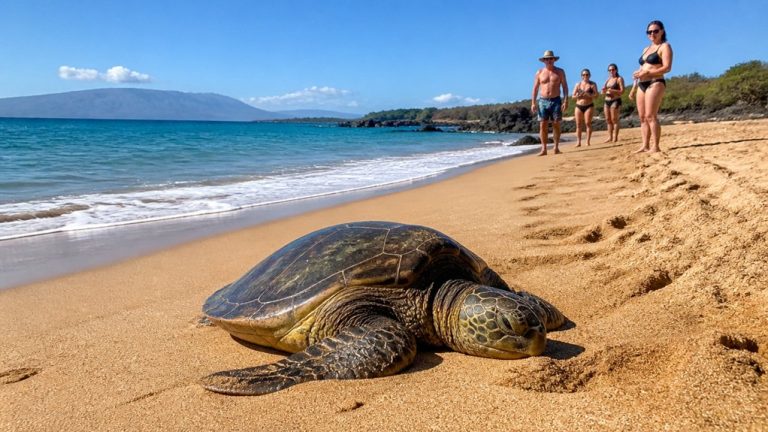
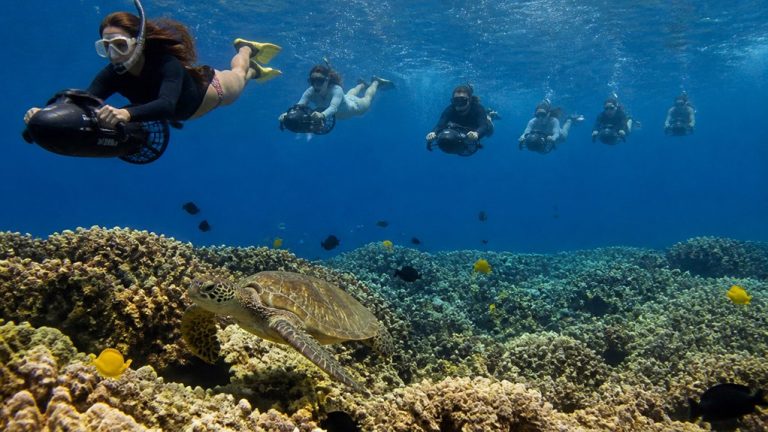
So which one shows you more marine life? If you want easy, close views, Underwater Scooters shine. You cruise about 7 to 10 feet down and often spot reef fish, octopi, and Hawaiian green sea turtles without swimming hard. You stay dry inside the helmet, which helps if you’re not a swimmer. On Oahu, sea turtle tours are especially popular for gliding alongside Hawaiian green sea turtles in shallow water.
Underwater Scooters make marine life easy: shallow, vivid views of reef fish, octopi, and turtles without hard swimming.
- You see bright shallow reefs fast and with little effort.
- Scuba Waikiki takes you deeper to reef ledges, wrecks, and bigger fish.
- You can hover slowly on scuba, which is great for careful macro views.
If your goal is variety, scuba usually wins because deeper zones hold different species. If your goal is simple, vivid encounters, sea scooters feel like a cheat code with bubbles and a nice splash for first timers.
How Long Does Each Waikiki Adventure Last?
Marine life is only part of the story in Waikiki, because the clock feels very different once you book each outing. If you choose a Sea Scooter tour, plan on about two hours from start to finish. That window usually includes a catamaran ride, a safety briefing, and your turn underwater for roughly 20 minutes. Most Sea Scooter tours in Waikiki follow this same general timeline, though exact schedules can vary by operator. While others ride, you might snorkel, watch the water flash blue, and hear the boat crew calling out instructions over the wind.
With scuba excursions, you give the day more room. Many trips run three to four hours, and some stretch to a full day for farther reefs. Your actual dive time often lasts 45 to 60 minutes per tank. Add gear setup, certification checks, safety talks, and surface intervals, and the pace feels slower, deeper, and more committed.
How Much Do Sea Scooter and Scuba Cost in Waikiki?
Two price tags shape this choice in Waikiki, and they tell you a lot about the kind of day you’re buying. Sea scooter tours usually land around $50 to $100 per person. That often covers a catamaran ride, snorkel time, and a short underwater scooter segment. This typical cost breakdown helps set expectations before you compare sea scooter tours with scuba options. Scuba diving experiences cost more. Intro sessions often run $100 to $200, while certified single-tank dives usually range from $75 to $150.
- Want the lower cost in Waikiki? Sea scooters usually win.
- Want specialty dives like wrecks or night trips? Expect $150 to $200+ per dive.
- Check what’s included. Photos, gear, tanks, and permits can change the final bill.
You’ll also see add-on photo packages. Peak dates can push prices up, so booking ahead helps. Think of it as paying for simplicity or paying for depth.
When Do Waikiki Conditions Favor Each Option?
You’ll want calm seas and clear water for a Sea Scooter, especially on Maunalua Bay mornings when low swell and 30 to 60-plus feet of visibility make those easy 7 to 8-foot glides feel smooth and close. Waikiki can also offer clear water that makes sea scooter tours more enjoyable when visibility is high. If currents pick up or the afternoon trade-wind chop starts slapping the surface, you’re usually better off with Scuba Waikiki or standard snorkeling, where guides can shift spots fast and keep things comfortable. Weather, surf, and depth all shape the call, so you’ll get the best day by matching the ocean’s mood instead of trying to out-stubborn it.
Calm Seas Vs Currents
When Waikiki wakes up calm, Sea Scooter tours usually shine first. You can slip into protected water, ride about 7 to 8 feet down, and reach reef life fast on a short guided run. Mornings with light winds and tiny swell feel made for easy fun.
- Pick a Sea Scooter when water stays mellow and you want a quick 20-minute underwater taste.
- Choose scuba when currents build past about 1 knot or surge starts nudging you around.
- If trade winds push in later, scuba guides with drift procedures beat scooters that top out near 2 to 4 mph.
You’ll spend less energy, keep better control, and avoid turning your vacation into a fin-kicking comedy when the ocean decides to test your plans offshore today. The best time of year for sea scooter tours in Oahu is usually when calmer seasonal ocean conditions line up with lighter winds and smaller swell.
Visibility And Depth
Often, visibility makes the choice for you before depth even enters the picture. In Waikiki, if you can see 20 feet or more, Sea scooters shine. You stay around 7 to 10 feet, glide quietly, and get easy reef views without committing to scuba. If clarity stretches past 40 feet, scuba fits better. You can drop to 40 to 60 feet and inspect deeper reef ledges or wreck details. Morning tours often offer the best time of day for calmer Waikiki water and clearer viewing conditions.
| Visibility | Best pick | Why |
|---|---|---|
| <15 ft | Sea scooters | Shallow, easier orientation |
| 20-40 ft | Sea scooters | Great below-surface viewing |
| 40+ ft | Scuba | Better depth and detail |
If turtles are your target in 10 to 30 feet, choose the option that matches your comfort and the day’s visibility. Quick rides feel sci-fi, like snorkeling with a tiny engine.
Weather And Surf Conditions
Because Waikiki can shift from pool-calm to choppy by lunch, the best pick sometimes comes down to what the water’s doing that morning. If you wake up to calm waters, tiny waves under 1 foot, and light winds, sea scooters usually shine with easy glides and clear views. Afternoons often turn breezy, noisy, and bumpy for most first timers.
- Go early, ideally sunrise to 9 AM, when visibility is cleaner and the surface feels smoother.
- Expect moderate surf conditions and 10 to 20 knot winds to add chop, making entries and boat rides fussier.
- Skip both when surf tops about 3 feet. Currents build, operators often cancel, and even scuba gets harder. Check NOAA forecasts, beach flags, and tour updates before you suit up.
What Does a Sea Scooter Tour Actually Feel Like?
Usually, the first surprise is how calm a sea scooter tour feels once you settle onto the scooter or slip under a helmet-style BOB. You glide 7 to 10 feet down on an Underwater scooter or BOB helmet, moving at an easy 2 to 4 mph. The motor hums softly. Your guide stays close while green sea turtles and reef fish drift past.
| Feel | What you notice | Why it matters |
|---|---|---|
| Glide | Steady electric pull | Little effort |
| Breathing | Normal in BOB | Stress stays low |
| Tour flow | Boat, ride, snorkel, relax | Easy two hours |
Most trips last two hours, with boat time, snorkeling, and deck lounging. You stay mostly dry in the helmet option, and photo packages let you prove you looked cooler than you felt.
What Is a Scuba Dive in Waikiki Like?
Scuba in Waikiki feels more like stepping into the reef than cruising past it. You suit up with a mask, fins, regulator, BCD, and tank, then follow a guide into warm blue water for a scuba dive at 40 to 60 feet. Over 45 to 60 minutes, your underwater exploration slows down. You hover near coral, watch turtles cruise by, and maybe spot an octopus acting suspiciously normal.
- Expect a briefing, buddy checks, rental gear, and clear depth limits.
- Dive sites like Turtle Canyon and Moku Manu reward good buoyancy control.
- A 3mm wetsuit helps in Waikiki’s 76 to 82 degree water.
Most Waikiki operators want Open Water certification, and the full outing usually takes two to four hours, including transit there.
Frequently Asked Questions
Are There Age or Height Limits for Sea Scooter or Scuba Tours?
Yes, you’ll usually face age restrictions and height requirements for sea scooter or scuba tours, and child policies vary by operator. You must meet weight and medical rules, or they can deny participation for safety.
Can Pregnant Guests Participate in Sea Scooter or Scuba Experiences?
No, while you’re pregnant, you shouldn’t scuba dive, and sea scooter access may surprise you: operators often require doctor clearance, prioritize prenatal safety, and may steer you toward alternative activities after reviewing their medical policies.
What Happens if Weather Cancels My Waikiki Water Tour?
If weather cancels your Waikiki water tour, you’ll usually get weather refunds, rescheduling options, or credit. Operators often notify you the night before or hours ahead, so check messages and review trip insurance carefully beforehand.
Can I Bring My Own Gopro or Underwater Camera?
Yes, look before you leap: you can usually bring your own GoPro or underwater camera, but you’ll need to check camera policies, secure mounting options, and confirm footage rights with your guide before heading out.
Are Private Tours Available for Couples, Families, or Groups?
Yes, you can book private tours for couples, families, or groups through Private charters. You’ll get Custom itineraries, possible Group discounts, and tailored experiences, but you should book early and confirm age, health, and requirements.
Conclusion
Choose the ride that matches your version of adventure. If you want an easy glide, the sea scooter lets you float above bright reef, hear bubbles hum, and spot turtles without much effort. If you want the full rabbit hole, scuba drops you deeper into blue silence, longer bottom time, and closer fish encounters. Either way, Waikiki gives you warm water, boat help, and a memorable look below the postcard. Pick your chapter and go.