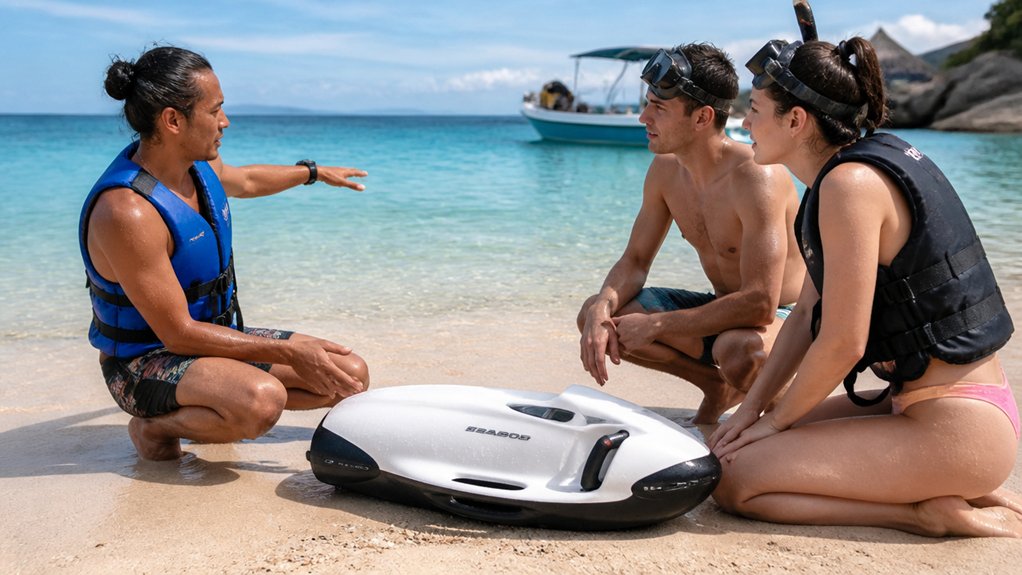
You probably don’t need to be a strong swimmer for a sea scooter tour, which surprises a lot of first-timers. In most places, you only need enough water comfort to move a few feet from a boat or shore to the floating scooter dome while a guide steadies you. The ride itself feels more like gliding through a quiet aquarium than swimming laps, but a few small details can make or break your trip.
Key Takeaways
- Most sea scooter tours accept beginners, so strong swimming skills usually are not required.
- You should be comfortable in water and able to swim a few meters to the scooter or buoy.
- Mounting the scooter may require briefly submerging your face or ducking under a line.
- Guides and crew provide close supervision, instruction, and in-water assistance throughout the tour.
- Check operator rules for age, height, weight, and medical restrictions before booking.

Oahu Majestic Circle Island Tour with Waimea Falls and Byodo Inn
Since 1974, E Noa Tours has specialized in showing visitors the real Oʻahu through immersive experiences led by passionate local guides. Our mission...

Oahu: Submarine Scooter Adventure
Dive into an unforgettable underwater adventure on Oahu’s beautiful Maunalua Bay. Cruise past the iconic Diamond H...

Oahu Catamaran Snorkel Tour: See Turtles 100% Guaranteed
Experience one Viator's 2025 Top 20 Best Excursions in the country. This Oahu Catamaran snorkel tour offers unbeatab...

Toa Luau at Waimea Valley, Oahu
Toa Luau invites you to immerse yourself in the beauty and excitement of Polynesia on Oahu’s historic North Shore!...
Do You Need to Swim on a Sea Scooter Tour?
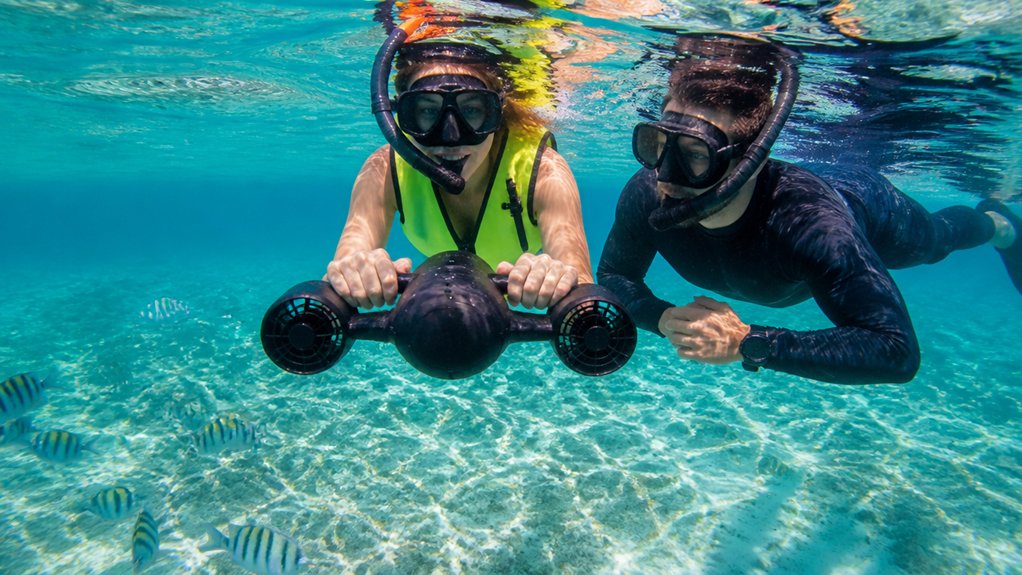
Even if you’re not a strong swimmer, you can usually still join a sea scooter tour. Most operators don’t ask for scuba cards or snorkeling certificates, and a guide stays with you the time. Before boarding, you’ll sign a medical waiver and confirm you meet the age, height, and weight rules. The crew helps you enter and exit the underwater scooter, then follows a set route that avoids reefs and keeps the group together. You won’t be drifting around on your own like a lost flip-flop. It still helps to know how to swim, because you’ll be in open water and saltwater can feel buoyant and calm. If motion sickness likes to ambush you, taking Dramamine ninety minutes early can make the ride smoother. These first-time riders often ask the same questions about safety, swimming ability, and what to expect before the tour starts.
How Much Swimming Is Actually Required?
You usually only need enough swimming to get from the shore or boat to the scooter, and that’s often just a few easy meters. Once you’re in, the machine does the moving while you float through calm, salty water with a guide nearby and reef fish flickering past. If getting in or out feels awkward, the crew is there to help, so you don’t need Olympic form, just a little comfort in the water. On an Underwater Sea Scooter Oahu tour, beginners can generally expect a guided, easygoing experience designed to keep the physical effort low.
Swimming Before Boarding
Getting to the sea scooter usually takes less swimming than most people expect. You usually swim only a few yards from the shore or boat entry point to the floating scooter area, often in calm water where saltwater buoyancy gives you a helpful lift. That means you don’t need advanced Swimming Skills or scuba certification. Still, you should feel comfortable putting your face in the water and ducking under briefly to mount the scooter. A little Snorkeling experience can make this feel more natural, especially if you’re steady with short swims and quick submersion. Think less lap pool, more easy glide past bubbles, fins, and the boat’s splashy stern before the ride begins for real once you’re settled and ready to explore below there. For many beginners, a first timer walkthrough can also help set expectations before you ever enter the water.
In-Water Assistance Needed
While the idea sounds more demanding than it is, the actual swimming on a sea scooter tour is usually short and simple. You usually just paddle from shore or the boat to a floating buoy where the underwater scooters wait, bobbing in calm saltwater.
- Crew members help you climb in and out, so you won’t need to know advanced strokes.
- Once you’re seated, guides stay nearby in the water, watching and assisting the whole time.
- You may duck under briefly to place your head into the dry bubble, so comfort with quick submersion helps.
That means no long solo swim is expected. Saltwater boosts your buoyancy, flotation aids add confidence, and the rules stay practical: usually age 10, height 4 feet, and the ability to swim a little. On most tours, the step by step process is designed to keep the in-water portion brief and easy to follow.
What Guides Help You With Before and During the Tour
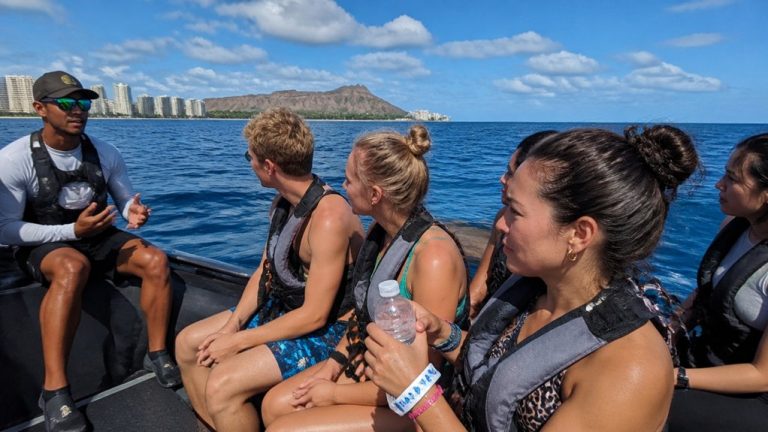
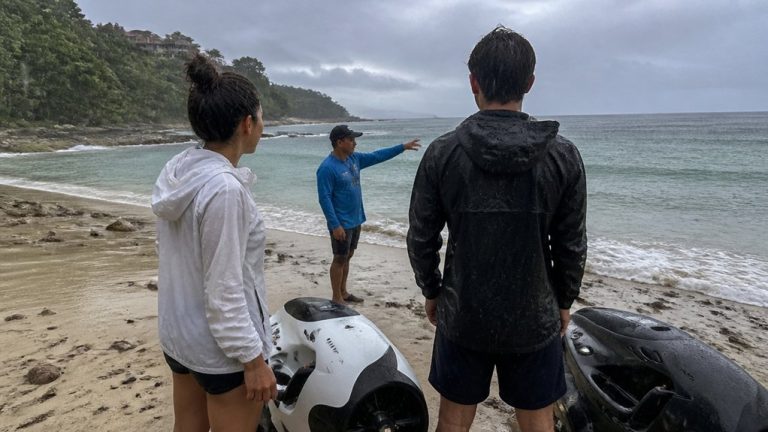
Before you get in the water, your guides walk you through the sea scooter controls, hand signals, and safety steps on land so you know exactly what to expect. They also help you board from the back of the boat, settle onto the dome or seat while it’s tethered, and get comfortable before the tour begins. Once you’re in the water, they stay close to guide the route, help with buoyancy and positioning, and step in fast if you need a quick adjustment or a breather. It’s also smart to ask about tour accessibility before booking, including what support is available for boarding, seating, and in-water assistance.
Still comparing Do You Need To Know How To Swim For A Sea Scooter Tour?
Ask for tour ideas, hotel suggestions, or a simple trip plan that combines both.
Trip Helper
Pre-Tour Safety Briefing
Usually, the safety briefing answers the big question right away: you don’t need to know how to swim, snorkel, or scuba dive to join. Before underwater exploration begins, guides show you how the sealed dome and Scooters work, how to use the propulsion switch, and how the bubble’s 110-pound buoyancy and weights keep you neutral.
- You learn the age, height, weight, and medical waiver rules.
- You review the buoy line, seven- to eight-foot depth, crew contact, and hand signals for help.
- You get practical tips on Dramamine, glasses, and contacts during setup.
That clear, hands-on rundown keeps the ride calm and curious, not mysterious. Guides also cover Sea Scooter safety basics so you’re prepared before the ocean starts humming beneath you softly today.
Boarding And Entry Help
At the back of the boat, the crew turns the trickiest part into a calm, guided sequence. They assist participants as you step in, move to the stern, and approach the floating buoy line. If you’re not a swimmer, staff can escort you from the entry point and steady the unit in the water. They help you duck under the line, guide your head into the dry bubble, or settle you onto the seat. While scooters are motorized devices, boarding feels surprisingly simple. A Dive Master can hold your goggles, secure straps or hand grips, check buoyancy, and show you the propulsion switch. Soon you’re seated, balanced, and ready to glide with only light swimming or assisted wading required for most guests today aboard. For many guests, a non-swimmers tour in Waikiki is realistic because guides assist closely during both entry and setup.
In-Water Guide Support
Even if you’re not a confident swimmer, the in-water guides stay right beside you from the first splash to the final climb back aboard. On an underwater tour, you’re never left to figure things out alone. Dive Masters and Dive Instructors meet you in the water, help you reach the scooter at the buoy, and steady you as you climb on.
- They show you the controls and give a quick safety briefing.
- They practice simple turns with you in shallow water first.
- They stay close, watching your comfort and helping with your ears.
If you’ve tried scuba diving, the support feels familiar, just simpler. The bubble keeps about 110 pounds of buoyancy, so you don’t need strong swim skills. You ride. They handle the logistics, and the fish get the spotlight. If plans change, it also helps to review the refund policy before your Sea Scooter Tour.
Age, Height, Weight, and Medical Requirements
Before you zip off over the water, it helps to know the basic rules for who can join. On this Snorkel Tour, you need to be at least 10 years old and at least 4 feet tall. You also need to weigh under 350 lbs. so the gear fits and the ride stays smooth. Keep the weight limit in mind when booking so there are no surprises on tour day.
Before boarding, you’ll sign a medical waiver. That’s standard for many Underwater adventures, and it keeps the crew informed. If you’ve had motion sickness before, take Dramamine about 1.5 hours before the excursion. It can make the boat ride easier and help you focus on the clear water, reef colors, and that fun first burst of speed instead of your stomach’s opinions. Check these details early so planning feels easy.
When You Should Skip a Sea Scooter Tour
While the tour feels easy once you’re gliding over bright reef and clear blue water, a few situations mean it’s smarter to sit this one out. Operators set limits for a reason, and your safety comes first.
- Skip the tour if you’re under 10, under about 4 feet, or near the 350 pound limit.
- Pass if a medical waiver feels risky because of heart trouble, severe breathing issues, or recent surgery.
- Don’t join if you can’t swim at all. You must be able to move from the entry point to the buoy and duck under to mount.
Most operators also enforce a sea scooter tour age limit as part of their family safety rules.
Also step back if motion sickness hits hard and you can’t take meds, or guided underwater spaces make you uneasy, even with dive staff right beside you.
How to Prepare for Your First Sea Scooter Ride
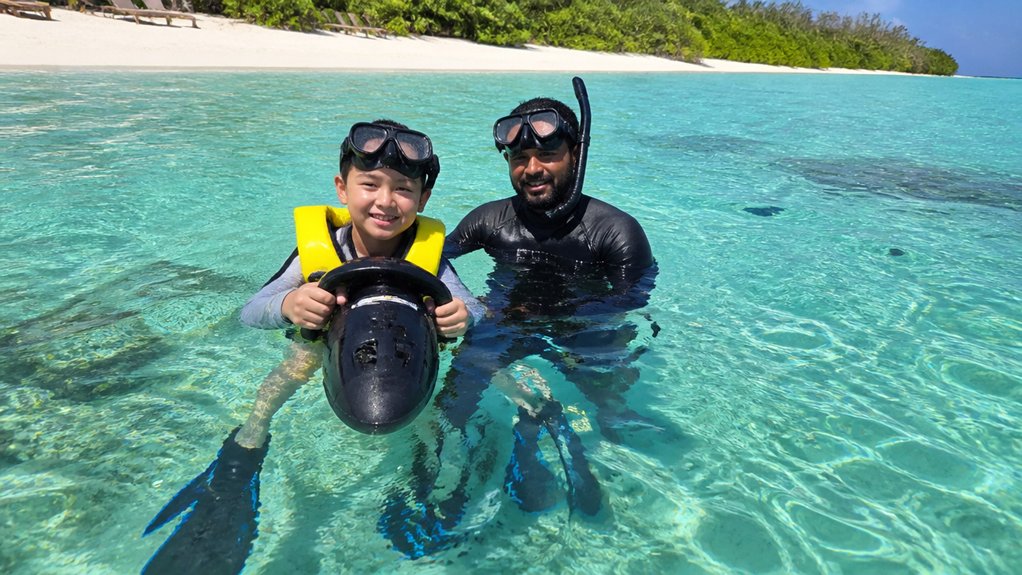
Pack smart and your first sea scooter ride feels far less mysterious once you reach the dock. Wear reef-safe sunscreen, a swimsuit, and a snug rash guard or wetsuit if the water runs cool. Most tours last 1.5 to 2 hours, with about 20 to 40 minutes in the water, so comfort matters. If motion sickness has tagged along before, take Dramamine about 1.5 hours early. Practice basic water comfort. You should swim a short distance to a buoy and duck under briefly to mount. Arrive early for the waiver, safety talk, and hands-on control demo. Plan your check-in time so you reach the dock early enough to handle the waiver and briefing without feeling rushed. Secure glasses or contacts exactly as instructed. The crew guides every step, and these devices help you start smoothly, not heroically, even if your stomach and nerves disagree.
Frequently Asked Questions
Can I Wear Prescription Glasses or Contact Lenses During a Sea Scooter Tour?
Yes, you can wear prescription glasses or contact lenses during a sea scooter tour. For prescription safety, remove glasses before entering the dry bubble, then reseat them inside; visual aids work if you brief crew.
Are Underwater Photos or Videos Included, or Can I Bring My Own Camera?
Yes, some tours include underwater photos or videos, while others charge extra, and you can usually bring your own camera. You’ll need secure camera housings, follow underwater etiquette, and confirm package details, pricing, and crew rules.
What Marine Life Might I See on a Sea Scooter Tour?
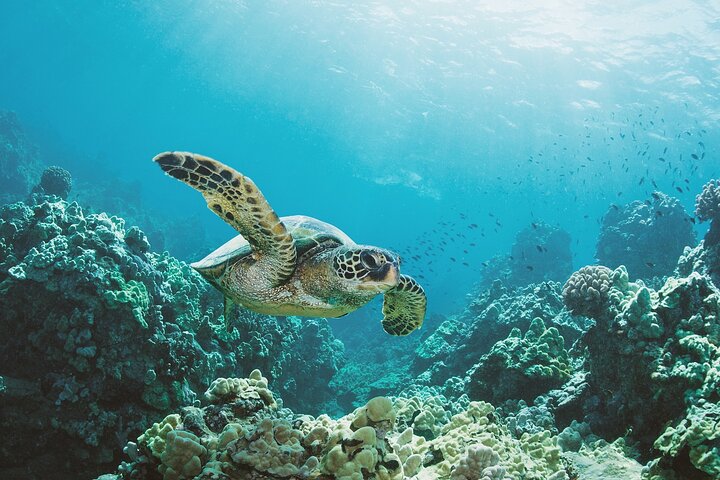
You’ll see an underwater rainbow of colorful fish, curious turtles, rays, and maybe small reef sharks. Guides often lead you past coral gardens where wrasses, gobies, and juvenile fish dart through crevices like living fireworks.
How Long Does a Typical Sea Scooter Tour Last?
Typical sea scooter tours last 1.5 to 2.5 hours, though you’ll usually ride or snorkel for only 20 to 40 minutes. Your tour duration depends on transfers, briefings, group size, stops, and your energy levels.
Do Sea Scooter Tours Operate in Bad Weather or Rough Water?
No, you usually won’t ride in bad weather or rough water because operators prioritize safety. You’ll get safety briefings, but crews may issue weather cancellations, reschedule tours, or move you to sites when conditions worsen.
Conclusion
You don’t need strong swim skills for a sea scooter tour. You just need basic water comfort, a calm attitude, and a few easy movements from boat or shore to the buoy. Guides handle the heavy lifting with briefings, boarding help, and close watch in the water. If you meet the age, weight, and medical rules, you’re set. Soon you’ll glide under the surface like a slow-moving astronaut, hearing bubbles hiss and seeing reefs flicker below.

Oahu: Full or Half Day Grand Circle Island Tour
Choose from two exciting ways to experience Oahu's top attractions, scenic beauty, and local culture.Option 1: Dole Plantation & Haleiwa Town (6.5 H...

Oahu: Grand Tour Around Island with Snorkeling
Come join on a circle island adventure led by some of Hawaii’s most knowledgeable local guides and experience brea...

Oahu Grand Circle Island Experience from Waikiki
Enjoy Grand Circle Island experience tour with breathtaking views of Amelia Earhart Lookout on Diamond Head, admire...
Waikiki: Turtle Canyon Snorkel Adventure on Oahu
Enjoy an exclusive snorkeling adventure in Waikiki with small group sizes for a comfortable and VIP experience. You...