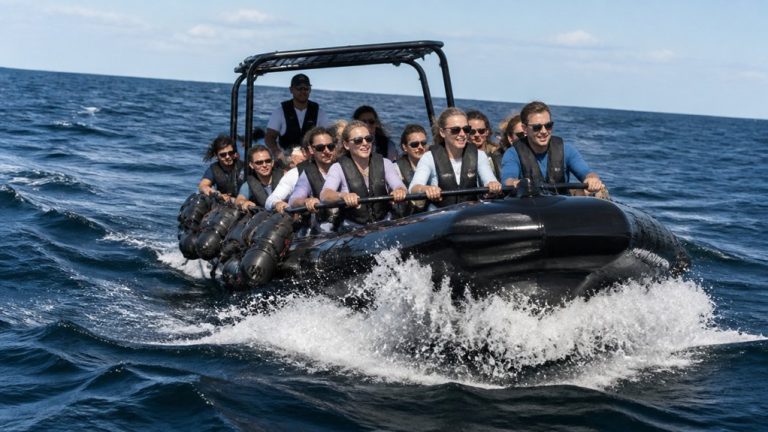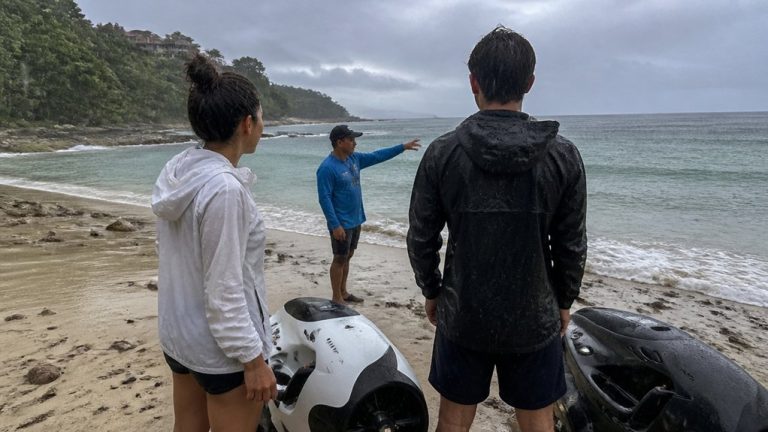
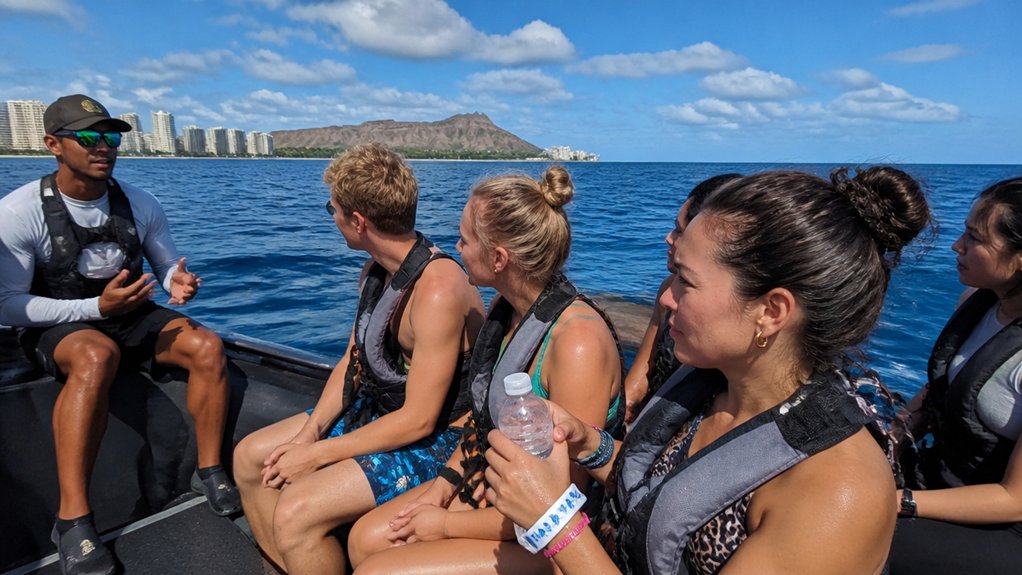
Waikiki can look calm from shore, then surprise you with a bouncy boat ride once the trade winds wake up. If you tend to get queasy, a few smart moves can change the whole trip. Eat a light snack before boarding, sip water, skip the greasy plate lunch, and claim a midship seat where the motion feels softer. Keep your eyes on the horizon, stash your phone, and tell the crew the moment your stomach starts its little protest.
Key Takeaways
- Eat a light bland meal, hydrate with small sips, and avoid alcohol, greasy foods, and excess coffee before your Waikiki sea scooter tour.
- Take meclizine or dimenhydrinate 30–60 minutes before boarding, or apply a scopolamine patch 4–8 hours early after testing on land.
- Choose a larger stabilized catamaran when possible, and sit mid-boat near the centerline facing forward for the smoothest ride.
- Keep your eyes on the horizon or shoreline, stay in fresh airflow, and avoid reading or staring at your phone onboard.
- If nausea starts, move to midship, sip cool water, try ginger or Sea-Bands, and alert the crew right away.
How to Prevent Seasickness on Waikiki Sea Scooter Tours
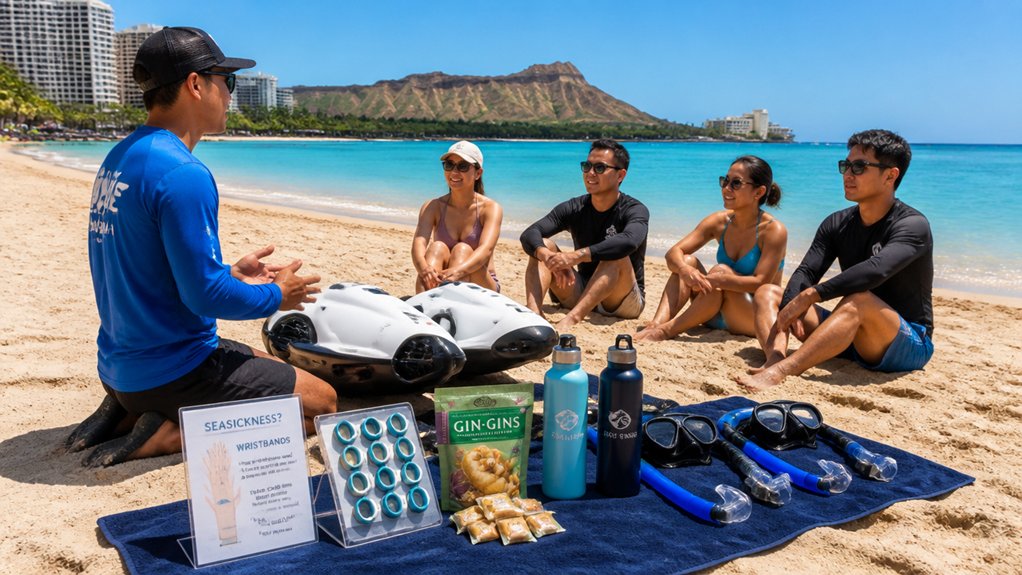
Often, the easiest way to prevent seasickness on a Waikiki Sea Scooter tour starts before the catamaran even leaves the dock. Eat a light meal like toast, a banana, or oatmeal about one to two hours ahead, and keep sipping water so dehydration doesn’t stir trouble. If you use medication, take meclizine or dimenhydrinate 30 to 60 minutes before boarding, or apply a scopolamine patch four to eight hours earlier. Test it on land first.
Once aboard, sit mid-ship, stay in the fresh trade winds under sunny skies, and lock your eyes on the horizon or Diamond Head. Skip your phone and any reading. Pack ginger chews or Sea-Bands. If nausea starts, tell the crew, sip cool water, and move quickly toward the middle. On days with rough waters, the ride can feel noticeably choppier, so these prevention steps matter even more.
Why Waikiki Afternoons Feel Rougher
While Waikiki can look calm from shore, the water usually feels bumpier once the afternoon trade winds kick in. By mid-afternoon, onshore breeze builds shorter, steeper waves, so you notice more chop, more spray, and a stronger side-to-side roll than you would in the morning. The coastal forecast also notes hazy conditions through the period, which can make the ride feel even less settled offshore.
| Time | What you feel | Smarter move |
|---|---|---|
| Morning | Gentler motion, less chop | Book early |
| Afternoon | Stronger roll, cooler spray | Choose SeaKeeper stabilization system |
That extra motion can make a sea scooter tour feel busier and louder, with hull slaps and wind hiss replacing glassy calm. If you must go later, pick a boat with a SeaKeeper stabilization system. You’ll feel less amplified roll during peak trade winds. Tour operators often suggest late-morning departures, when the water still behaves politely enough aboard.
Understand What Causes Seasickness at Sea
You get seasick when your inner ear feels the boat roll, pitch, and heave, but your eyes lock on something that looks still, so your brain gets mixed signals and protests fast. Around Waikiki, trade winds often build by mid-afternoon, and that extra chop can turn a smooth sea scooter ride into a side-to-side wobble. You’ll usually notice the first hints as nausea, dizziness, sweat, or a tired fog, which is your cue to respect the motion before your stomach files a formal complaint. Choosing an early morning tour in Waikiki can help reduce motion because the ocean is often calmer before the trade winds pick up later in the day.
Sensory Mismatch Explained
Because seasickness starts with crossed signals, it can hit even before you feel like the ride is rough. Your eyes and inner ear report different stories, and your brain doesn’t enjoy refereeing that sensory mismatch for long.
- Your inner ear feels roll, pitch, and yaw.
- Your eyes may lock on a seat, phone, or camera and report stillness.
- That conflict can spark nausea, dizziness, and sweating fast.
- If you look at the horizon, or a distant shoreline, you help those signals line up.
That’s why reading texts or checking close screens can backfire on the boat. Prevention works best before boarding, since symptoms often build quickly once the mismatch starts. Think of it as giving your brain one clear map, not two noisy guesses. Knowing what to expect on a sea scooter tour can also reduce stress, which may help you notice early warning signs before symptoms intensify.
Wind And Wave Effects
Wind and waves turn that sensory mix-up into a real problem fast. In Waikiki, trade winds often build by mid-afternoon, and you feel the boat answer with more side-to-side roll and short chop. That sharper rocking can scramble what your body senses, so nausea and dizziness rise quickly. You usually feel it more on smaller boats that bob and slap over wind-driven waves. Heavier boats and stabilization systems calm the motion and make the ride feel easier. Short nearshore routes also help because you can track the coastline or horizon. If you know breezy conditions are likely, take your preventative before boarding. Timing matters once the conflict starts. And yes, the ocean can be a very persuasive chemistry teacher out there in Waikiki waters. Choosing tours during the best time of year for sea scooter outings in Oahu can also mean calmer conditions and less motion that may trigger seasickness.
Common Motion Triggers
Although the ocean can look calm from shore, seasickness usually starts with a simple mix-up between what your eyes see and what your inner ear feels. On a boat ride, you’re more likely to feel queasy when these triggers stack up:
- Afternoon trade winds add chop and a side-to-side roll.
- Small single-hull boats bounce more than larger catamarans.
- Staring at your phone, a book, or the cabin hides the horizon.
- Fatigue, dehydration, and greasy meals make you more prone to motion sickness.
Rain itself does not usually cause motion sickness, but afternoon chop and rougher conditions can make symptoms feel stronger and may be a reason to reschedule. You can lower the odds by choosing short nearshore routes, watching the coastline, and sitting near the middle of the boat, where motion feels gentler. Your stomach may still complain, but at least you’ll know why, especially on Waikiki’s breezy afternoon runs.
Choose the Best Waikiki Sea Scooter Tour for Motion Sensitivity
For the steadiest start, book a Waikiki sea scooter tour on a 50-foot power catamaran from Maunalua Bay, especially a Lokahi-style boat with SeaKeeper stabilization, instead of a smaller single-hull vessel that can roll more in the chop.
If you’re motion-sensitive, that extra stability matters before you ever slip into the water. Ask where the boat departs and how it handles transit outside Kewalo Basin. A wide catamaran rides flatter, sounds calmer underfoot, and gives you a better shot at arriving relaxed. Ala Wai Harbor departures can involve more harbor traffic, so compare routes and boat design when evaluating Ala Wai Harbor sea scooter tours. You can also favor guided SeaBob or Sub Scooter options with easy entries, since many riders feel better once they’re immersed. Think of the boat choice as your first seasickness tool. Pick the platform that feels balanced, and let the reef views become the reward.
Start With a Shorter Waikiki Tour
Starting small is one of the easiest ways to figure out how your body handles a Waikiki sea scooter day. Pick a shorter Waikiki tour, about two hours, so you can test your sea legs without betting the whole vacation on it. Try this plan:
Start with a short Waikiki sea scooter tour and let your body decide how much ocean adventure feels right.
- Depart from Kewalo Basin or Maunalua Bay and stay near shore.
- Book stabilized catamarans for a steadier, quieter ride.
- Go in the morning or early afternoon, before trade-wind chop builds.
- Choose a scenic cruise or short turtle snorkel before full-immersion thrills.
Closer coastline views give your eyes a steady reference, which can calm that queasy disconnect. You’ll also hear less hull slap and feel less roll. Many Kewalo Basin tours also make it easier to start with a shorter outing before committing to a longer ride. If the ocean feels friendly, then longer adventures can wait for tomorrow too.
Take Seasickness Medicine Before Boarding
A short Waikiki sea scooter tour gives you a gentle test run, and smart timing with seasickness medicine can make that ride even smoother. For a quick trip, take Dramamine pills or Bonine 30 to 60 minutes before boarding, since medicine works best before the water starts rocking beneath you. Dimenhydrinate can make you sleepy, while meclizine is often easier on your eyelids. If you want longer coverage, apply a Sea-EEZ/Transderm Scop patch 4 to 8 hours early and test it on land first. Follow package directions, ask your doctor or pharmacist about interactions, and skip alcohol. If anything makes you drowsy, don’t drive. Prefer backup support instead? Bring ginger chews and Sea-Bands, and use them as helpers, not your only shield out at sea. Asking about sea scooter safety before your tour can also help you feel more confident and prepared before boarding.
Eat a Light Meal Before Your Tour
Before your Waikiki sea scooter tour, you’ll feel steadier if you eat a light, bland meal like toast, a banana, or crackers about 1 to 2 hours before boarding. Skip the greasy plate and the strong drink, because heavy foods and alcohol can turn a calm morning into a queasy ride. Sip water instead of chugging it, and if you use motion sickness medicine, take it with that small meal so your stomach doesn’t get any surprises. Even if you’re worried about swimming skills, sea scooter tours typically provide flotation support and guidance, so staying comfortable on the boat matters just as much as what happens in the water.
Choose Bland Foods
Often, the best pre-tour meal is the plainest one on the table. Before you zip into Waikiki’s blue water, eat a light, bland meal that keeps your stomach calm, not busy. Think simple textures and mild flavors that won’t fight the motion.
- Choose toast, plain rice, bananas, or oatmeal for easy fuel.
- Avoid heavy fried or acidic foods like burgers, pizza, or citrusy plates.
- Stay hydrated with small sips of water, not big sodas or boozy drinks.
- Pack crackers or plain pretzels, and try ginger chews or tea if you’re sensitive.
These simple choices are some of the most common first-time rider questions before a sea scooter tour in Waikiki. Your goal is comfort. A quiet stomach lets you notice the salt air, the bright reef below and the scooter’s soft hum, instead of your lunch trying stand-up comedy in rough water that day.
Time Your Meal
About 1 to 2 hours before your Waikiki sea scooter tour, give your stomach a small, quiet meal so it has time to settle. Eat a light, bland meal like toast, oatmeal, rice, or a banana. You don’t want to board hungry, but you also don’t want a heavy lunch rolling around once the water starts bobbing. Avoid greasy, spicy, or acidic foods for at least 6 to 8 hours before launch, since rich bites can linger and invite nausea. If you’re taking an anti-nausea pill, pair it with that snack and follow the timing on the label. Keep sipping water through the day, then take just a few sips before boarding. Since a first-timer walkthrough can help you know what to expect, planning your meal timing ahead of the tour can also make the whole experience feel smoother. For evening tours, crackers beat a full dinner every single time out there.
Avoid Heavy Drinks
Usually, your best pre-tour move is simple: eat a light, bland meal and skip the heavy drinks. You want fuel, not a stomach rebellion once the boat starts bobbing in Waikiki’s bright blue chop.
- Choose toast, a banana, rice, or oatmeal 1 to 2 hours before boarding.
- Avoid greasy, spicy, acidic foods and huge portions. They sit heavily and can stir up queasiness.
- Skip alcohol and limit caffeine. Both dry you out and can sharpen dizziness on the water.
- Sip water steadily before and during the tour. Slow sips help more than gulping.
These simple habits can make a big difference in sea scooter tours by keeping you more comfortable before you even hit the water. Trying a new motion remedy? Take it with a light snack as directed, and test it on land first. Your future sea legs will thank you when waves start doing hula.
Hydrate Well Before You Board
Start hydrating before you ever step onto the boat, because even mild dehydration can make seasickness hit harder. To hydrate well before you board, drink at least 16–24 ounces of water during the two to three hours before departure. Then continue sipping water in small amounts while you’re out on Waikiki’s bright, rolling blue. Little sips help more than big gulps, which can leave your stomach sloshy and annoyed. Skip alcohol, and go easy on coffee the day before and the morning of your tour, since both dry you out. If nausea tends to follow you, eat a light hydrating snack like a banana or toast with a little nut butter. For kids, offer frequent small sips before and during the ride too there. Also, choose operators and launch areas that prioritize lifeguarded beaches, since trained lifeguard coverage can be critical if an ocean emergency happens.
Sit Mid-Boat for a Smoother Ride
If you want the calmest ride on a 50-foot power catamaran, sit near the middle where the boat pitches and rolls less than the bow or stern. You’ll do best on the main deck centerline, ideally between the two hulls, where the wider stance helps tame that trade-wind chop. Book early if you can, tell the crew you’re motion-sensitive, and pair that seat with fresh air and steady looks at the horizon so your stomach doesn’t try to freelance. For a smoother start, follow the posted check-in time and arrive early enough to board without feeling rushed.
Midship Minimizes Motion
Because the center of a 50-foot power catamaran moves the least, sitting midship gives you the smoothest ride to and from your Waikiki sea scooter tour. You’ll feel less pitch and sway there, which can reduce roll, ease sensory mismatch, and lower your odds of seasickness.
- Pick the main deck near the centerline.
- Avoid the bow and stern, where motion feels bigger.
- Ask the crew before boarding if they can save a midship spot.
- Pair that position with horizon gazing and small sips of water.
On SeaBob or Submarine Scooter runs from Maunalua Bay, mid-boat placement also gives you steadier footing during short anchoring moves and better airflow across your face. That salty breeze helps, and your stomach usually agrees. It’s simple boat physics that feels like a travel hack. If you’re driving in, sorting out Waikiki parking ahead of time can also make the whole tour day feel easier and less stressful.
Best Seats Onboard
Often, the best seat on a Waikiki sea scooter tour is mid-boat on the main deck, close to the centerline and nearer the waterline, where a 50-foot power catamaran feels noticeably calmer than the bow, stern, or any higher perch.
After boarding, move fast and claim a mid-ship spot before the engines rev. On this boat, the center area between the twin hulls trims side-to-side sway, so your ride feels steadier. Since many tours leave from Waikiki departures, settling into a mid-boat seat early can make the whole outing feel calmer from the start. Face forward if you can, and plant your feet on the deck. That simple posture gives your inner ear a more consistent message. It also helps seasickness bands and meds do their quiet work before the tour gets rolling. Think of it as choosing a calm seat in the house, a wise move.
Pair Position With Horizon
Usually, you’ll feel best when you pair a mid-boat seat with a steady look at the horizon. Motion feels milder when you sit near the middle of the 50-foot catamaran, where pitching and rolling ease off. Then stack the odds in your favor:
- Pick a forward-facing seat so you can read the boat’s next move.
- Keep your eyes on the horizon or the green coastal cliffs, not your SeaBob or phone.
- If you can, head for the upper deck for wider views and cooler airflow.
- Skip leaning over the rail or studying choppy waves during the short ride out.
If you have mobility or comfort concerns, ask about accessibility questions before boarding so the crew can help match you with the easiest seat and entry option. Your inner ear likes this teamwork. Your eyes see a stable line. Your body relaxes. You arrive at the snorkel site to play, not pale.
Keep Your Eyes on the Horizon
Out on the water, one of the simplest tricks is to lift your eyes to the horizon and let that steady line where the sky meets the sea do its work. On a Waikiki ride, fix your gaze on the distant horizon to help your eyes and inner ear agree. When trade winds freshen in the afternoon and the boat starts a side-to-side roll, check the horizon frequently before queasiness sneaks up. If shoreline cliffs block the view, use a steady landmark instead. At night, watch the lit patch beneath the boat. And avoid looking at phones, cameras, or close-up gear for long stretches, since nearby focus can stir your stomach fast. Before heading out, you can also check the Honolulu forecast on Weather.gov to get a sense of local marine conditions. Breathe slow, listen to the water, and let that fixed point steady.
Put Your Phone Away on the Boat
Sometimes the fastest way to feel queasy on a Waikiki sea scooter tour is to stare down at your phone while the boat rocks under you. staring at a phone makes your eyes believe everything’s still while your inner ear feels every roll, and that mismatch can turn a ride sour fast.
Looking down at your phone while the boat rolls can scramble your senses and bring on nausea fast.
- Stow it before departure.
- keep your phone in a waterproof case for protection.
- Use it only for quick photos when the crew pauses mid-ship.
- Then look up and fix your gaze on the distant horizon.
This matters even more on a sea scooter tour for non-swimmers in Waikiki, where staying relaxed on the boat helps the whole experience feel more manageable.
Short, choppy afternoon runs can feel bouncy when trade winds kick up. If you need a map or selfie, ask the crew for a stop instead of scrolling while the boat moves along.
Use Ginger or Wristbands for Mild Nausea
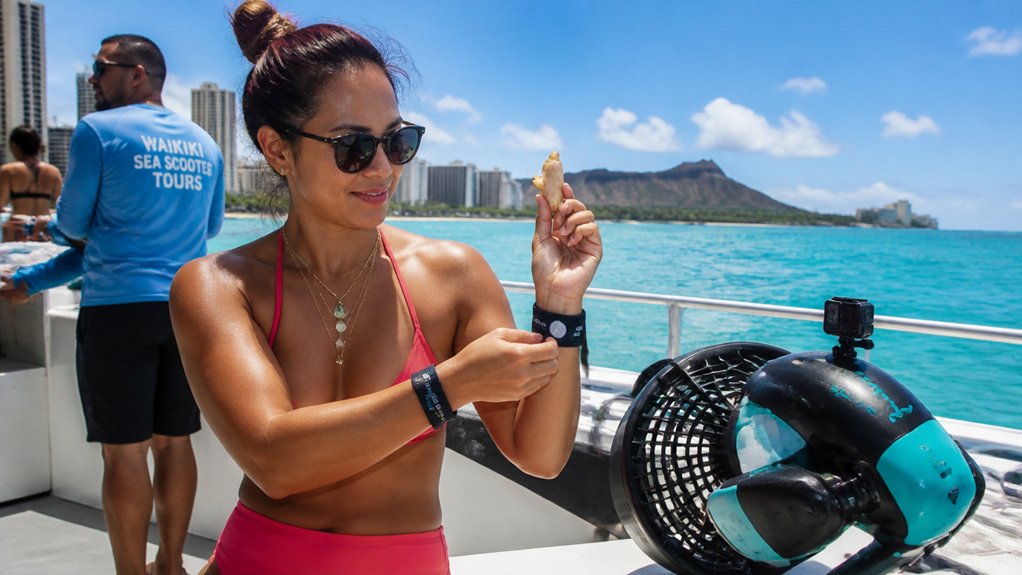
Even seasoned boat riders like a simple backup plan, and ginger or acupressure wristbands can take the edge off mild nausea before a Waikiki sea scooter tour starts to bounce.
Try ginger chews before boarding, or sip ginger tea during the ride. Sea-Band acupressure wristbands work best when you place them on the P6 point before motion starts.
| Option | Why it helps |
|---|---|
| Ginger | Calms your stomach |
| Wristbands | Eases nausea signals |
| Both together | Gives additive relief |
Test both on land first. Fit matters. If mild symptoms sneak in anyway, stay put with your remedy, move toward midship fresh air, watch the horizon, and sip water slowly. It’s a small routine, but on a short nearshore run, small routines feel almost magical.
Ask the Crew for Help at the First Signs
As soon as you feel that first little wobble in your stomach, tell the crew. Acting early gives you options before the boat’s bounce starts feeling like a bad playlist on repeat.
- Ask crew for a seat on the main deck near the middle, where motion eases.
- Let them know if you took patches or pills, so they can watch for drowsiness.
- Request fresh air and a forward-facing position and keep your eyes on the horizon.
- Remember, the crew can move you mid-ship, bring water, or even tweak the heading to soften the roll.
On a Waikiki catamaran, help usually comes fast. You might hear lines snap, feel salt breeze on your face, and notice the ride settle just enough to relax again.
Why You May Feel Better Once in the Water
Once you slip into the water, your body often stops arguing with itself. On the boat, your eyes and inner ears may send mixed messages, which fuels seasickness. In the ocean, those signals line up again because you move with the swell instead of against the roll. During a Sea Scooter ride or snorkel tour, the motion feels smoother and more predictable.
That shift from boat to water helps fast. You get fresh air, stand upright, and take deeper breaths. Your skin cools off. The clammy feeling fades. If you focus on coral, fish, or the glowing patch beneath the boat at night, your stomach usually settles within minutes. And if you’re still woozy, the crew can guide an easy float until normal returns.
Frequently Asked Questions
Can Children Take Seasickness Medicine Before a Sea Scooter Tour?
Yes, you can give children seasickness medicine before a sea scooter tour if you follow age restrictions, check dosage timing, and ask their doctor about pediatric alternatives; don’t use scopolamine patches, and test remedies first.
Will Seasickness Affect My Ability to Enjoy Snorkeling Afterward?
By and large, you won’t let seasickness ruin snorkeling afterward if you use motion prevention strategies; once you’re immersed, nausea usually fades. If you get sick, post snorkel recovery and dive readaptation tips still help.
What Should I Wear if I Am Prone to Motion Sickness?
You should wear light clothing, breathable fabrics, and snug footwear, with your swimsuit underneath. Add a lightweight layer for cool breezes, skip tight waistbands, and avoid flip-flops so you’ll stay balanced and more comfortable onboard.
Can I Reschedule if Rough Ocean Conditions Are Forecasted?
Yes, you can reschedule, even if you think policies are rigid; check weather waivers, maintain operator communication, and ask about alternative dates early, since many tours shift bookings or refund you when rough forecasts trigger limits.
Are Private Tours Better for Guests With Severe Motion Sensitivity?
Yes, Private charters often help if you’re highly motion-sensitive because you get Reduced crowds, Tailored pacing, calmer departure windows, sturdier boats, and mid-ship seating. Still, they don’t eliminate motion, so you’ll want proven medication beforehand too.
Conclusion
With a few smart moves, you can trade queasy worry for clear water and reef glow. Eat light, sip water, face the horizon, and tell the crew early if your stomach starts plotting mutiny. Pick the steadier boat and keep your phone tucked away. Once you slip into the water, you may feel like Odysseus finding calmer seas at last. Then all you hear is bubbles, boat hum, and Waikiki shining behind you.