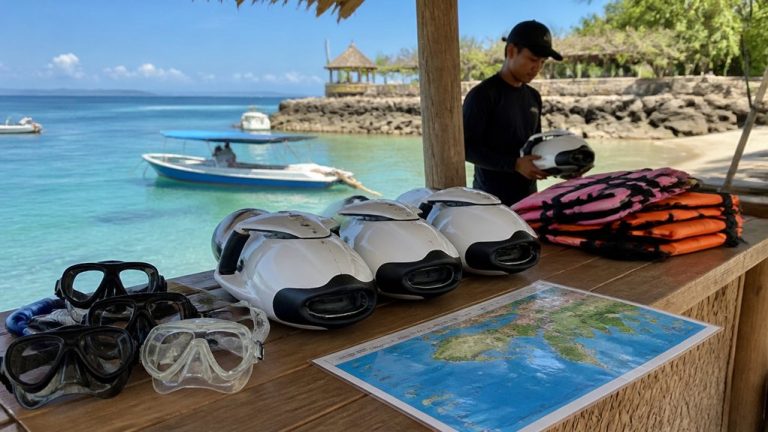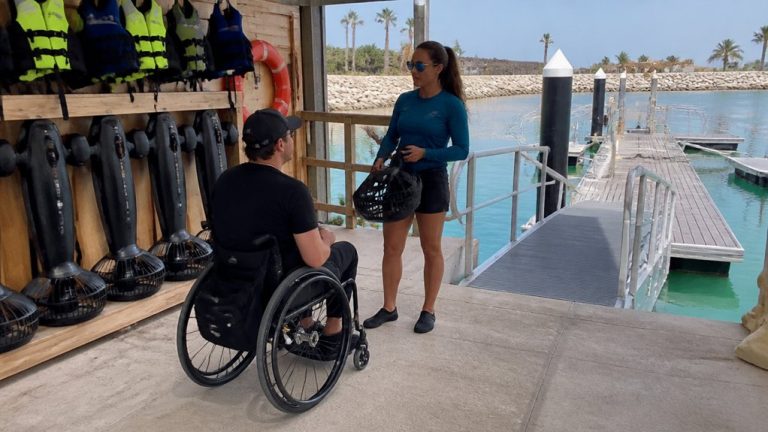

If you’re eyeing a sea scooter tour in Kapalua Bay, you’re probably wondering what shows up in the gear pile before you hit the water. Most tours hand you a flotation wetsuit, snorkel, mask, fins, and the scooter itself, then walk you through the controls while the surf hushes in the background. It sounds simple, but the right gear can change how calm and confident you feel once you leave the sand.
Key Takeaways
- Yes, most sea scooter tours include core gear in the ticket price, including a flotation wetsuit, mask, snorkel, fins, and the scooter.
- Flotation wetsuits are standard safety gear, adding buoyancy, warmth, and sun protection for beginners, non-swimmers, and children.
- Guides fit gear during check-in and briefing, and explain scooter controls, safety procedures, and basic in-water practice before launch.
- Optional extras may cost more, such as GoPro rentals, scooter camera mounts, Sharkbanz, and professional photo or video packages.
- Bring personal basics like swimwear, a towel, reef-safe sunscreen, water, and any preferred mask or glasses strap.
Do Kapalua Bay Sea Scooter Tours Include Wetsuits?
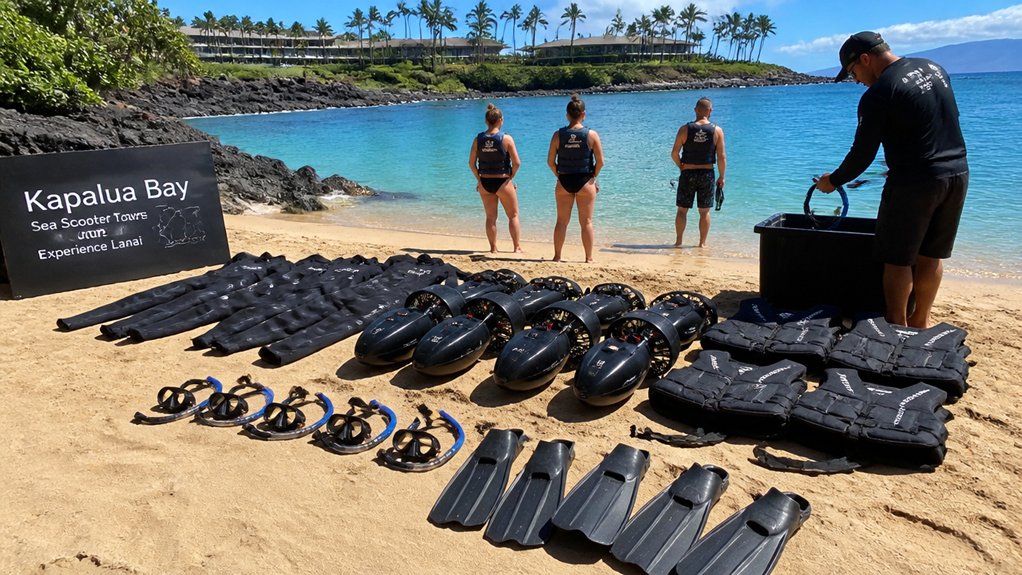
Yes, Kapalua Bay sea scooter tours do include wetsuits, so you won’t need to track one down before you go. On this guided tour, you’ll slip into an Airtime Watertime flotation wetsuit built for warmth, sun protection, and a little extra buoyancy when the water feels lively. Child and adult sizes are available, so your fit should be straightforward. That matters at Kapalua Bay, where morning light glints off clear water and you want to focus on the reef, not your rental checklist. The flotation wetsuit is included with the two hour experience, rather than treated like a separate add on. You may also use the provided snorkeling gear and sea scooters, though you can bring personal favorites if you’d like for added comfort. As noted in the Essential Guide, sea scooter tours generally highlight included gear and preparation details so guests know what to expect before entering the water.
What Gear Is Included on the Tour?
Pack light and step in. Your standard tour kit covers the essentials, so you won’t need to haul much from the hotel. Staff show you how the scooter hums forward, how the mask seals, and where to clip in before the bay turns from quiet shallows to bright blue. For Essential Gear, it still helps to bring small personal items like a towel, reef-safe sunscreen, and water.
| Included gear | What you get |
|---|---|
| sea scooters | Yamaha 350LI models with GoPro mounts, three speeds, and about 1.5 hours of battery life |
| Snorkel set | mask snorkel fins, fitted before you enter the water |
| Buoyancy gear | wetsuit tops, full wetsuit options, Watertime Flotation, and other flotation aids |
You can bring your own gear if preferred. You may also see briefings, shark anklets on some tours, and optional camera rentals, but your core gear is already included.
How Do Flotation Wetsuits Help Beginners?
Often, the quickest confidence boost for a beginner is a flotation wetsuit because it helps you float higher with less effort from the moment you enter the water. On Airtime Watertime tours, flotation wetsuits add buoyancy, so you can relax on the surface, breathe easier, and watch reefs drift below instead of kicking hard. That extra lift supports beginners, non-swimmers, and para-swimmers, which improves safety and confidence right away. This added support is especially helpful on Sea Scooter Tours in Waikiki, where comfort tips for seniors also emphasize easy floating and reduced effort in the water. You also stay warmer during cooler months and get sun coverage for longer, more comfortable time in the sea. Guides fit children and adults during the briefing, checking movement and support before you start. With the suit doing part of the work, you can focus on steering, spotting fish, and enjoying the soft swish underwater.
Do Tours Include Snorkel Gear and Fins?
Along with that extra buoyancy, most sea scooter tours also hand you the full snorkel setup, so you won’t need to show up with a gear bag rattling in the trunk. You’ll usually get snorkel gear, including a mask, snorkel, and fins, plus a wetsuit top or flotation wetsuit for warmth and easy floating. Many operators fold fin rentals into the price, so you can travel light and still kick comfortably over coral and clear shallows. Before launch, a safety briefing and sea scooter training cover how everything fits and works. Your ticket often bundles these basics as part of the sea scooter tour ticket cost, rather than charging separately for standard gear. If you prefer, you can bring your own gear, but you don’t have to. Some tours also tempt you with extras like GoPro rentals, scooter mounts, or Sharkbanz for an added fee sometimes.
Are Sea Scooter Tours Safe for Non-Swimmers?
Even if you’ve never felt confident in the water, many sea scooter tours are designed to make non-swimmers feel steady from the start. With flotation wetsuits like Airtime Watertime suits and lifejackets, you stay buoyant while you learn the scooter. Each ride begins with a safety briefing and simple hands-on practice, so nothing feels rushed or mysterious. The clear dome or floating design lets you breathe normally, which helps settle first-time nerves. Professional guides stay close the whole time, and tours often run in calm protected bays over shallow reef areas where the water feels manageable. On a first-timer walkthrough, you can expect step-by-step guidance that makes the entire experience easier to understand before you head into the water. You’ll hear the motor hum, see fish flicker below, and realize the setup is built to keep non-swimmers comfortable, curious, and smiling from launch to shore again today.
What Age, Height, Weight, and Health Rules Apply?
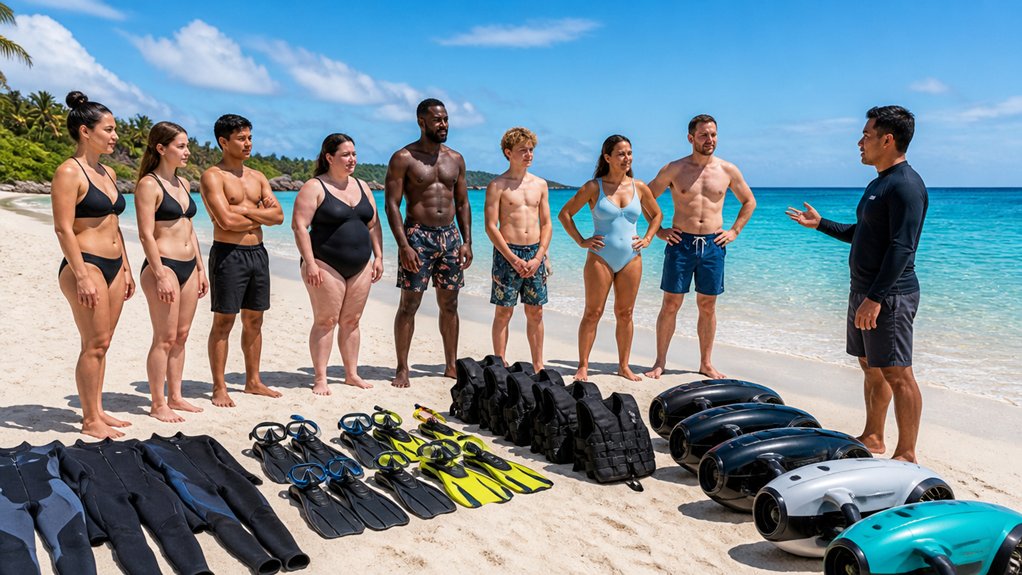
Before you zip out over the reef, check the basic ride rules, because sea scooter tours do have clear limits. The minimum age is usually 10, and height rules often fall around 46 to 68 inches, though you’ll want to confirm with your operator.
You should also ask about the maximum weight, which is commonly 350 pounds for balance and control. Sea scooter tour weight limit rules can vary by operator, so it helps to confirm the exact policy before you book. If you’re pregnant, pregnant guests aren’t allowed, and serious heart conditions usually rule you out too. Tours like to see basic swimming skills, but many still welcome non-swimmers. You’ll get a flotation wet suit for extra buoyancy, and the crew follows firm safety procedures. Many guides hold CPR and First Aid credentials, and a lifeguard often rides along, which feels reassuring to you.
How Do Underwater Scooters Work?
Once you settle into the scooter, a sealed electric motor spins a propeller and pulls you through the water at speeds up to about 3.7 mph, which feels fast enough to be fun but still easy to handle.
Many underwater scooters use a clear dome based on bell theory, so you breathe normally while your head stays dry. A short sea scooter guided briefing shows you the controls, and then you manage thrust with beginner-friendly ease.
- You choose from three speed settings.
- You watch battery life on a built-in indicator.
- You equalize gently as you descend.
Because guides handle depth and navigation, you can focus on reef colors, fish flashes, and the hum of the scooter instead of wrestling with scuba gear. On a typical tour, guides also explain the step by step flow of the experience so you know what to expect before entering the water.
What Happens on a Maui Sea Scooter Tour?
You start by stepping aboard a 50-foot power catamaran in Kapalua, where the crew gets everyone settled for a 2-hour outing to calm reef spots like Napili or Kapalua Bay. Once you arrive, guides walk you through safety, equalizing, and sea scooter controls before the easy launch. Then you ride underwater in a clear air bubble, staying dry while cruising past coral, reef fish, and maybe turtles at three selectable speeds. The crew supplies all the gear you need for snorkeling too, including a mask, fins, flotation support, and an optional Airtime Watertime wetsuit. A lifeguard-certified staffer stays close, and non-swimmers can join. If you’ve heard of Maunalua Bay tours, expect Maui’s version to feel intimate, educational, and just adventurous enough for first-time ocean explorers. For travelers comparing islands, Ala Wai Harbor tours come with their own essential tips and planning details before you book.
What Should You Bring for the Tour?
Pack light and smart, because the crew already covers most of the big gear. Your tour usually includes snorkel gear, fins, and a flotation wetsuit, so you only need a few personal basics. Bring swimwear, a towel, reef-safe sunscreen, and sunglasses for the boat ride and the sun deck.
- Wear easy on, easy off clothes and simple footwear, since scooters weigh about 20 pounds and you may help carry gear.
- Bring your own mask if it fits better, plus a strap for prescription glasses or tie back long hair.
- Toss in a small dry bag and a personal GoPro if you like, though rentals are often available.
Most operators also give a quick safety briefing before you ride, so arrive ready to listen and follow crew instructions. Keep it practical. You’ll be changing fast, getting salty, and smiling anyway afterward too.
Can You Buy Tour Photos and Videos?
How do you keep the proof when the reef looks that good on camera? Usually, you can buy it. Many tours bring an activity photographer, so you don’t have to juggle a mask, a sea scooter, and a smile at once. An individual photo can be purchased for $40. If you’re traveling as a pair, a photo and video combo for two often runs $60.
A video shot guide can also help you plan better angles and moments if you’re capturing your own tour footage.
You might also spot a GoPro mount on the scooter, and some operators rent a GoPro for $50. Want your own footage? Bring an underwater camera or buy a 32GB SD card for $20 to collect recorded clips. Packages are commonly sold onboard or right after the tour, so your bright blue memories don’t drift away with the bubbles.
How Do You Choose and Book the Right Tour?
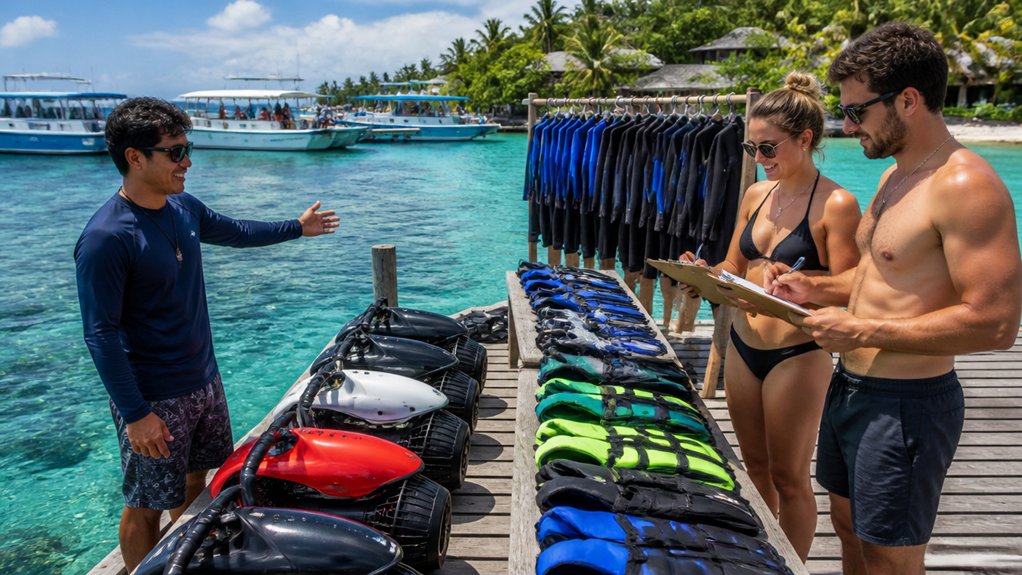
First, match the tour to your comfort level, because the best ride is the one that feels exciting instead of stressful. Pick a beginner-friendly sea scooter outing if you want calm water, easy pacing, and a simple snorkel tour.
- Check skill rules, age limits, height, weight, and swimming requirements before you book.
- Confirm gear included, like the scooter, mask, fins, flotation wetsuit, GoPro mounts, and safety briefings.
- Compare price, extras, and booking cancellation terms, especially for weather changes.
Book early in busy months, since some trips need minimum numbers and fill fast. Most tours run about two hours, with around twenty minutes riding the scooter. Plan to arrive early for tour check-in so you have time for waivers, gear fitting, and the safety briefing. If you want more privacy, ask about private charters. Your future self, sun-dried and smiling, will thank you later.
Frequently Asked Questions
Are Prescription Masks Available for Guests Who Wear Glasses?
Yes, you can request prescription snorkels, custom mask fittings, optical insert options, vision correcting masks, near sighted solutions, and diopter mask rentals, but you’ll need to confirm availability when booking or bring your own ahead.
Can Pregnant Guests Participate in Sea Scooter Tours?
No, about 1 in 10 pregnancies develop complications, so you can’t join sea scooter tours; prenatal precautions, trimester restrictions, doctor clearance, buoyancy concerns, motion sickness, and emergency protocols keep operators excluding pregnant guests for safety.
What Marine Life Might You See During the Tour?
You’ll likely see tropical fish and sea turtles gliding through coral gardens, and you might spot manta rays, dolphin pods, or enjoy rare octopus sightings as your guide leads you along reef drifts nearby safely.
Are There Restroom or Changing Facilities at the Launch Site?
Yes, like finding an oasis after a hot mile, you’ll usually get nearby facilities, but they vary. Ask about Restroom proximity, Changing privacy, Facility cleanliness, Accessible stalls, Shower availability, and Secure lockers before you arrive there.
What Is the Cancellation Policy for Bad Weather?
You’ll usually get weather refunds or rebooking for safety cancellations, while force majeure terms may limit options. Check reschedule windows, ask whether partial credits apply, and consider tour insurance, since policies can vary by operator.
Conclusion
Yes, you’ll usually get the essentials with your sea scooter tour: a flotation wetsuit, snorkel set, fins, and the scooter itself. That means less guesswork and more time watching reef fish flicker like confetti beneath the surface. You should still arrive early for waivers, fittings, and safety tips. Bring a towel, reef-safe sunscreen, and your sense of adventure. If you want photos or extras, ask at check-in. Then zip off and let the bay do the talking.