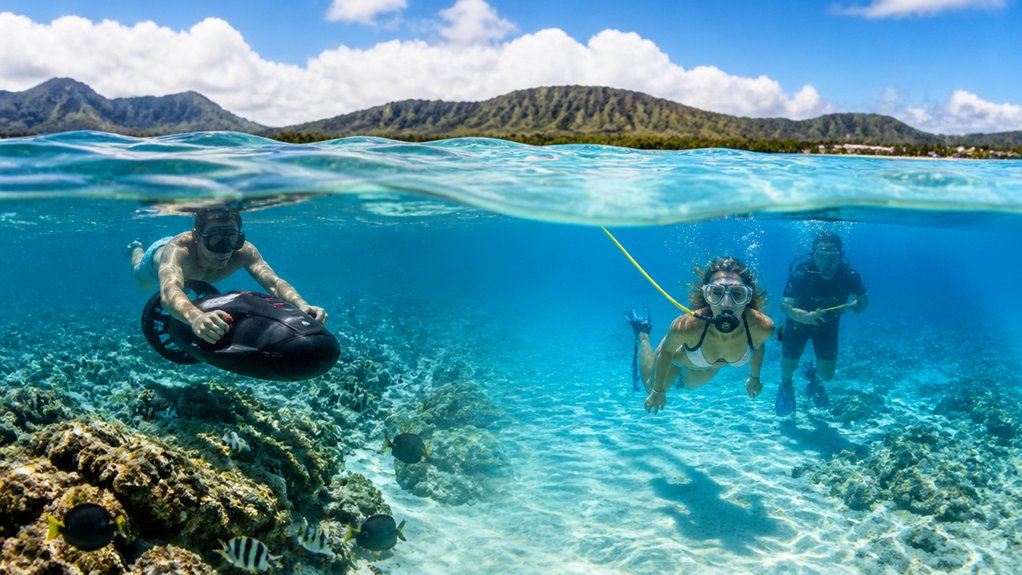
Most people don’t realize Sea Scooter tours and SNUBA both get you under Oahu’s reef without a scuba card, but they feel nothing alike once you hit the water. With a sea scooter, you grip a small motor and zip through warm blue shallows as the prop hums in your hands. With SNUBA, you breathe through a long hose and drift slower while fish flicker past coral heads. The better choice depends on how you want the reef to feel.
Key Takeaways
- Sea scooter tours are playful, motorized reef rides; SNUBA is a guided breathing experience using a regulator connected to surface air tanks.
- Neither activity requires scuba certification, and both usually begin with a catamaran ride plus a 15–20 minute safety briefing.
- Sea scooters usually stay around 8–10 feet for 20–45 minutes; SNUBA can stay underwater 25–30 minutes, often up to 20 feet.
- Sea scooters offer faster movement and wider reef coverage; SNUBA is slower, calmer, and better for lingering near coral and marine life.
- Choose sea scooters for action and easy fun; choose SNUBA for steadier underwater viewing and a more dive-like experience.
Sea Scooter vs SNUBA Oahu at a Glance

To size it up quickly, a sea scooter tour on Oahu feels like an easy underwater joyride, while SNUBA feels closer to a real guided dive. If you want a quick, active outing, Sea Scooter options usually keep you around 8 to 10 feet down for 20 to 45 minutes, often as part of a two hour boat trip. If you want longer breathing access and a steadier descent, SNUBA lets you go to about 20 feet with air supplied from the surface. You don’t need scuba certification for either one. Sea Scooter rides can work for some non swimmers with support, while SNUBA stays close to an instructor and uses a harness, regulator, and weights. Think playful glide versus reef mission, sparkle included. For first timers, an Underwater Sea Scooter experience on Oahu is often presented as beginner friendly and easy to expect.
What a Sea Scooter Tour Is Like
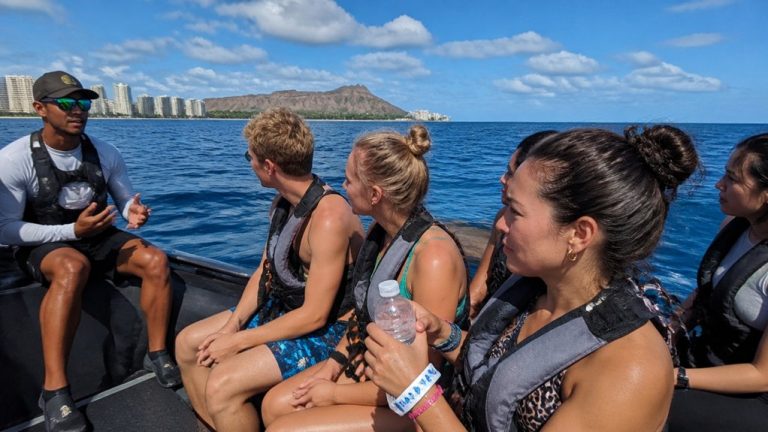
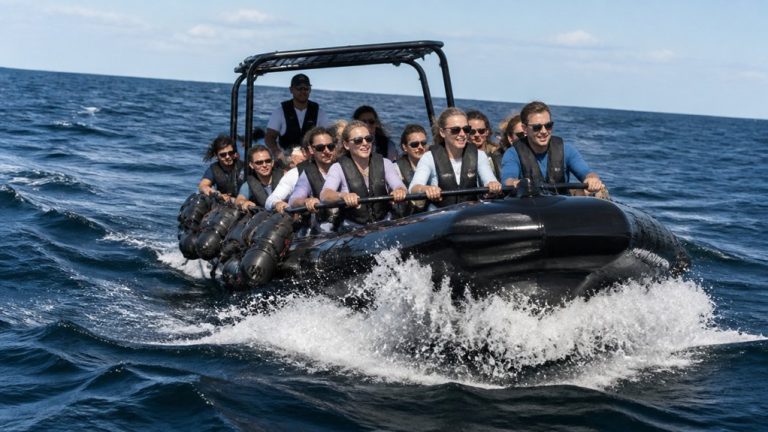
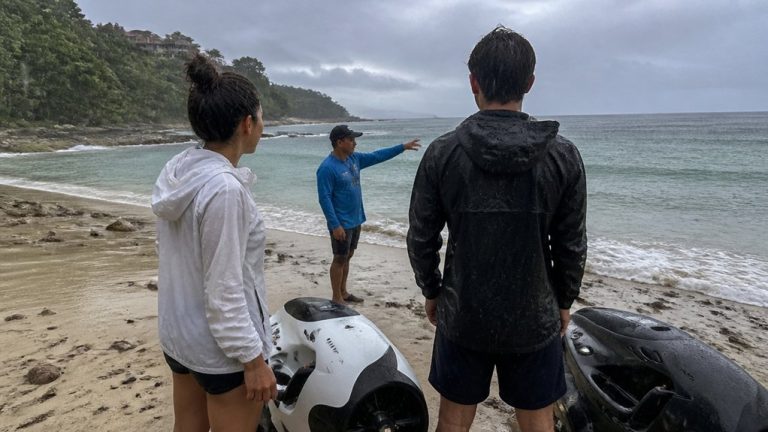
Set off on a sea scooter tour and the day starts with a short catamaran ride out to reef sites in Maunalua Bay or Turtle Canyons, with the whole trip usually running about two hours. After a one on one briefing, you practice with the Underwater Scooter before slipping into clear water. Then you hold on and go. The handheld SeaBob can zip to about 12 mph, so you skim above coral, dip below the surface, and stay fully immersed while crew keep watch nearby. It feels more active than snorkeling and definitely gets your head wet, though it isn’t scuba diving. Expect about 45 minutes of ride time, safety gear, optional wetsuit tops, snacks afterward, and maybe a photographer catching your superhero pose. Most tours follow a simple step by step flow, from the boat ride and briefing to practice time in the water and the guided ride itself.
How SNUBA Works in Oahu
Slip beneath the surface on a SNUBA tour in Oahu, and you’ll breathe through a regulator fed by air tanks floating above you on a small raft instead of wearing scuba gear on your back. That surface-tethered air supply sends steady breaths through a hose, so you can focus on the reef instead of heavy equipment. Before you enter the water, you’ll get a 15 to 20 minute safety briefing, then one-on-one help with your mask, fins, weight belt, and harness. Certified instructors guide you throughout, which makes SNUBA feel approachable even if you’ve never tried scuba. You don’t need certification, and kids eight can join. In the water, you’ll hear bubbles, watch bright fish flicker near coral, and spot a turtle or octopus. Families comparing activities should note the age limits can differ between a SNUBA tour and a sea scooter tour with kids in Oahu.
Depth and Freedom: Sea Scooter vs SNUBA
With a sea scooter, you control your speed and direction as you cruise over the reef, dip a few meters below the surface, and zip back up with salt spray in your face. With SNUBA, you stay on a long air hose and usually hover around 8 to 10 feet down, sometimes as deep as 20 feet, while an instructor keeps the pace calm and steady. That means you get more freedom and motion with a scooter, while SNUBA gives you an easier, more fixed underwater view without needing to pop up for air. In Waikiki, the choice often comes down to whether you want the perfect fit for speed and independence or a more guided, relaxed underwater experience.
Depth Range Comparison
While both options take you deeper than regular snorkeling, they feel very different once you leave that top 0 to 3 feet of water. On a Sea Scooter tour, you can dip below the surface, rise again, and hover above the reef within common shallow limits around 5 to 15 feet. That gives you changing views of coral heads, sand patches, and fish flashing by in brighter or dimmer light. Most Waikiki Sea Scooter tours are designed to keep the ride comfortable and easy to follow, which supports those shallow, flexible depth changes. SNUBA keeps your depth steadier. Most setups place you around 8 to 10 feet, though some tours may allow closer to 20. Because your air comes from a surface raft through a hose, your range stays capped and predictable. If you want variable shallow depth, choose Sea Scooter. Prefer calm midwater time? SNUBA works.
Movement And Control
At the controls, the difference feels immediate. On a Scooter ride, you hold the motor, squeeze for thrust, and steer with your whole body. You can zip above coral, angle down a few feet, then pop back up fast. The water hums around you, and every turn feels direct. You choose the pace.
With SNUBA, movement slows down. You breathe hands free through a regulator and follow an instructor beneath a floating raft. The hose gives you easy air but limits how far and fast you roam. You kick, adjust buoyancy, and drift toward ledges or fish with steadier control. In Snorkeling vs. SNUBA, this is the big split: sea scooters feel nimble and sporty, while SNUBA feels calm, guided, and mid-depth focused overall. For many first-timers, especially non-swimmers in Waikiki, a sea scooter tour can still be realistic because flotation support and guided pacing help reduce the need for strong swim skills.
Which Is Easier for Beginners?
If you want the easiest start, a sea scooter usually gets you moving faster with less swimming and more built-in help. You can often wear a life jacket or even a dry-face helmet, so you stay focused on the fish, the water’s sway, and the fun part instead of what your arms are doing. SNUBA is still beginner-friendly, but you’ll need a little more comfort being underwater as you get used to breathing through the setup and following the air hose like an obedient underwater puppy. A first timer walkthrough can also help you know what to expect before you get in the water.
Swimming Skill Required
How much swimming do you actually need to do? For sea scooter rides on Oahu, not much. Many SeaBob and helmet scooter tours welcome non-swimmers, and they give you a life jacket or a dry helmet that keeps your face out of the water. Be sure to check the tour’s weight limit before booking, since sea scooter rides follow specific rider guidelines. You stay guided, supported, and focused on the reef below instead of kicking hard.
SNUBA asks a little more from you. You should feel comfortable in the water and able to swim at the surface in fins. You’ll breathe through a regulator, stay linked to a floating air raft by a 10-foot hose, and move around with more body control. If you’re anxious, a helmet scooter or guided SeaBob usually feels easier. It’s the gentler option when your sea legs are still waking up.
Learning Curve Compared
While both are beginner friendly, sea scooters usually win the easiest-first-try award on Oahu. You get brief one-on-one coaching, then you’re off, learning controls and trim within minutes. If you choose a helmet-style scooter, your face stays dry, the ocean sounds turn muffled and calm, and the ride feels forgiving even if you’re not a strong swimmer. That sense of calm confidence can make a first sea scooter adventure feel much less intimidating. SeaBobs ask for a bit more balance and core control, but still come quickly.
SNUBA is still approachable, yet it asks more from you at first. Your safety briefing lasts 15 to 20 minutes, and snorkeling requires less adjustment than breathing through a regulator. You’ll also manage fins, a mask, and a weight belt or harness. Once underwater, though, most beginners relax fast and follow the instructor’s lead.
Which Tour Takes Less Effort?
Often, the easiest option is a helmet-style or BOB underwater scooter, because you sit back as the device does most of the work and the clear dome keeps your face dry.
If you want the least exertion, think of it like this:
- Helmet scooters glide you along while guides handle the pace.
- SNUBA asks you to fin gently, balance your body, and manage a little weight.
- Underwater Scooters like SeaBobs feel faster and sportier, so you steer, squeeze controls, and use more energy.
Traditional snorkeling seems simple, but constant surface kicking can wear you out over time. A guided boat snorkel helps, yet a 20-minute helmet ride still feels easiest. You just settle in, hear the soft hum, and let the water move past. For many first-timers, guided supervision also makes a sea scooter tour feel safer and less physically demanding.
Which Gives Better Marine Life Views?

Ease matters, but the real question is what you’ll actually see once you’re underwater. With SeaBobs, you can glide above the reef, dip down around 8 to 10 feet or a bit more, and cover more water fast. That mobility helps you spot schooling fish, rays, and other quick-moving visitors that don’t wait around for anyone.
On Oahu, sea turtles are a standout sight on sea scooter tours, adding even more appeal for riders hoping to encounter iconic marine life. SNUBA gives you a different kind of view. You breathe steadily through the surface hose and move slowly with your hands free, so you can hover near coral heads and watch turtles, eels, or an octopus tucked into a crack. Since guides often choose high-probability reef sites, sightings can be excellent. If you want action, SeaBobs shine. If you want lingering close-ups, SNUBA usually wins for detail seekers.
Safety Differences You Should Know
Because both adventures put you underwater in different ways, their safety basics feel different from the start. With SNUBA, you breathe from a surface air supply and stay tethered to a raft, usually around 8 to 10 feet deep. With a Sea Scooter, you ride fully submerged on ambient air at the surface, so you need swimming skills and handle the motor calmly.
- In SNUBA, you feel the gentle tug of the hose and an instructor beside you.
- On a Sea Scooter, you hear the whir of the prop and watch your depth closely.
- SNUBA guards against ascents. Sea Scooter tours focus on maneuvering, fatigue, cold water, and avoiding bumps.
Neither has tank-based decompression limits or a 24-hour flight rule.
Who Should Book a Sea Scooter Tour?
If the safety profile sounds manageable and the idea of a faster underwater ride makes you grin, a sea scooter tour is probably your lane. You’re a good fit if you’re 10 or older, can swim, and don’t mind full-body immersion, saltwater in your ears, and a few short breath holds. This matches the typical age limit and safety rules families should review before booking. With one-on-one instruction, you’ll zip over reef patches, cover more ground, and get closer looks at fish than standard snorkeling usually allows.
Choose a Sea Scooter trip if you want a more active pace, not a lazy float. Many Oahu outings pair the ride with a boat cruise, snorkel gear, safety talks, snacks, and guide support. If dry-face comfort matters or medical limits apply, skip this and consider SNUBA or another option instead.
Who Should Choose SNUBA in Oahu?
For a calmer trip below the surface, SNUBA in Oahu makes a lot of sense. You should choose it if you want guided breathing below the waves without certification. An instructor supervises while your air supply floats above, so you can descend about 8 to 10 feet and keep your hands free. That setup suits nervous swimmers, younger participants, and anyone who’d rather not lug heavy gear. Compared with sea scooter tours, SNUBA is usually the better fit if you prefer a slower, more relaxed underwater experience in Oahu.
Choose SNUBA in Oahu for a calm, guided dive experience with no certification, light gear, and easy breathing below the waves.
- You drift past coral heads and flashing reef fish with a gentle whoosh overhead.
- You stay down longer, usually around 25 to 30 minutes.
- You can still fly later without scuba’s 24-hour wait.
Pick SNUBA when you want a relaxed pace, slightly deeper views than snorkeling, and less turbo-charged action than a sea scooter.
What’s Included in Each Tour
When you compare what’s included, you’ll notice the gear and safety setup shapes the whole feel of the tour. On a sea scooter trip, you usually get snorkel gear, life jackets, a safety briefing, crew help, and boat perks like shade, snacks, and sometimes a restroom while the catamaran rocks out of Maunalua Bay. Many operators also provide wetsuits and gear, which can make sea scooter tours more comfortable for first-time guests. With SNUBA, you get your mask, fins, weight belt, a longer how-to talk, and guided time breathing from a floating air raft, so you can picture right away which extras sound more like your kind of ocean day.
Included Gear And Safety
Start with the gear, because both tours make the basics easy: you’ll get a safety briefing, core water gear like masks and fins, flotation support, and hands-on help from trained crew or instructors.
With a sea scooter, you ride with safety-first staff, life jackets, and either a domed helmet that keeps your face dry or a full-immersion scooter setup. You’ll also get:
- a one-on-one handling lesson and close monitoring
- snorkel gear, wetsuit tops, and certified in-water guides
- guided depth limits, usually around 8 to 10 feet for helmet scooters
Sea scooter tour tickets also typically cover the safety briefing along with the gear and guided support included in the experience.
SNUBA changes the feel. You breathe from a floating surface raft through a regulator and hose, then descend with a harness, weight belt, mask and fins, and constant instructor supervision for calm, tank-free underwater exploring.
Onboard Amenities And Extras
Beyond the masks and briefings, the boat itself shapes the day. On a sea scooter trip, you usually ride a scenic catamaran through Maunalua Bay, then settle into a mix of action and easy comforts. You get chips, cold refreshments, and crew help in the water. An onboard photographer often tags along, so you can buy digital shots later instead of fumbling with a camera. Some tours also tempt you with add-on banana boat or bumper tube rides. Sea scooter tours in Waikiki often begin at Maunalua Bay, which helps set expectations for the route and overall pace of the trip.
SNUBA leans more toward a bundled cruise-and-dive outing. You board, eat or snack, sip drinks, and follow your instructor into a guided underwater session. Depending on the vessel, you may get a fuller meal, different departure times, or a multi-activity package. Pretty efficient, right, for travelers?
What to Bring for Sea Scooter or SNUBA
Packing for either tour is simple, and that’s part of the appeal. Wear your swimsuit under your clothes, then toss in a towel, reef-safe sunscreen, and a waterproof phone case or dry bag. Since both adventures start with a catamaran boat ride, bring Dramamine or wristbands if you get queasy before boarding.
- For sea scooter snorkeling, you can use the provided wetsuit top and gear, or pack your own mask, snorkel, and fins for a better fit.
- For SNUBA, operators handle the mask, fins, weight belt, harness, and air supply, so you only need swimwear and a towel.
- Bring your ID, signed waivers, and cash or a card for photos or playful extras like a banana boat or bumper tube onboard later.
It also helps to bring essential gear that keeps you comfortable and ready for the full sea scooter tour experience.
Sea Scooter or SNUBA: Which Should You Book?
Once you know what to bring, the real question is how you want the water to feel. Book a Sea Scooter if you want motion, noise, and a little rush. You’ll ride a motorized unit through clear water, usually 8 to 10 feet deep, on a guided catamaran trip. It’s shorter, about 20 to 45 minutes, but it feels lively and camera friendly. Like snorkeling in Waikiki, it suits travelers who want an easy water activity without scuba training.
Choose SNUBA if you want more time below and a calmer view of the reef. You’ll breathe from a surface air hose, skip scuba certification, and descend to about 20 feet for roughly 25 to 30 minutes. That extra depth helps with fish watching. You also won’t face a 24 hour flight restriction. If you’d rather glide than zoom, SNUBA wins.
Frequently Asked Questions
Are Prescription Masks Available for Sea Scooter or SNUBA Tours?
Yes, you can usually use your own prescription mask on both tours, but operators rarely stock prescription friendly masks or custom fit goggles. You should confirm ahead, because some can suggest inserts, rentals, or shops.
Can Non-Swimmers Join Either Experience in Oahu?
Yes, you can join either experience in Oahu as a non-swimmer if you meet age and health rules. Operators provide water safety briefings, flotation options, and close guidance, so you’ll stay supported throughout the activity.
What Happens if Weather Cancels My Tour?
If weather cancels your tour, you’ll usually get notice faster than lightning and can choose rebooking or refunds, depending on the operator’s rescheduling policies, refund options, and whether they still run a scenic cruise portion.
Are Photos or Videos Included With Either Tour?
Usually, you won’t get photos or videos included with either tour; you’ll buy them separately. You should ask at booking about underwater cinematography, stills, video clips, and souvenir packages, because operators’ offerings and prices vary.
Is There a Minimum Age Requirement for Sea Scooter or SNUBA?
Yes, you’ll need to be at least 10 for sea scooters, while SNUBA sometimes starts at 8 or 10. Operators set age restrictions, require guardian supervision, and may deny participation if health or comfort concerns arise.
Conclusion
Choosing between them is like picking your ride through an underwater garden. You can zip along the paths on a bright little scooter, skimming coral heads in 8 to 10 feet of water while fish flash past like confetti. Or you can stroll with SNUBA, breathing easy from the surface raft and pausing near 20 feet to watch turtles drift by. If you want speed, book the scooter. If you want stillness, follow the raft.